
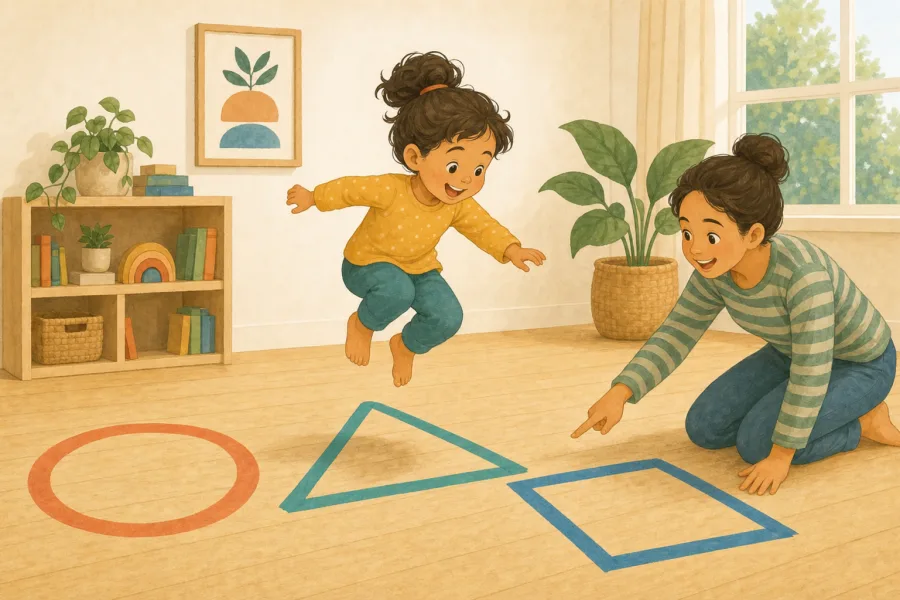
Shape Jump
Tape big shapes on the floor and jump between them on command.
Ages 2–6 ⏱ 10 min Household items
Stuck inside while it pours? These practical ideas bring movement, imagination, and calmer moments to a long afternoon — most use what is already in your living room.
Start here
Choose by the kind of day you are having, not by scrolling through every idea.
Best for burning energy
Tape big shapes on the floor and jump between them on command.
Big jumps and simple instructions turn a small patch of floor into an active game.
Best calm-down activity
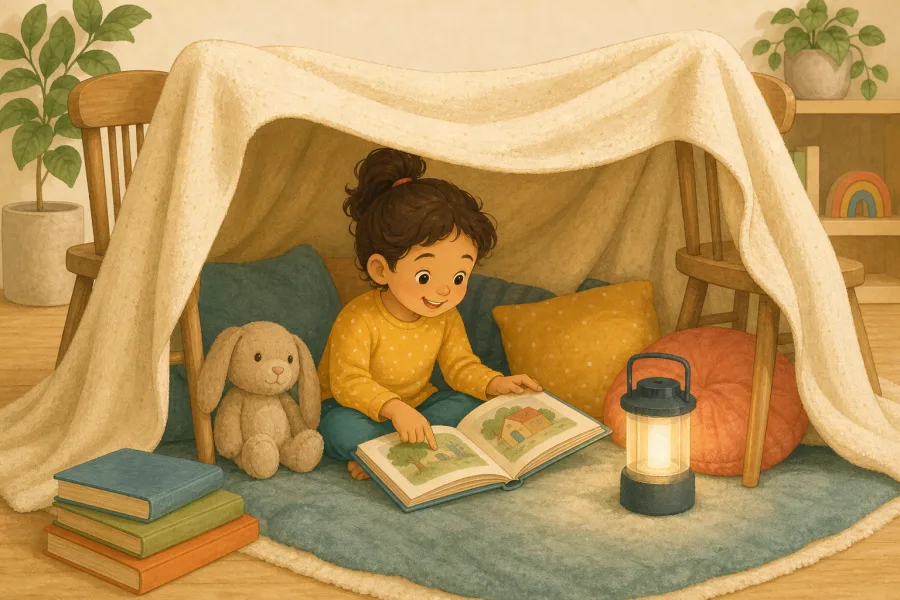
Build a cozy den from blankets, then hide inside with books and a flashlight.
A familiar book feels new again when children help build the place where you read it.
Best with no preparation
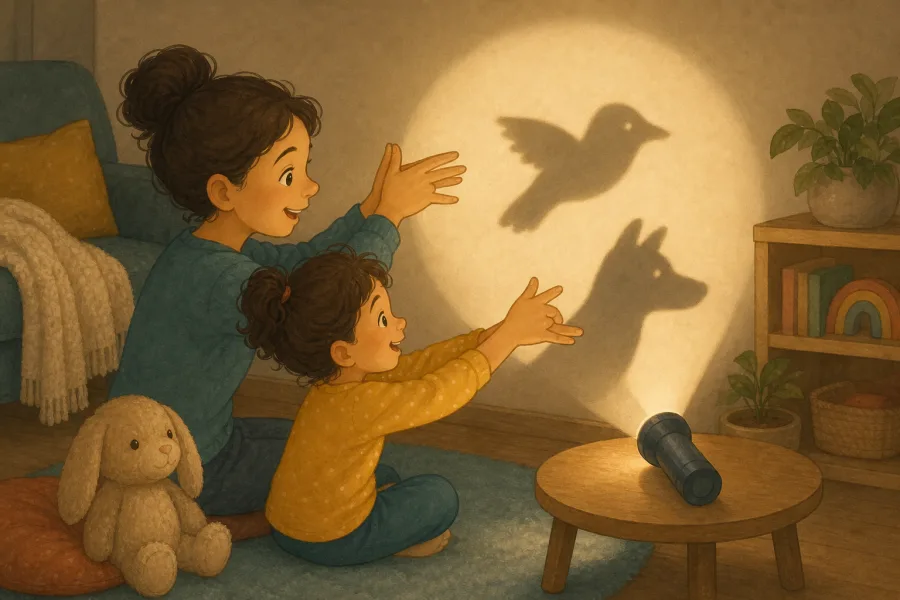
Turn a flashlight and a wall into a stage for barking dogs and flying birds.
All you need is a light, a blank wall, and a few minutes of shared imagination.
Browse the collection
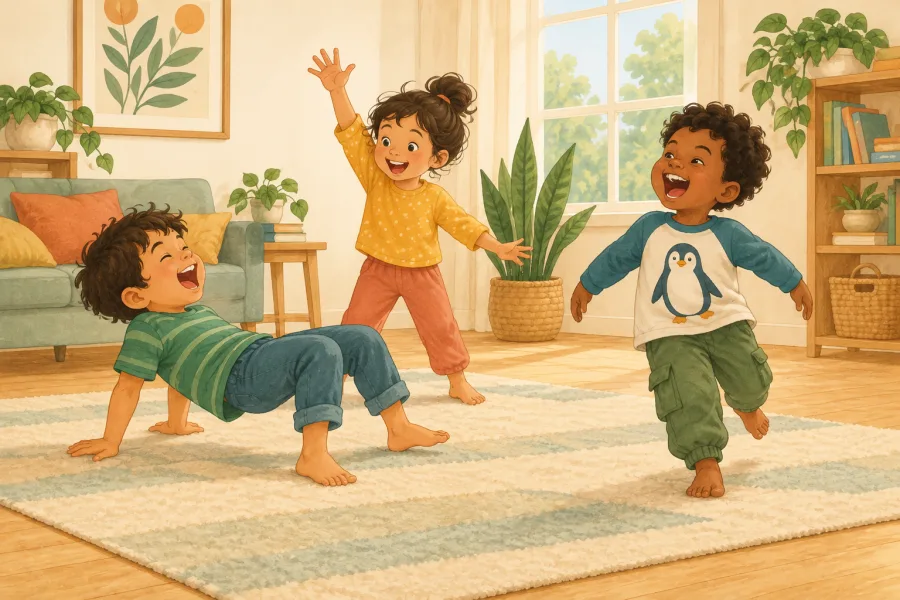
Walk like a crab, roar like a lion — at the same time. Instant giggles, zero supplies.
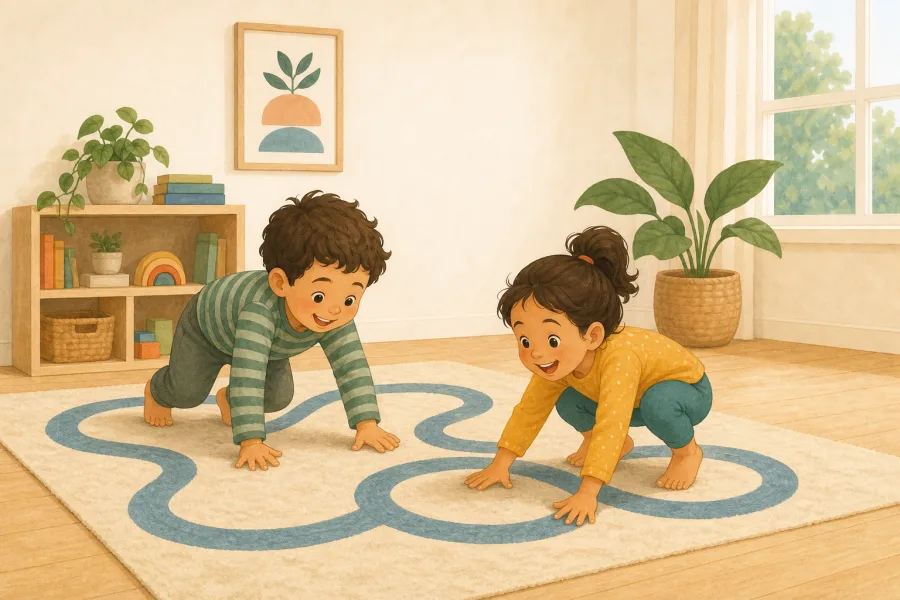
Crawl, hop, and stomp to the finish line like your favorite animals.
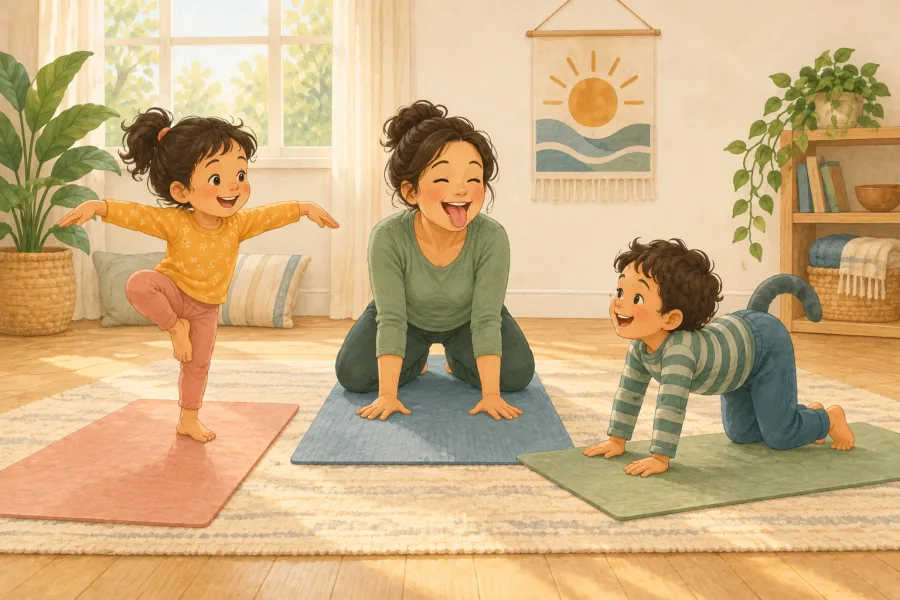
Stretch like a cat, balance like a flamingo, roar like a lion — yoga disguised as a trip to the zoo.
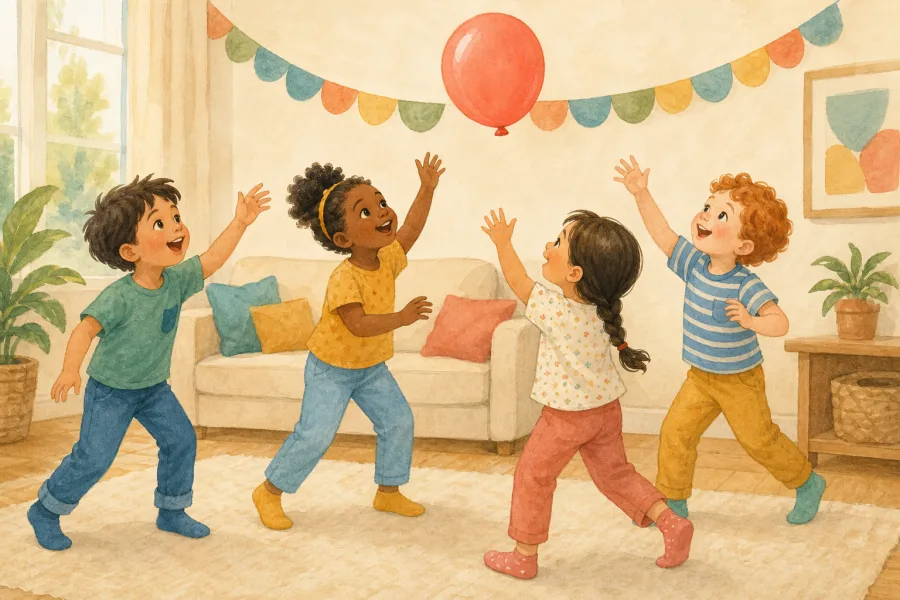
One balloon, one rule: don't let it touch the floor. Instant cooperative chaos.
Build a cozy den from blankets, then hide inside with books and a flashlight.
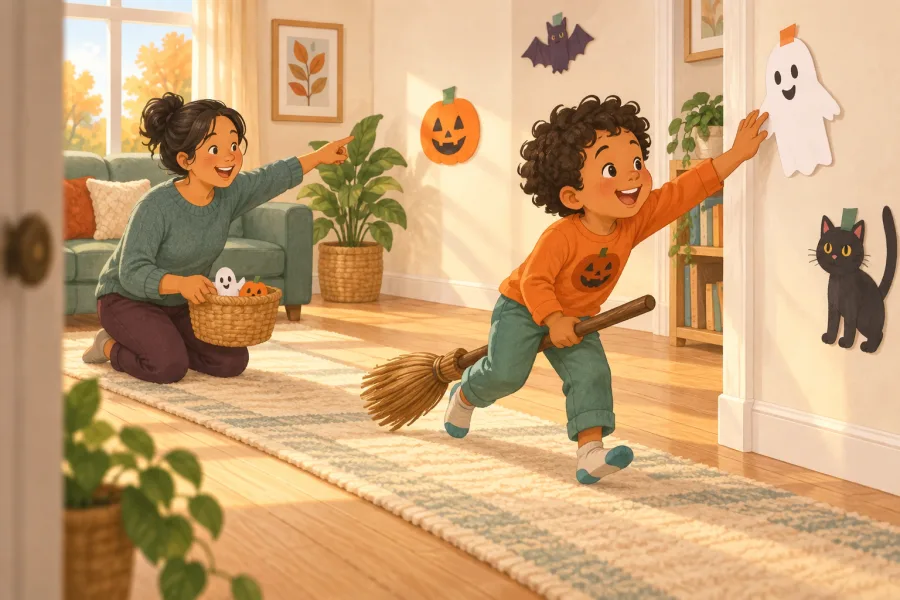
Climb onto a broom and collect the friendly Halloween characters hidden around the room.
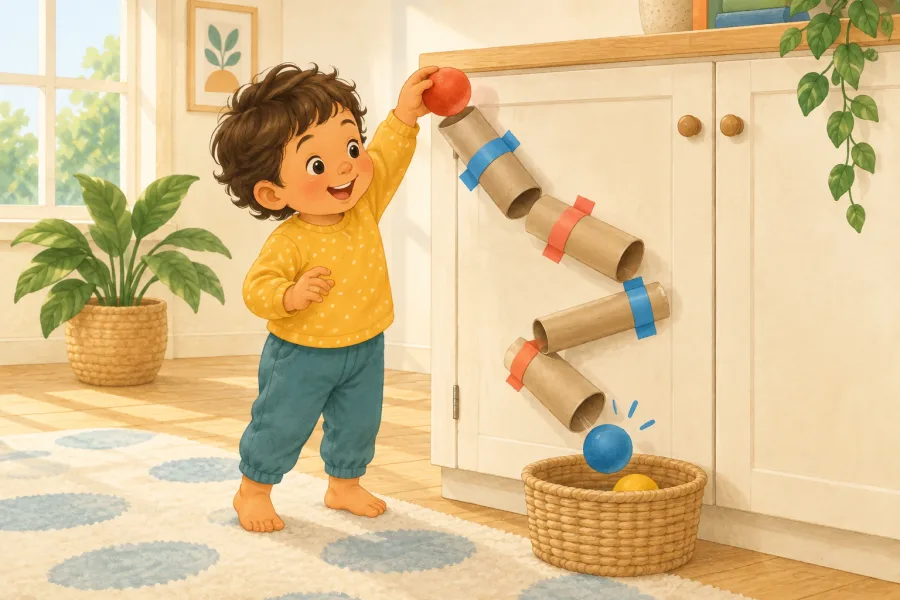
Tape paper towel tubes to the wall, hand over a cup of pom-poms, and watch gravity do the entertaining.
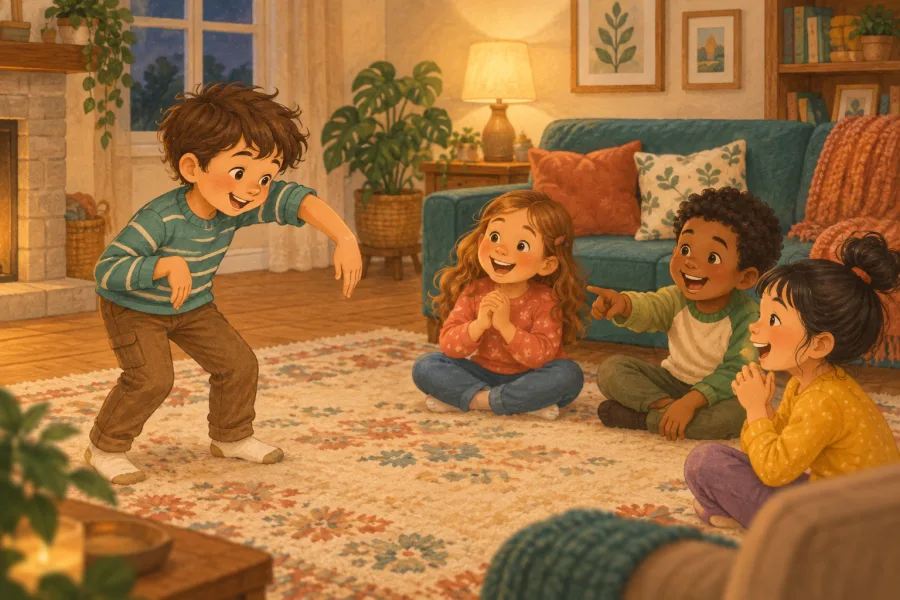
Act it out, no words allowed — the classic guessing game sized down for kid-sized actors.
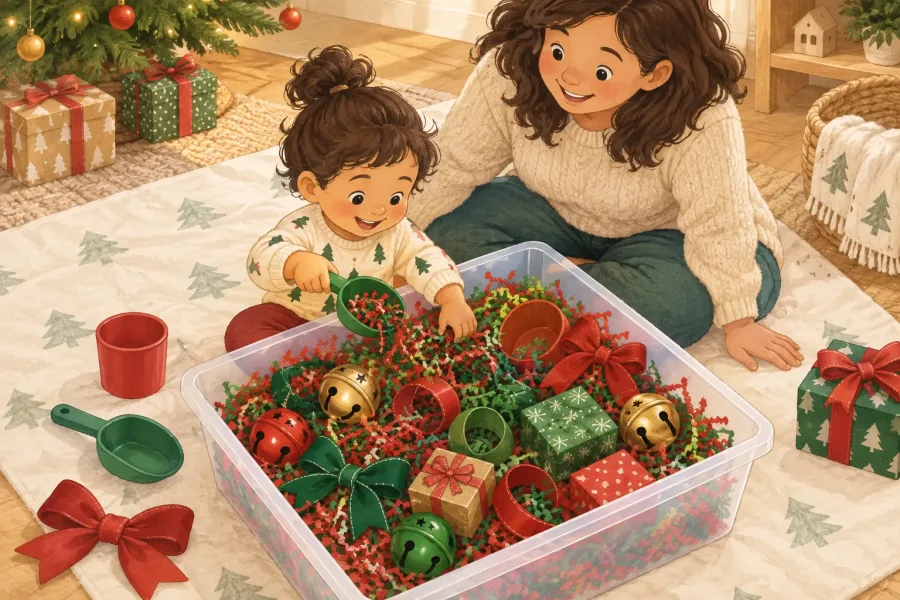
Bells, bows, ribbon and scoops in one tub: December in a box, hands-first.
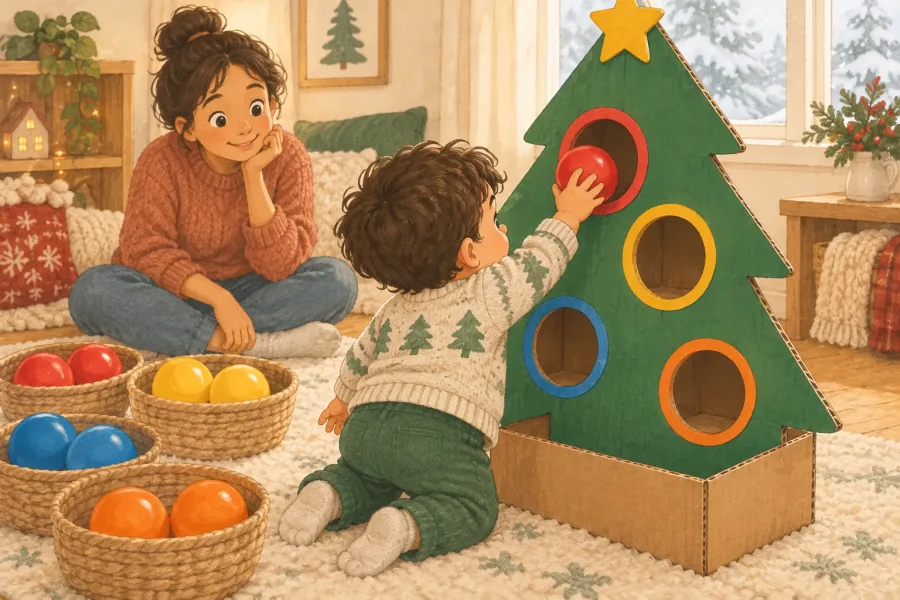
Post large colored balls through matching holes in a sturdy cardboard Christmas tree.
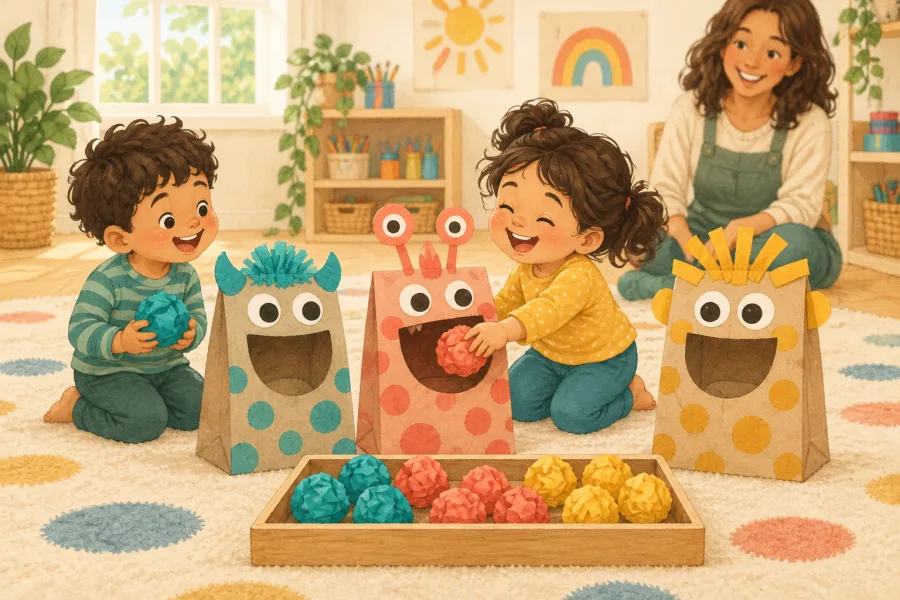
Make friendly paper-bag monsters, then feed each one a large paper ball in its matching color.
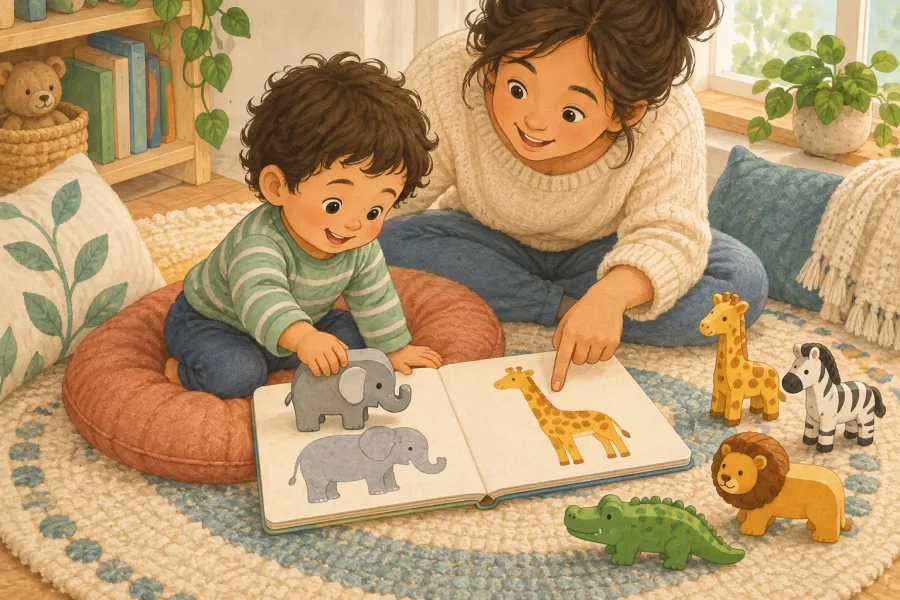
Toy animals meet their portraits: match the plastic elephant to the elephant on the page.
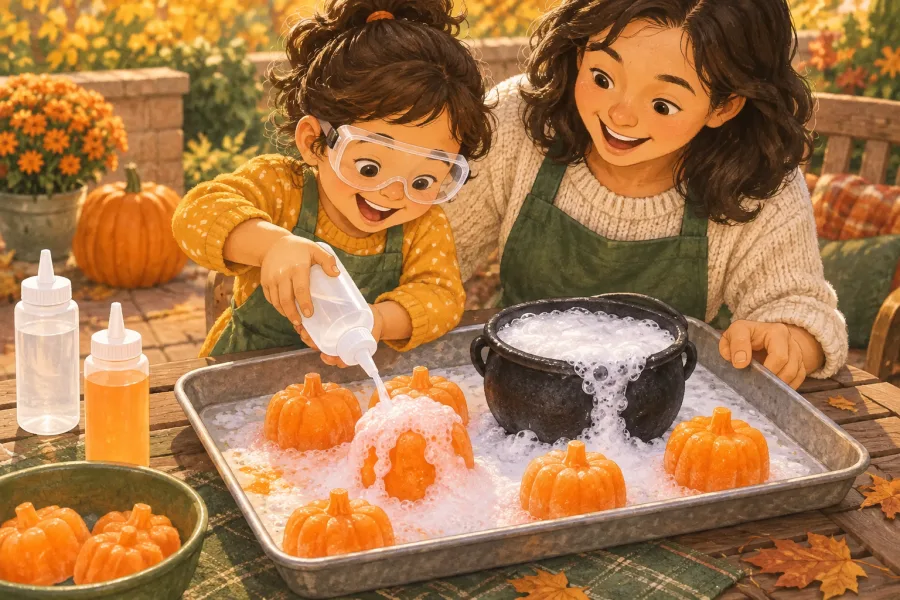
Drip vinegar onto frozen baking-soda pumpkins and watch the foamy reaction unfold.
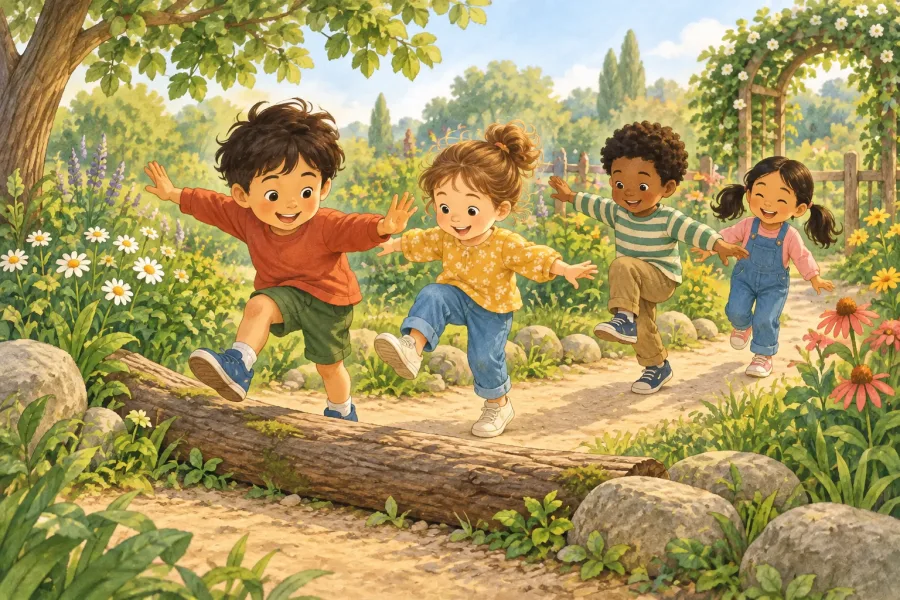
March, hop, wiggle — one child chooses the movement and everyone else tries to keep up.
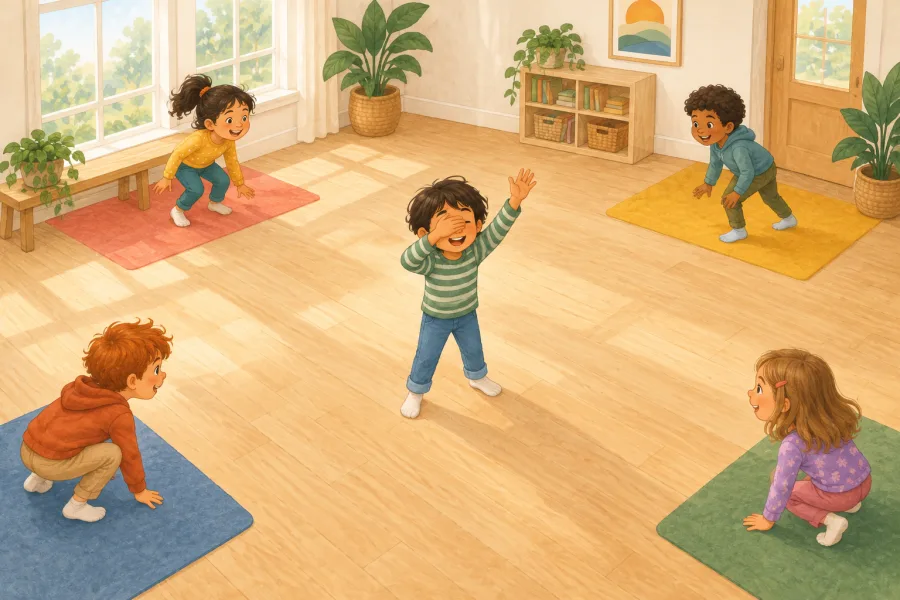
Four corners, one caller, quick feet: the classroom classic that turns any room into a game board.
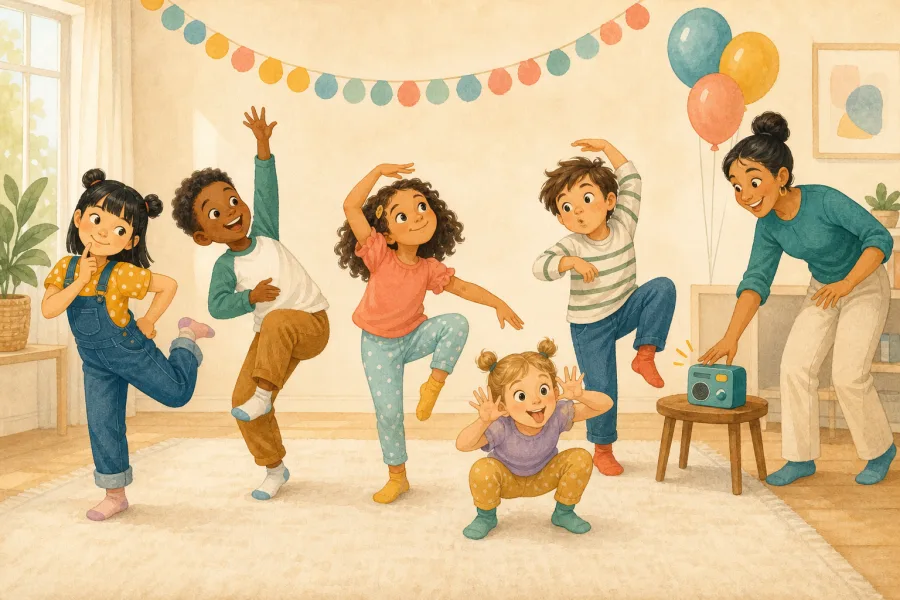
Dance like crazy, freeze like a statue — the classic party game that needs only a pause button.
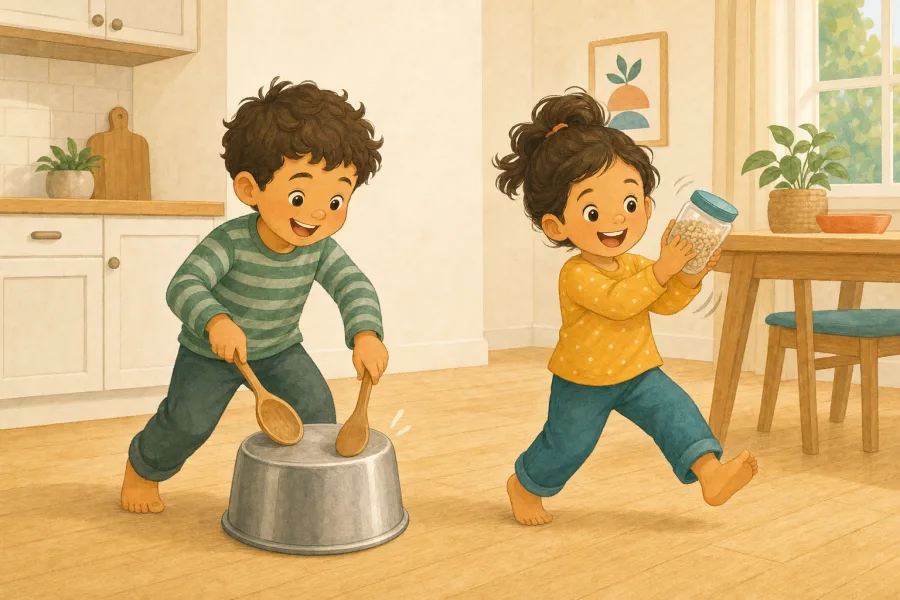
Pots become drums, spoons become drumsticks — march and make some noise.
Tape big shapes on the floor and jump between them on command.
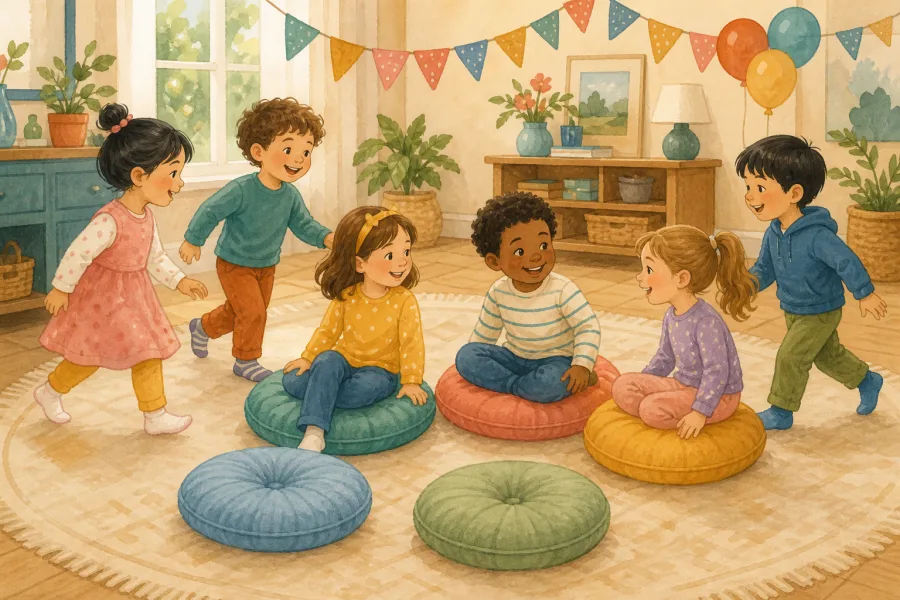
Musical chairs, rebuilt so nobody sits out crying: lose a cushion, share a cushion.
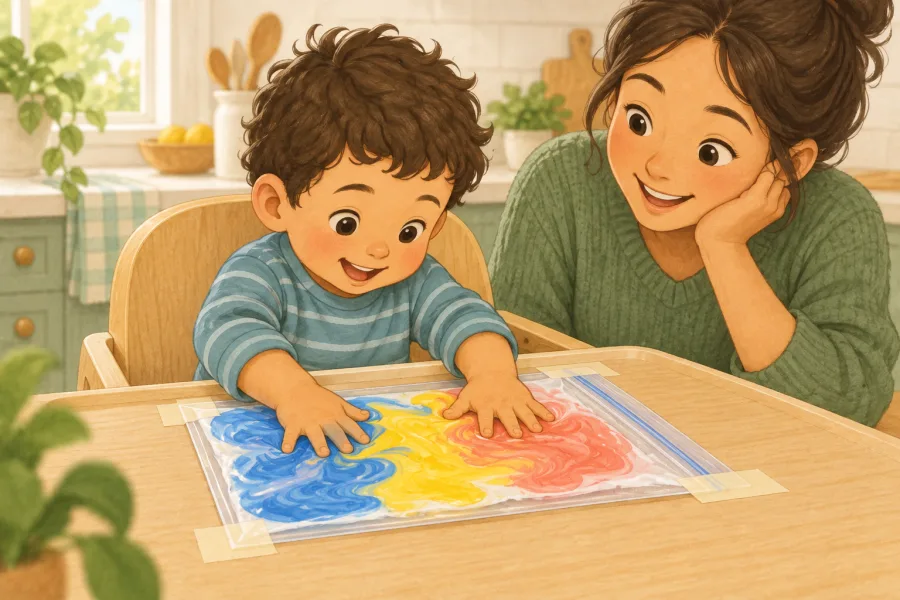
A sealed paint bag gives little hands color to press and mix, with the mess kept inside.
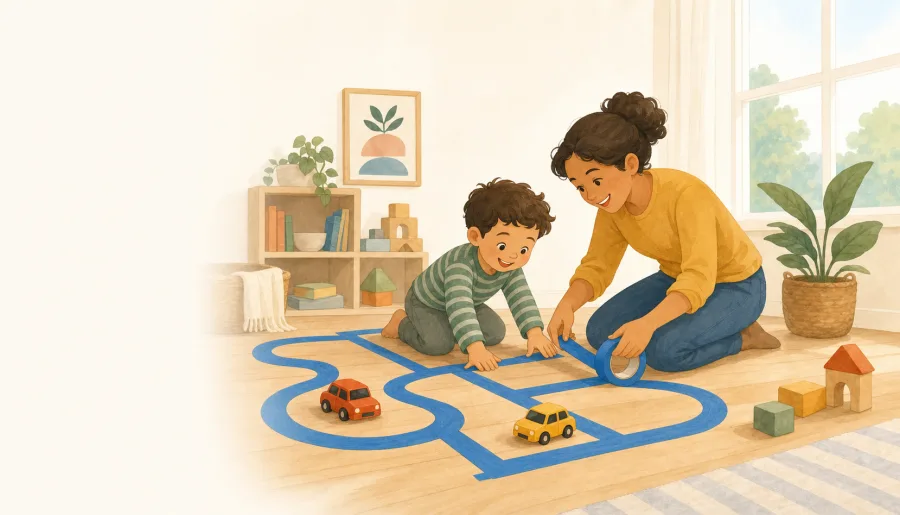
Build a winding road across the floor and go on a pretend adventure.
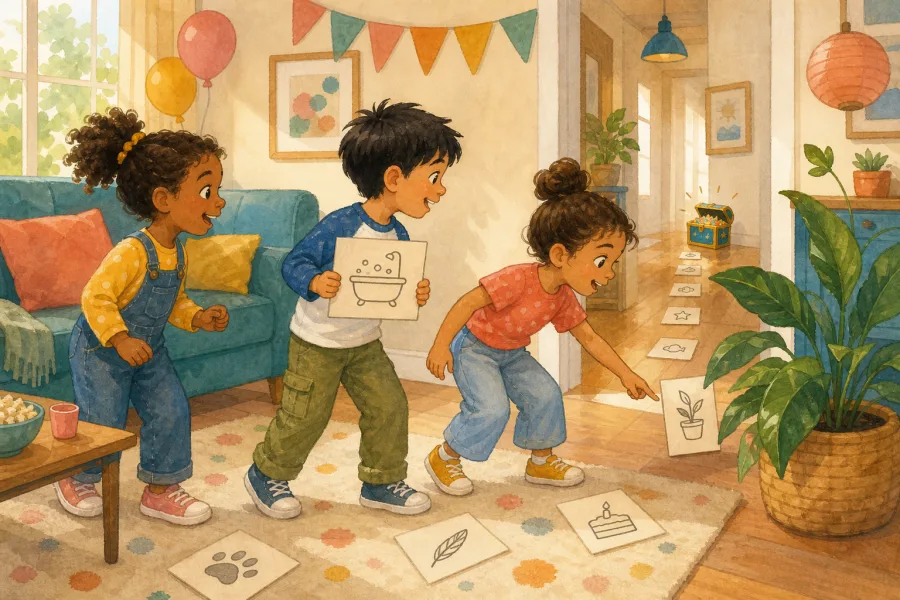
A trail of simple drawn clues leads from spot to spot — with real treasure at the end.
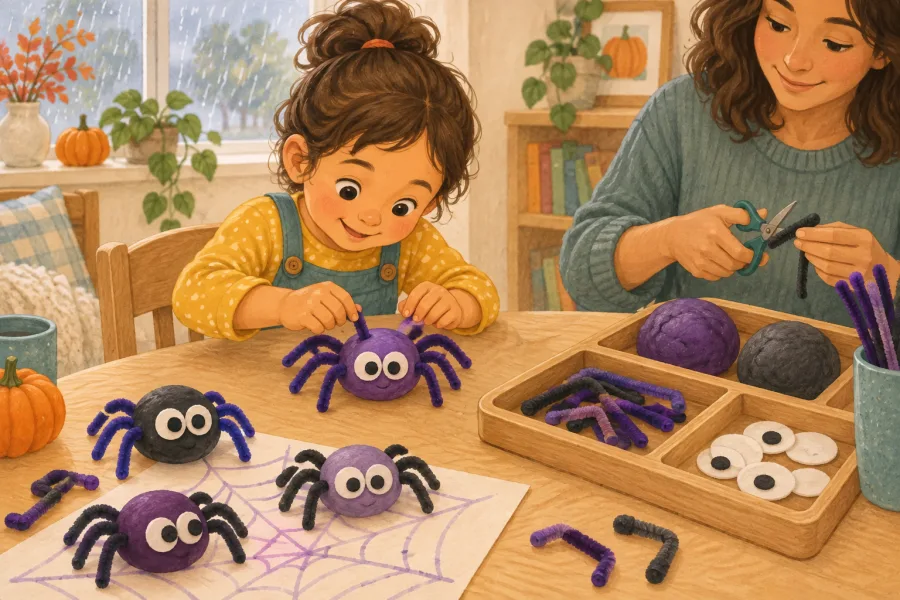
Roll a play-dough body, count eight soft legs, and build a spider ready for pretend play.
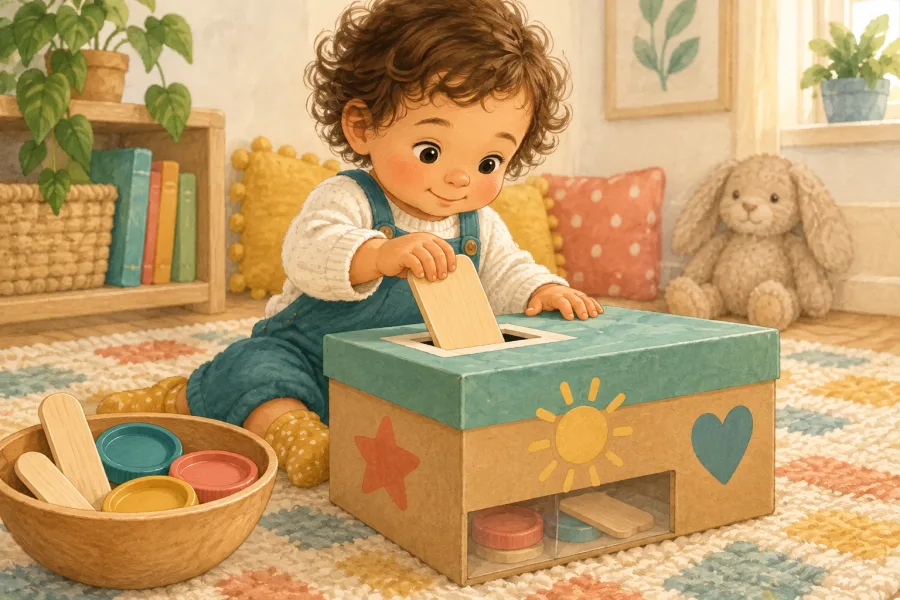
Cut a slot in a box and toddlers can post, listen for the drop, empty it, and begin again.
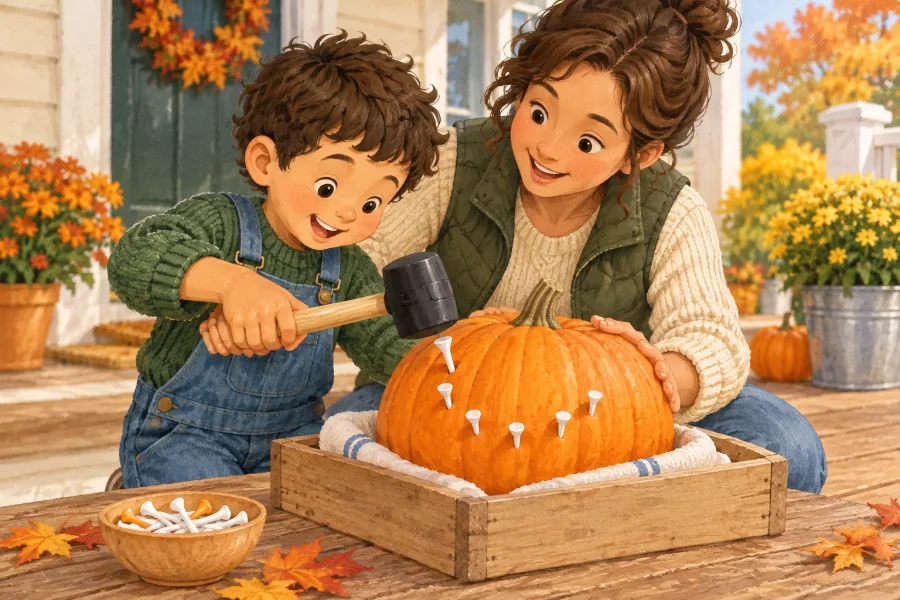
A real pumpkin, a kid-sized hammer, and golf tees: carving skills without the knife.
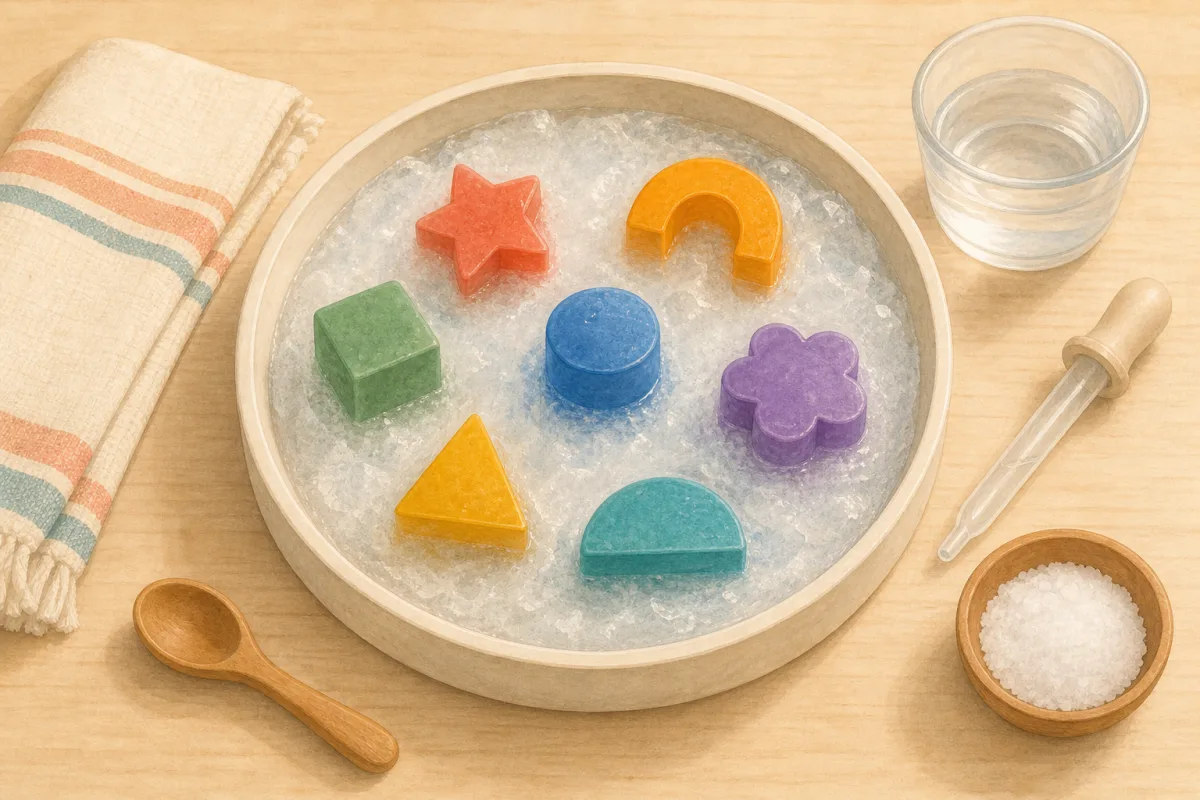
Free colorful toys from ice with warm water, salt, and tiny tools.
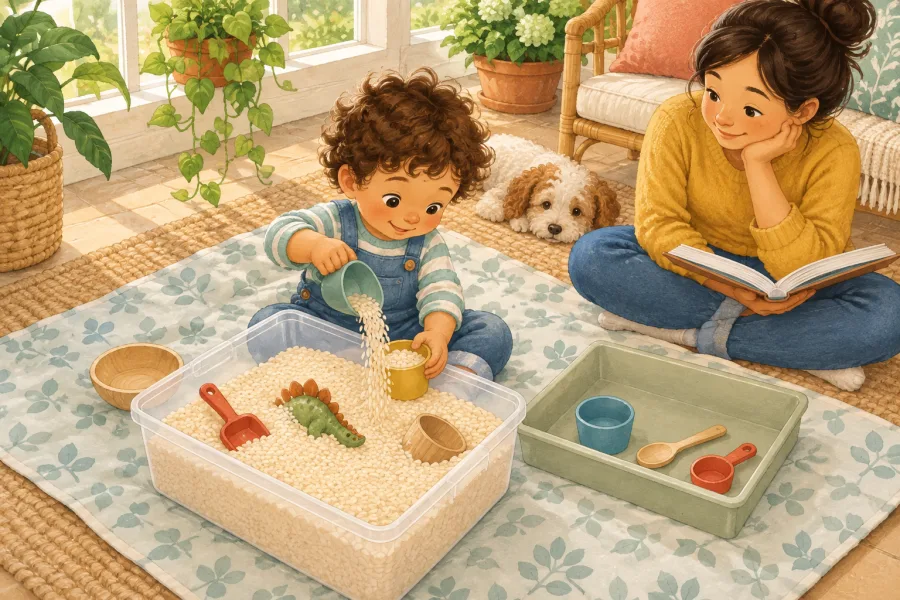
A tray of dry rice, a few scoops and hidden toys — the sandbox that lives in your kitchen.
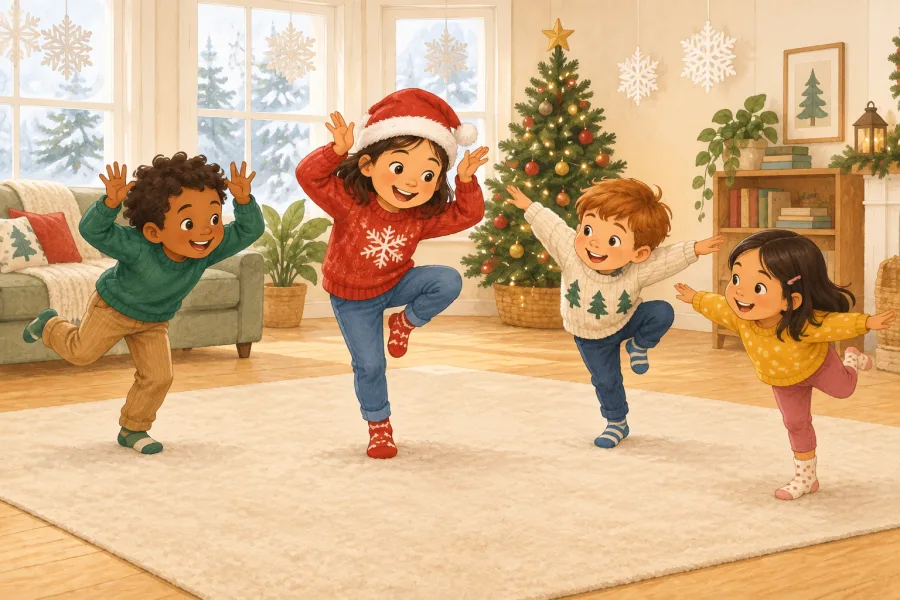
Give Simon Says a Christmas twist with reindeer hops, elf steps, and plenty of listening.
Turn a flashlight and a wall into a stage for barking dogs and flying birds.
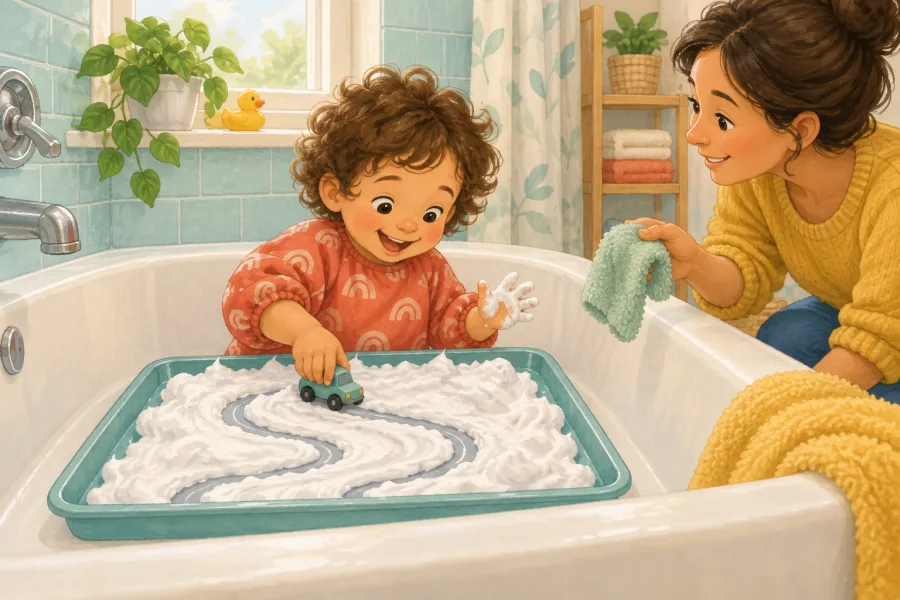
A mountain of foam on the high chair tray: the messiest-looking activity with the easiest cleanup.
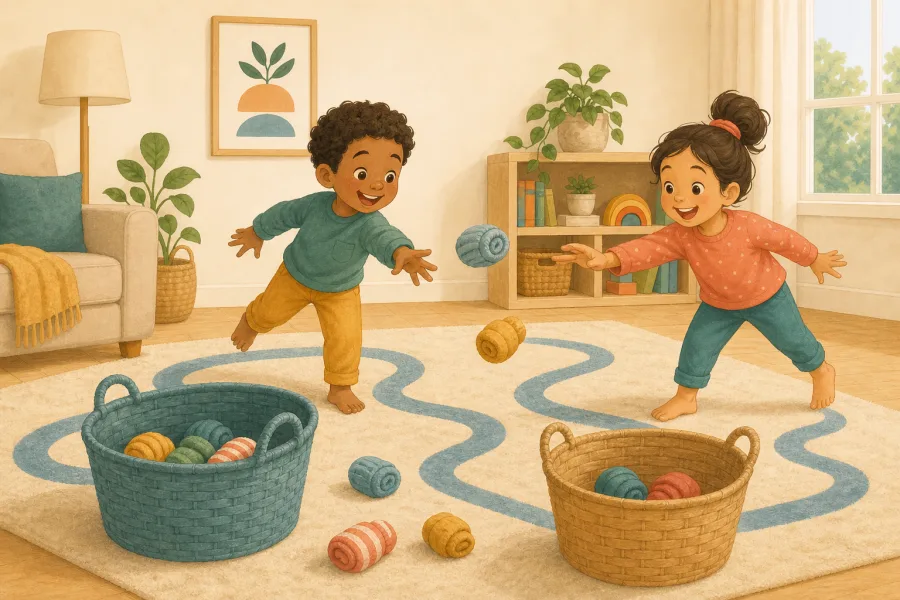
An indoor snowball fight with zero snow and zero mess — just rolled-up socks.
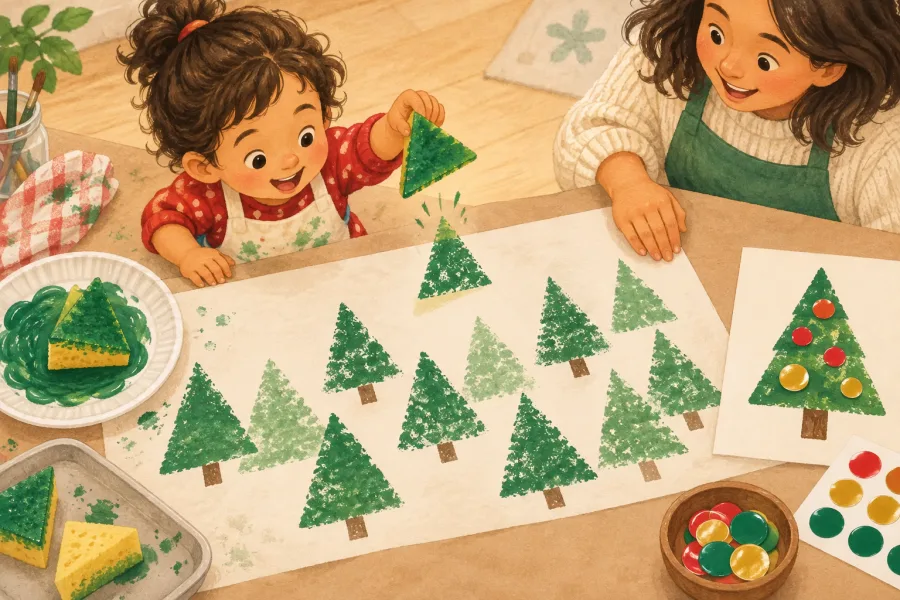
Stamp a forest of green sponge trees, let the paint dry, then add large sticker ornaments.
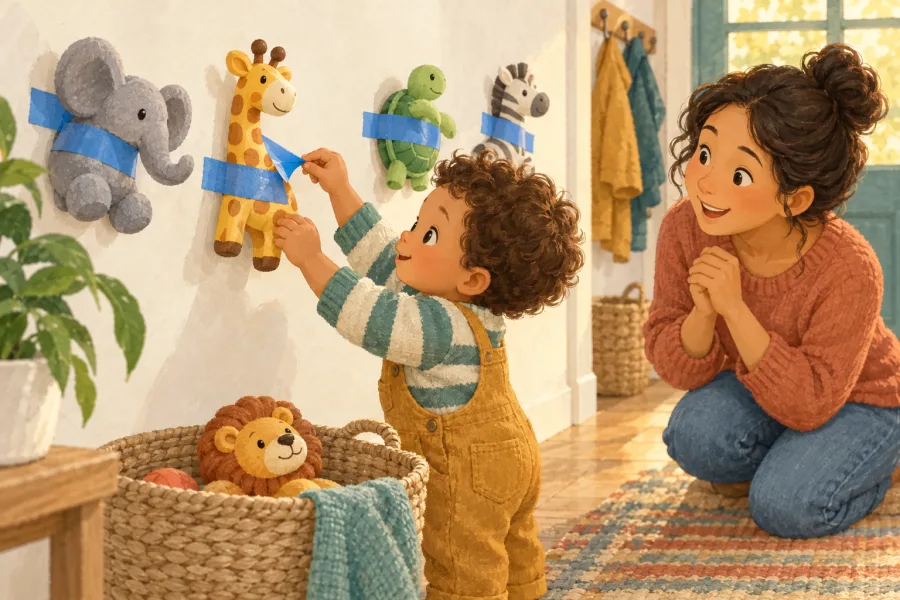
Tape their favorite toys to the wall and watch a tiny rescue mission unfold.
A calmer game plan
You do not need to fill every minute. One active game, one slower invitation, and some unstructured play is a realistic rhythm for a long day inside.
If your child is bouncing off the furniture, begin with movement. Save the fort, story, or sensory activity for the natural slowdown afterward.
A ten-minute game that starts now is usually more useful than an elaborate activity that needs an hour of preparation.
Use a timer, a final round, or one last rescue. Children handle transitions better when they know what “finished” will look like.
Young children often want the same jump, song, or rescue again. Repeating it is how they practise control, language, and prediction.
Helpful answers
Clear one small area, move sharp-edged furniture, and choose controlled movements such as animal walks, taped floor shapes, or sock tossing. Avoid running games on slippery floors.
Try I Spy, a story chain, an animal walk race, or shadow puppets. Each can begin with objects and spaces already around you.
Follow the child rather than the clock. Ten focused minutes can be a complete activity for a toddler; preschoolers may return to a favorite setup several times.
Pair one movement activity with one calmer choice. For example, follow Shape Jump with a blanket-fort story or Rainbow Ice Rescue at the table.