
An activity you can start today
Rhyme Match Basket
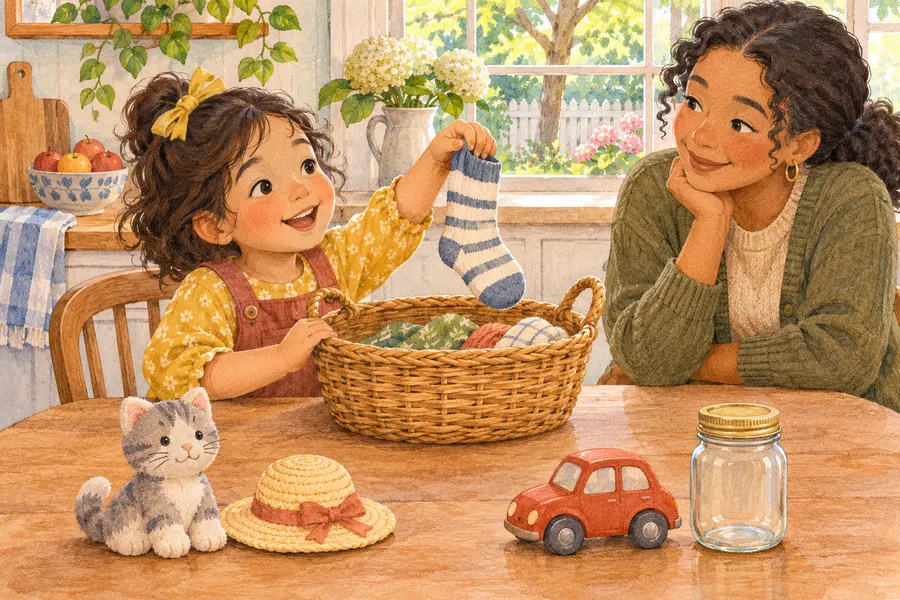
Pull a sock from the basket, say its name, then hunt for the rock that rhymes with it. Pairs line up on the table.
Know before you start
At a glance
- Setup
- 5 min
- Cleanup
- 2 min
- Mess
- low
- Energy
- calm
- Adult help
- hands-on
Before you start
- Collect 10 to 12 objects that form rhyming pairs, like sock and rock, spoon and a moon picture, car and jar, bear and chair.
- Keep the pairs simple and obvious for a first round, then add one or two harder ones.
- Clear a table space wide enough to lay the pairs side by side.
Step by step
Let’s play
- Fill the basket. Gather 10 to 12 small objects that make rhyming pairs and drop them in a basket.
- Pull one out. Your child picks an object, says its name out loud, and you repeat it together.
- Hunt for the match. They search the basket for the object that rhymes, like finding the rock to go with the sock.
- Line up the pairs. Set each matched pair side by side on the table so your child can see the growing row.
- Flip the game. Call out a word and let your child find an object that rhymes with it.
- Get silly. Take turns inventing nonsense rhymes: sock, lock, mock, zock.
The child’s-eye view
Why kids love it
It feels like a treasure hunt with a secret rule. Pulling real objects out of a basket is far more fun than a worksheet, and the moment a child hears two words click together, you can see it on their face.
Built into the fun
What they’re learning
Saying sock and rock out loud lets your child notice that the ends of words can match, which is the first step toward reading and spelling patterns.
Laying matching objects next to each other practices grouping by a shared feature, a thinking skill that shows up in math and science too.
Inventing silly rhymes like zock or bock stretches vocabulary and shows your child that language is something to bend and enjoy.
Make it fit your child
Ways to change the game
Adult says the word
Name a word and let your child dig through the basket for an object that rhymes with it. This flips the game and asks them to recall the sound.
Nonsense rhyme round
When the real pairs are done, take turns making up silly rhymes: sock, lock, mock, zock. Laughing at made-up words keeps the game light.
Picture pairs
No good objects at home? Draw rhyming pairs on cards (cat and hat, star and car, bee and tree) and match those instead.
Real-life fixes
If it’s not going to plan
Your child can't find the rhyme
Say both words slowly and stretch the ending: 'so-ck, ro-ck.' If they still miss it, give a hint like 'it's something hard you find outside.'
The game ends too fast
Keep a second basket of pairs ready, or move to the nonsense round. You can also ask your child to hide the objects for you to find.
Good to know
Frequently asked questions
What objects make good rhyming pairs?
Try sock and rock, spoon and a moon picture, car and jar, bear and chair from a dollhouse, can and pan, or hat and a toy cat. Keep them small enough to fit in a basket.
What age can kids start rhyming games?
Most children begin to hear simple rhymes around age 4 and get steadier at it by 5 or 6. Start with very obvious pairs and let your child lead the pace.
Kidtivity Lab activity guide · Last updated
Try next
I Spy: Colors Edition
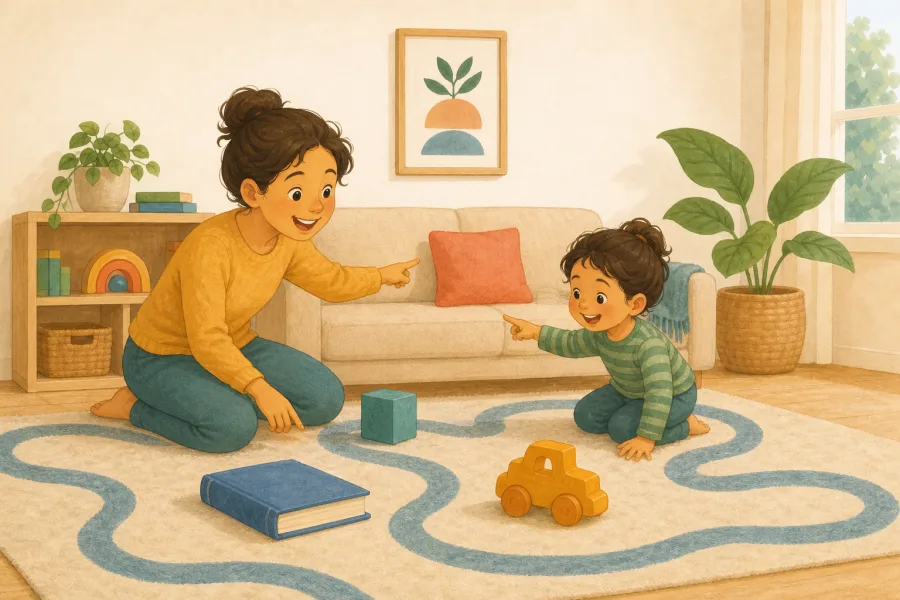
The classic guessing game tuned for little kids — spot things by color.

Mystery Stocking
Reach into the stocking without peeking and describe what you feel before making a guess.
Picture Clue Treasure Hunt
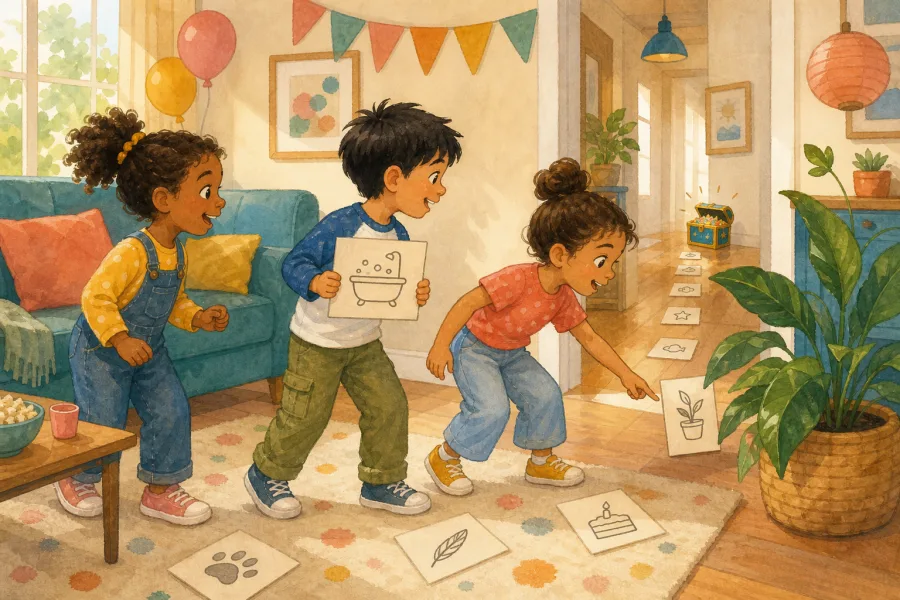
A trail of simple drawn clues leads from spot to spot — with real treasure at the end.