
An activity you can start today
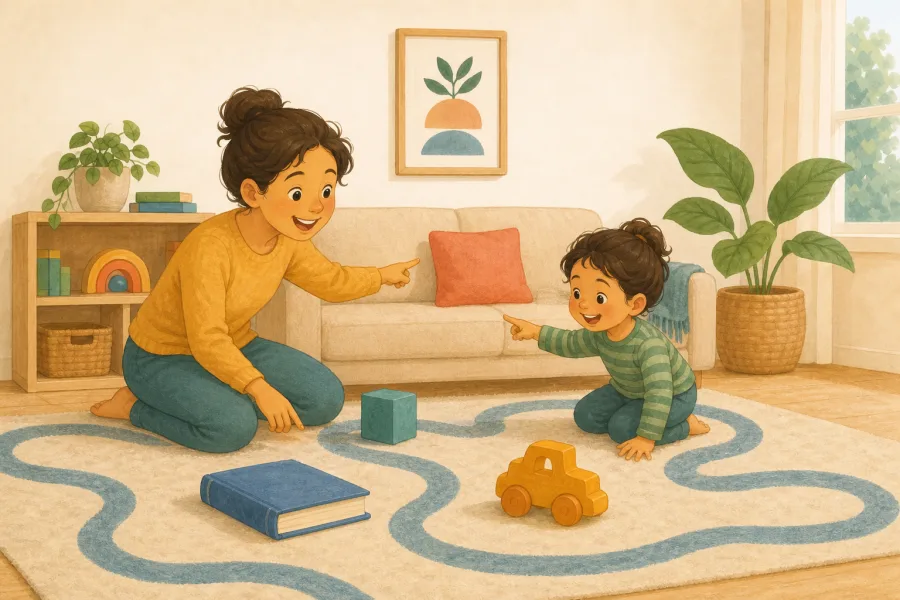
I Spy: Colors Edition
The classic guessing game tuned for little kids — spot things by color.
Know before you start
At a glance
- Setup
- 0 min
- Cleanup
- 0 min
- Mess
- low
- Energy
- calm
- Adult help
- nearby
Before you start
- Begin with objects that will remain visible long enough for several guesses.
- Use colors your child already recognizes before introducing a new shade.
Step by step
Let’s play
- Pick something you can both see. “I spy something… red.”
- Let them guess. Wrong guesses get a warm “nope, keep looking!”
- Swap roles. Their turn to spy is where the language practice really happens.
- In the car: stick to colors of cars, signs, and trucks — things that stay visible for a while.
The child’s-eye view
Why kids love it
The answer is hiding in plain sight, and the child controls the mystery as soon as roles swap. Each successful guess feels quick and achievable, which makes repetition easy.
Built into the fun
What they’re learning
Color clues give young children a manageable starting point for naming and comparing objects.
Scanning for one property helps children notice how nearby objects are alike and different.
Switching who gives the clue makes listening and speaking equally important.
Make it fit your child
Ways to change the game
For an early talker
Offer two visible choices and ask the child to point: “Is it the red cup or the blue book?”
Add a second clue
For older preschoolers combine color with texture, location, shape, or first sound.
Travel version
Choose larger targets such as trucks, signs, or buildings that stay in view safely.
Good to know
Frequently asked questions
What if my child guesses randomly?
Reduce the search area and point out two or three candidates. Model looking slowly instead of repeating that the guess is wrong.
Can I Spy help children learn new color words?
Yes. Use a familiar object as the reference—“turquoise like your cup”—and repeat the new word naturally across several rounds.
Kidtivity Lab activity guide · Last updated
Try next
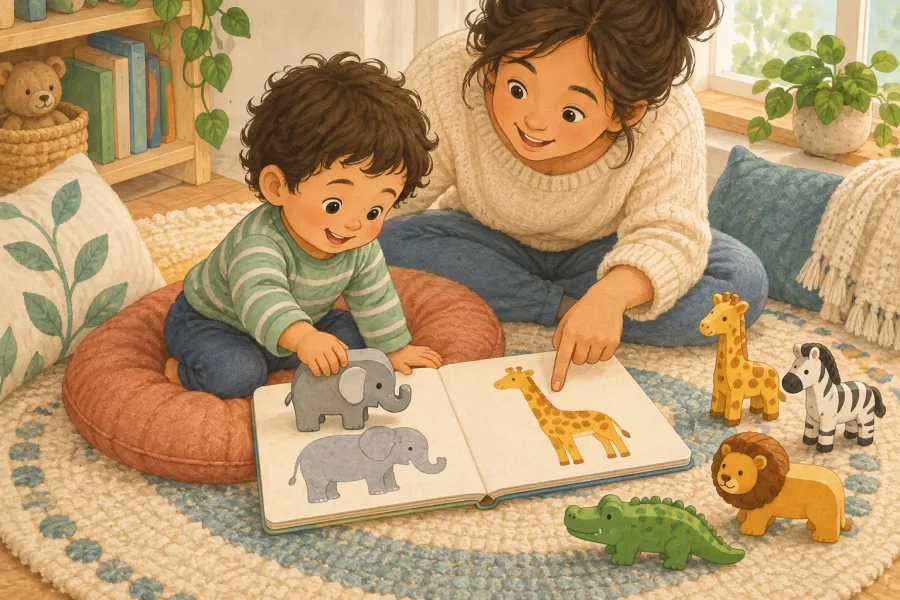
Figurine Book Match
Toy animals meet their portraits: match the plastic elephant to the elephant on the page.
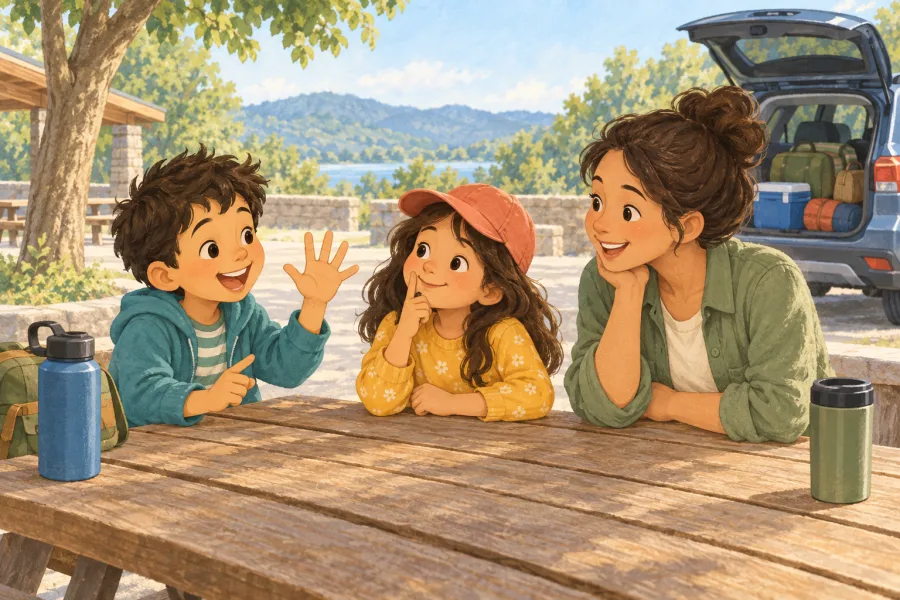
Five Things
Name five animals, five red things, five things with wheels — the fastest game that fits any back seat.
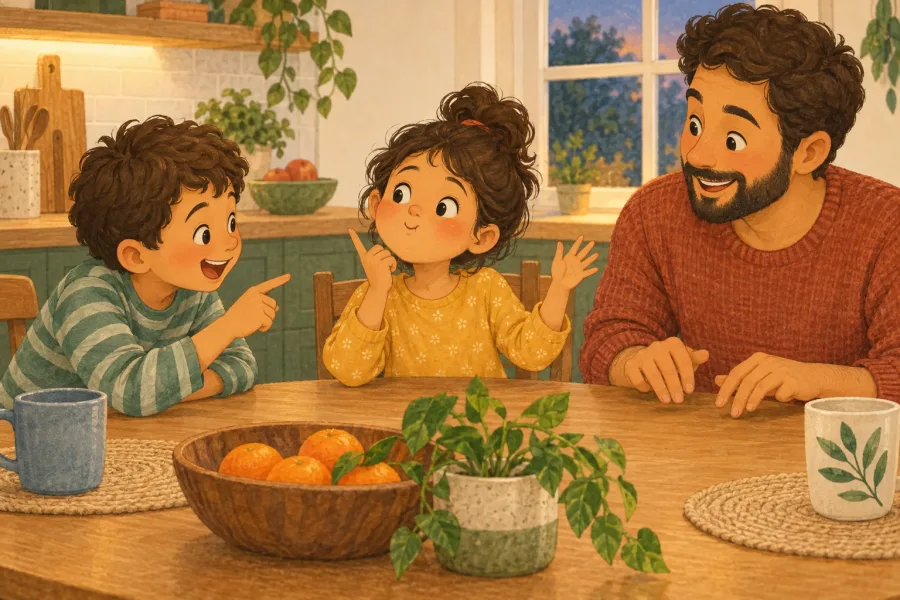
Hum That Tune
Hum a song, no words allowed — first one to name it takes the next hum.