
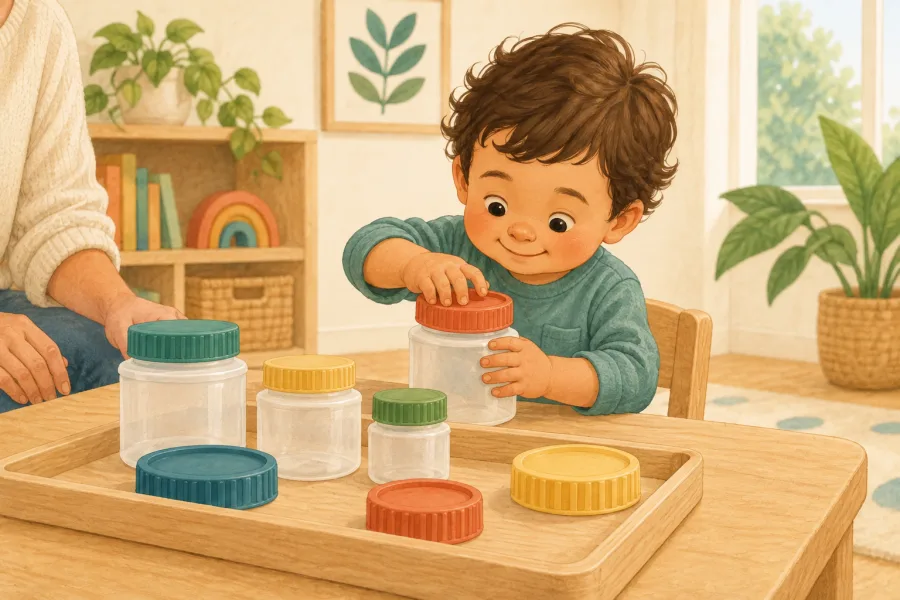
Bottle Cap Twist Station
A tray of jars and bottles with caps to twist off and on — real work for small serious hands.
Ages 1–3 ⏱ 10 min Household items
One-year-olds learn through repeating simple actions: drop, pull, carry, bang, fill, and empty. These activities keep the goal obvious and the adult close.
🎛 Fine-tune in the Activity FinderBrowse the collection
A tray of jars and bottles with caps to twist off and on — real work for small serious hands.
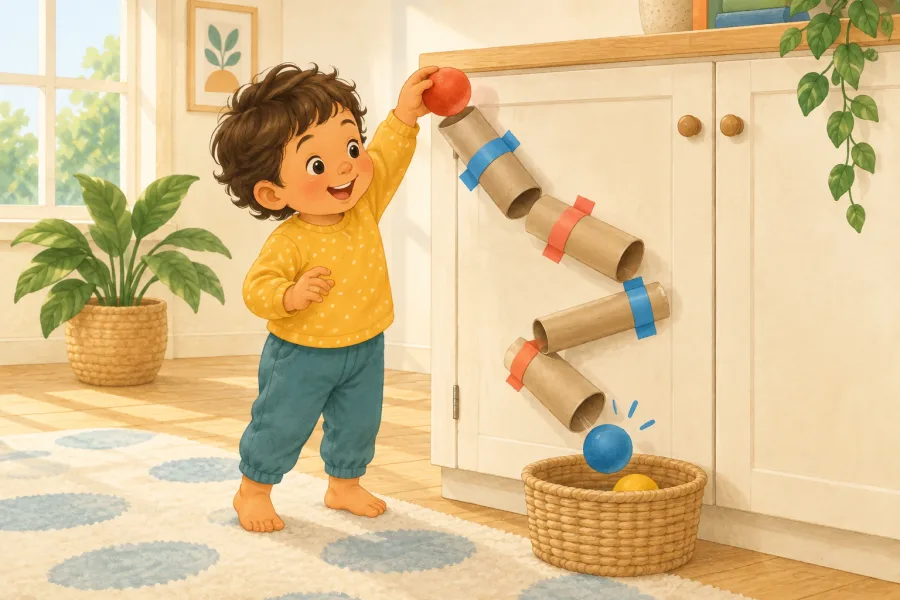
Tape paper towel tubes to the wall, hand over a cup of pom-poms, and watch gravity do the entertaining.
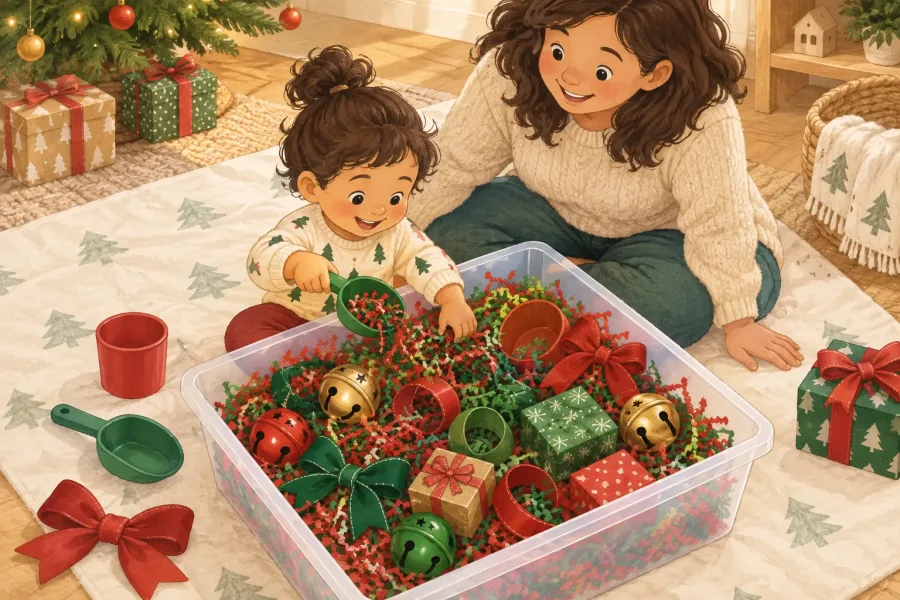
Bells, bows, ribbon and scoops in one tub: December in a box, hands-first.
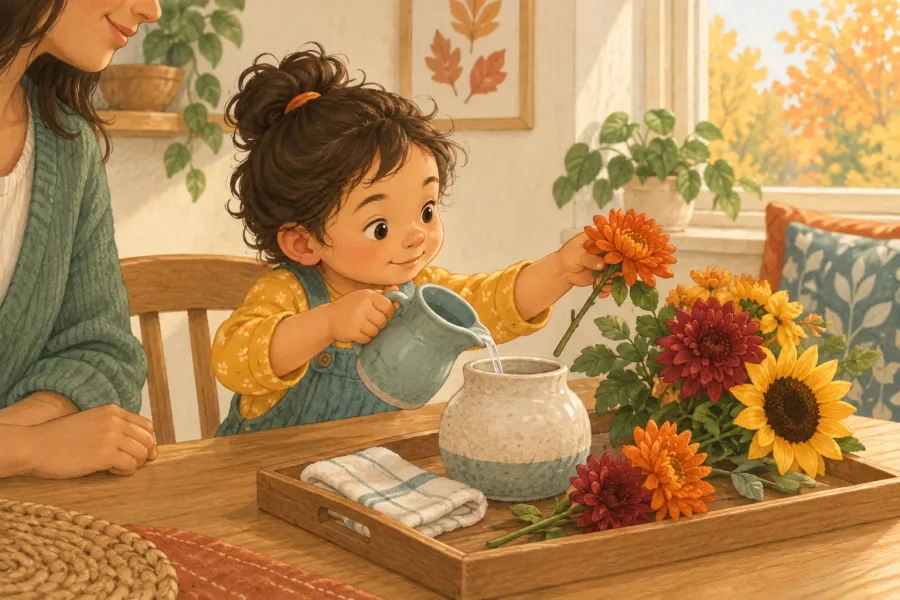
A small vase, a jug of water, and autumn flowers: real florist work for very small florists.
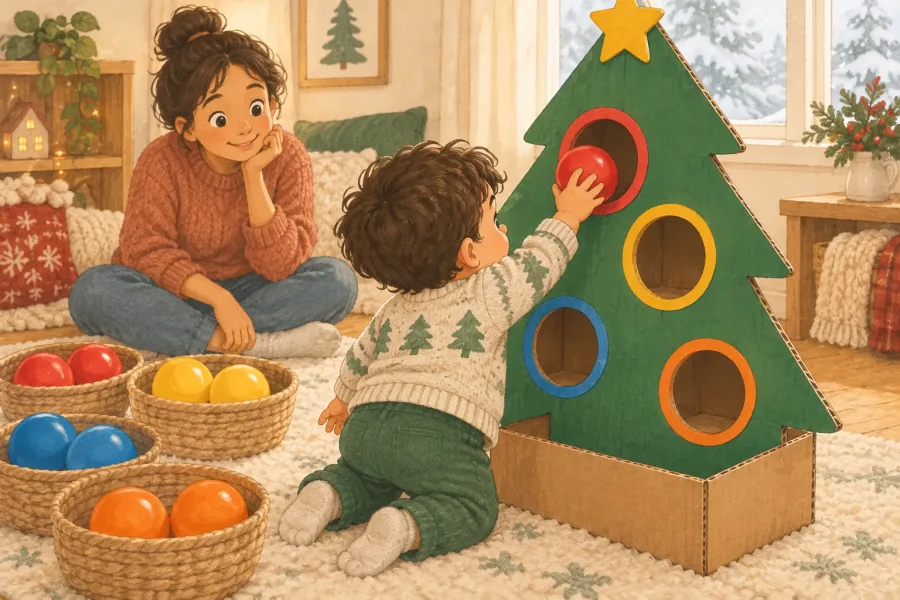
Post large colored balls through matching holes in a sturdy cardboard Christmas tree.

Hand over a whole ear of corn and let those little hands rip, peel and discover dinner.
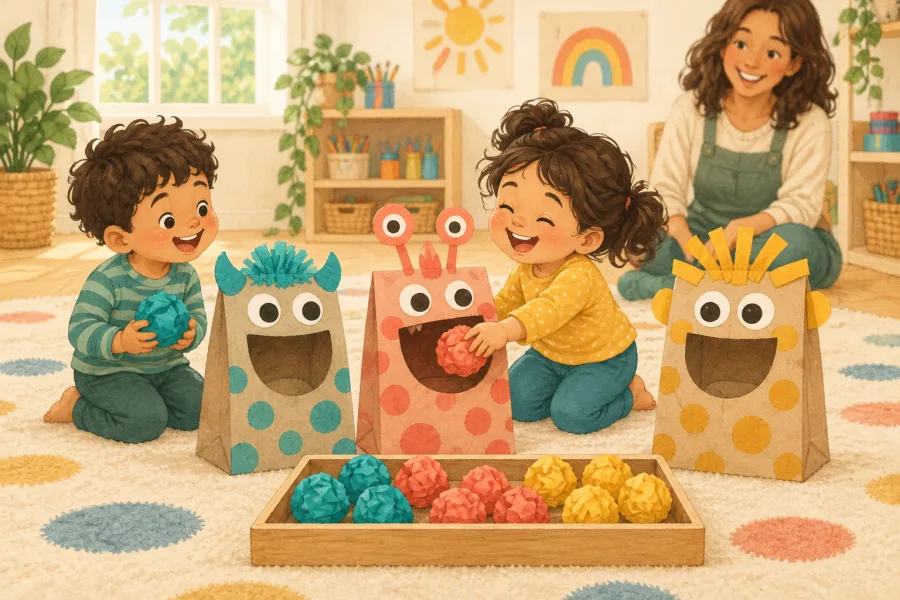
Make friendly paper-bag monsters, then feed each one a large paper ball in its matching color.
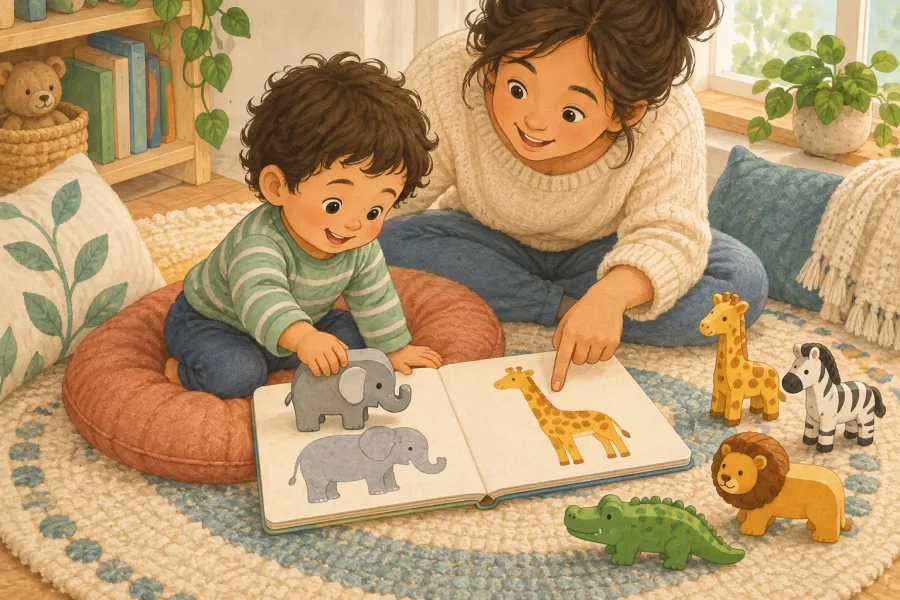
Toy animals meet their portraits: match the plastic elephant to the elephant on the page.
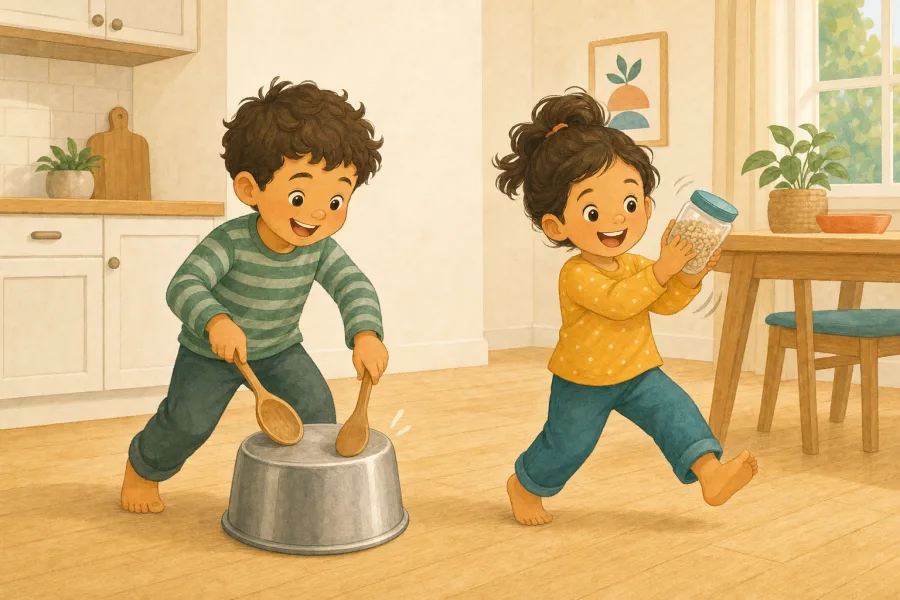
Pots become drums, spoons become drumsticks — march and make some noise.
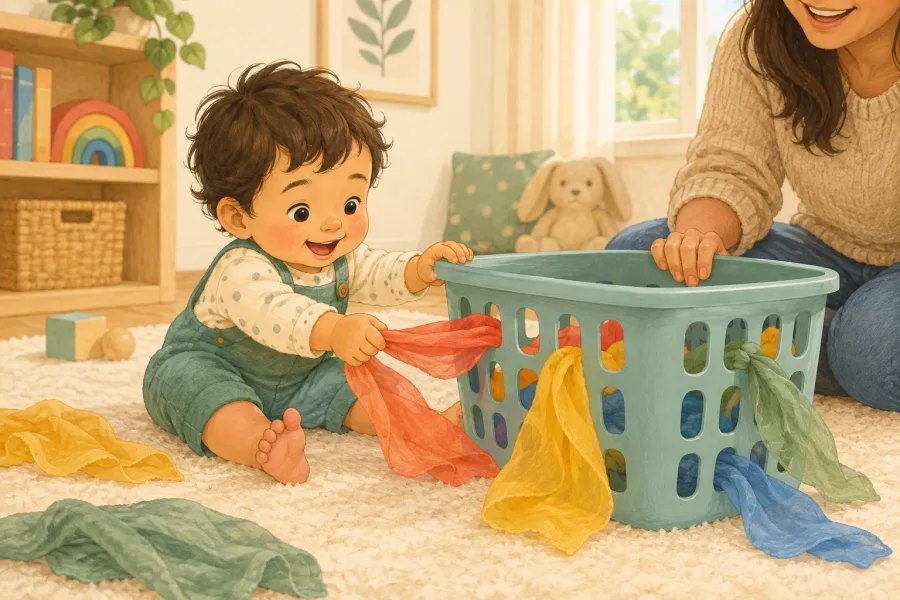
Thread short scarves through a laundry basket and give your baby a safe place to pull, tug, and try again.
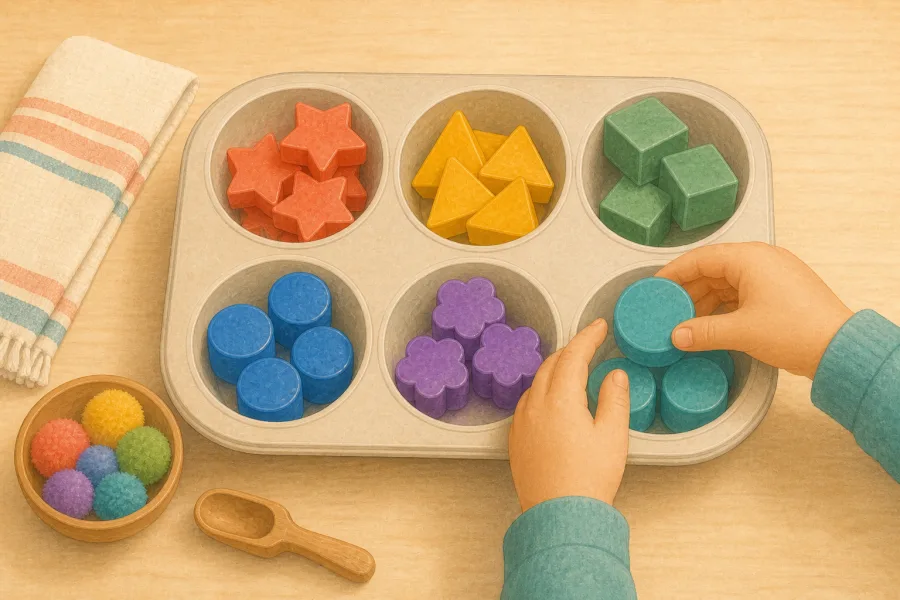
Sort blocks, pom-poms, or cereal into a muffin tin by color.
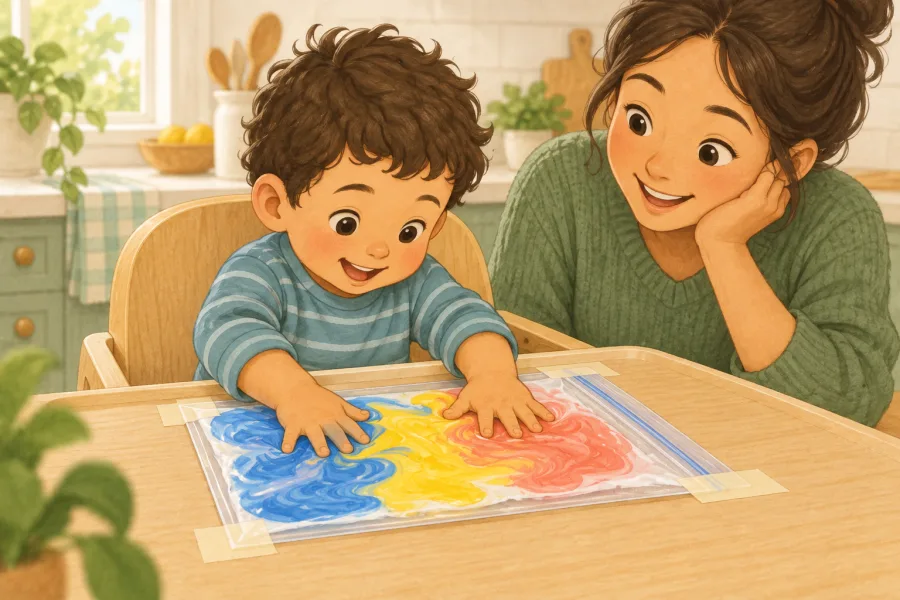
A sealed paint bag gives little hands color to press and mix, with the mess kept inside.

A homemade book of familiar faces hidden under sticky-note flaps — peekaboo meets first words.
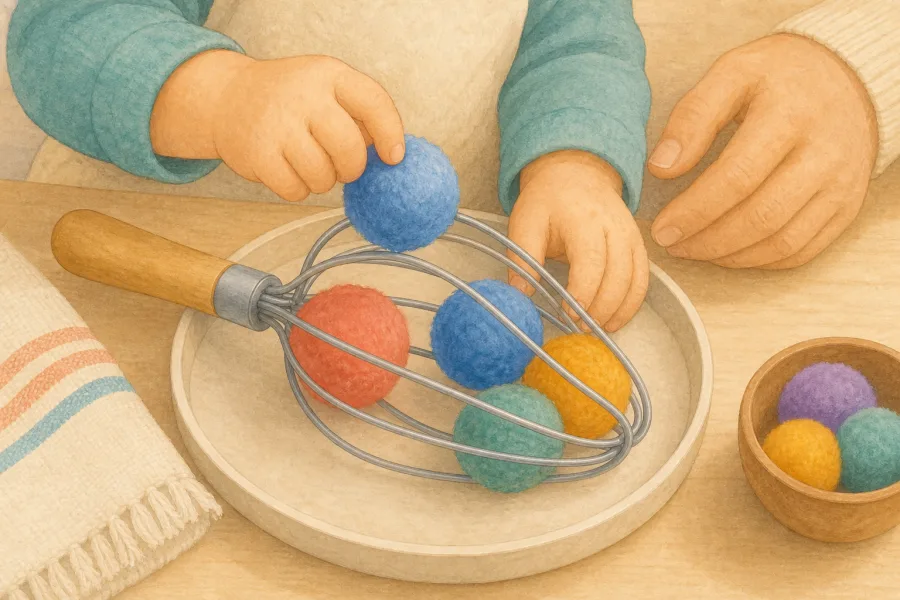
Stuff pom-poms into a whisk and let little fingers work them free.
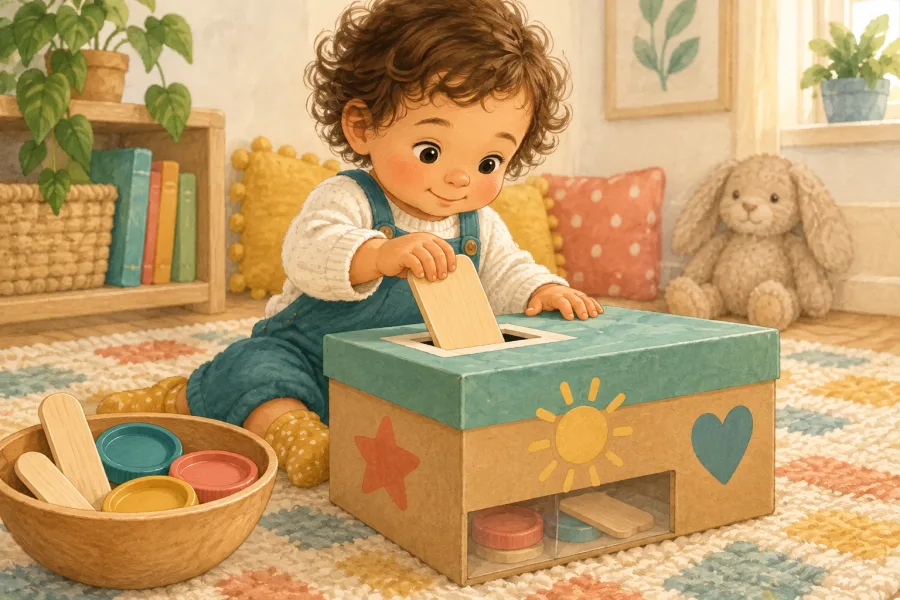
Cut a slot in a box and toddlers can post, listen for the drop, empty it, and begin again.
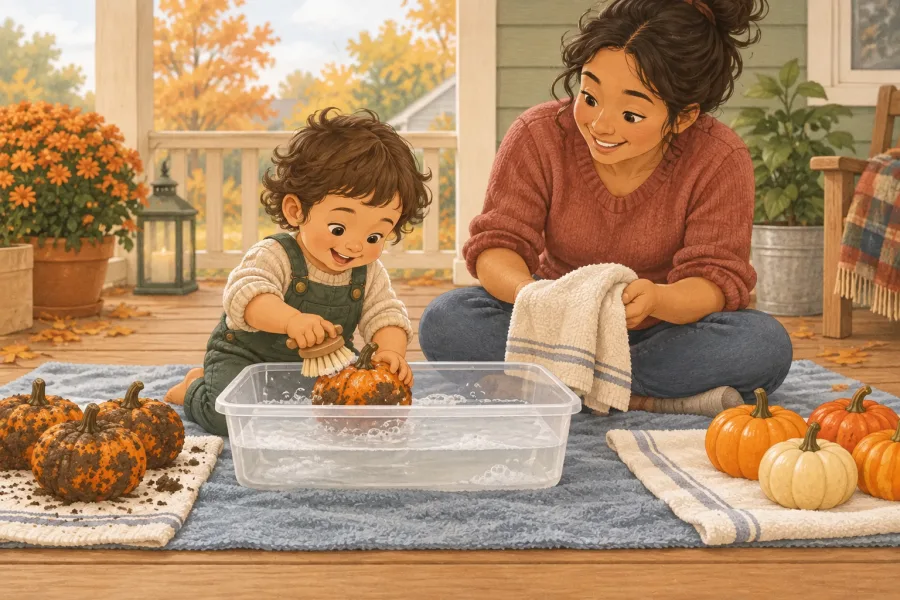
A tub of soapy water, a brush, and muddy pumpkins fresh from the patch: open for business.
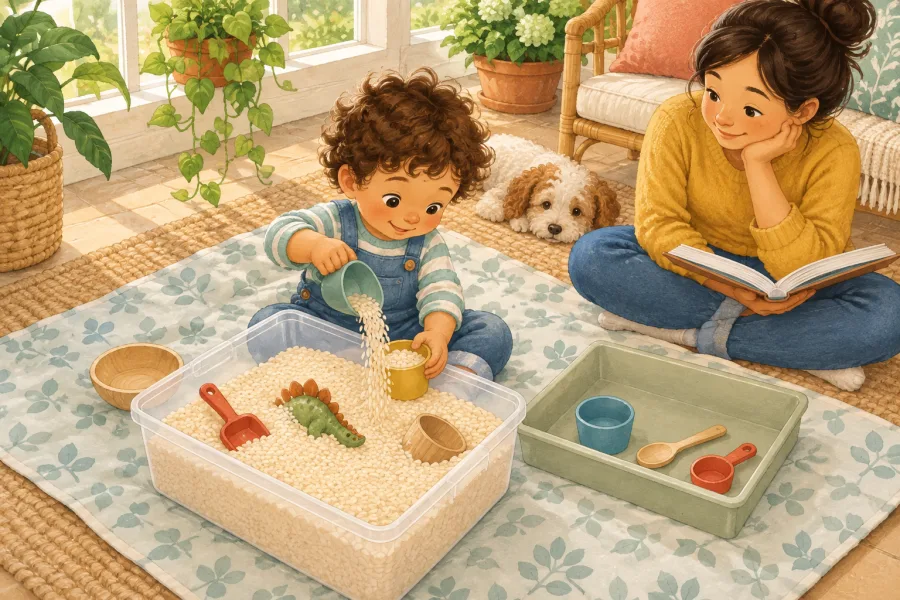
A tray of dry rice, a few scoops and hidden toys — the sandbox that lives in your kitchen.
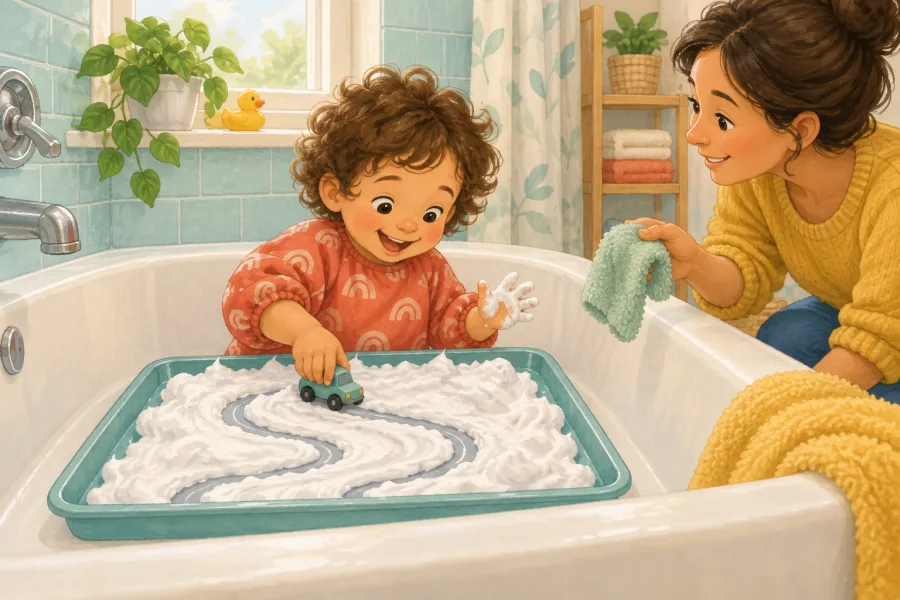
A mountain of foam on the high chair tray: the messiest-looking activity with the easiest cleanup.
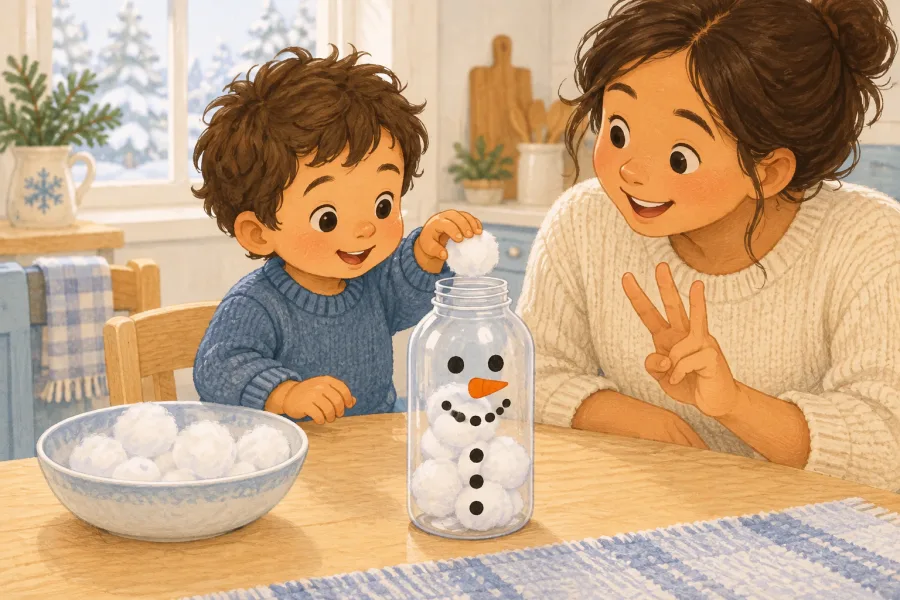
Draw a face on a bottle, hand over the cotton balls, and watch a snowman come to life one snowflake at a time.
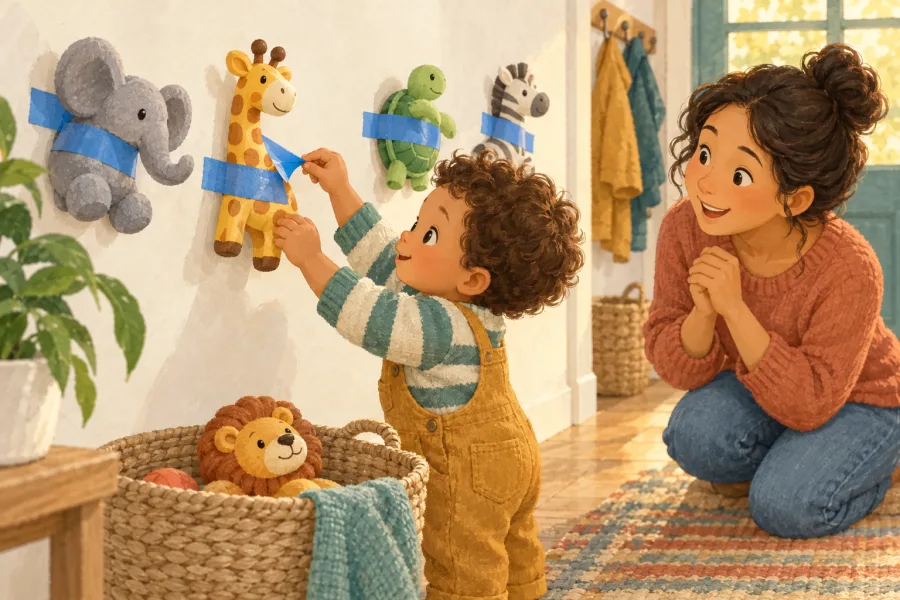
Tape their favorite toys to the wall and watch a tiny rescue mission unfold.
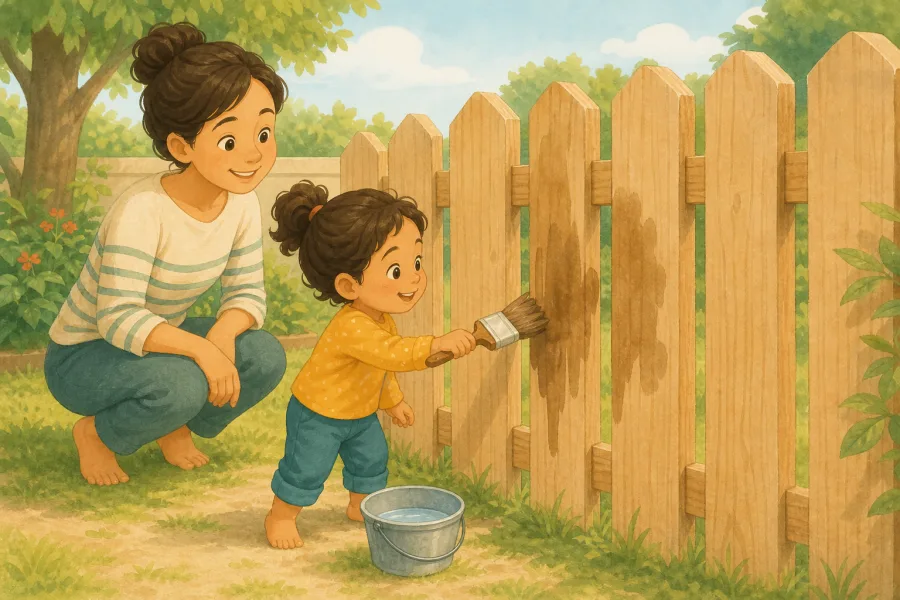
"Paint" the fence, the steps, and the sidewalk with plain water and a big brush.
At this stage
Assume materials may be mouthed. Use large pieces, shallow water, stable containers, and hands-on supervision.
Two interested minutes followed by a return later can be more realistic than one long session.
Emptying and refilling the same container is meaningful practice, not a failure to progress.
Helpful answers
Usually close, active supervision. Prepare the environment, model one action, and remain near enough to intervene immediately.
Dumping explores gravity, sound, quantity, and control. Offer a clear container and make putting pieces back a separate invitation.