
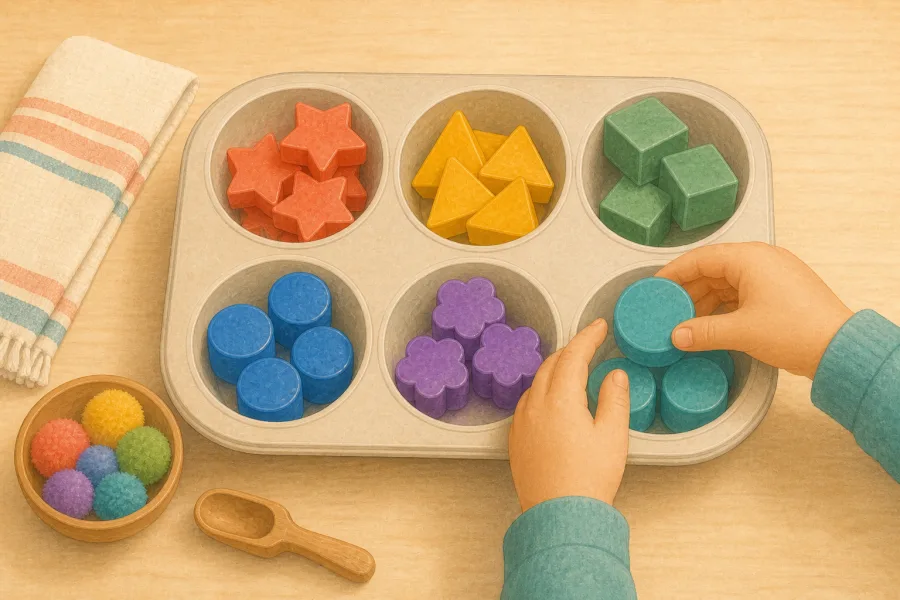
Muffin Tin Color Sort
Sort blocks, pom-poms, or cereal into a muffin tin by color.
Ages 1–4 ⏱ 10 min Household items
Wind-down activities for before naps, before bed, or whenever the volume needs to come down a notch.
Start here
Quiet time may mean focused hands, a soothing visual, or a shared story—not complete silence.
For focused fingers
Sort blocks, pom-poms, or cereal into a muffin tin by color.
Repeated sorting creates a predictable tabletop rhythm for younger children.
For watching and breathing
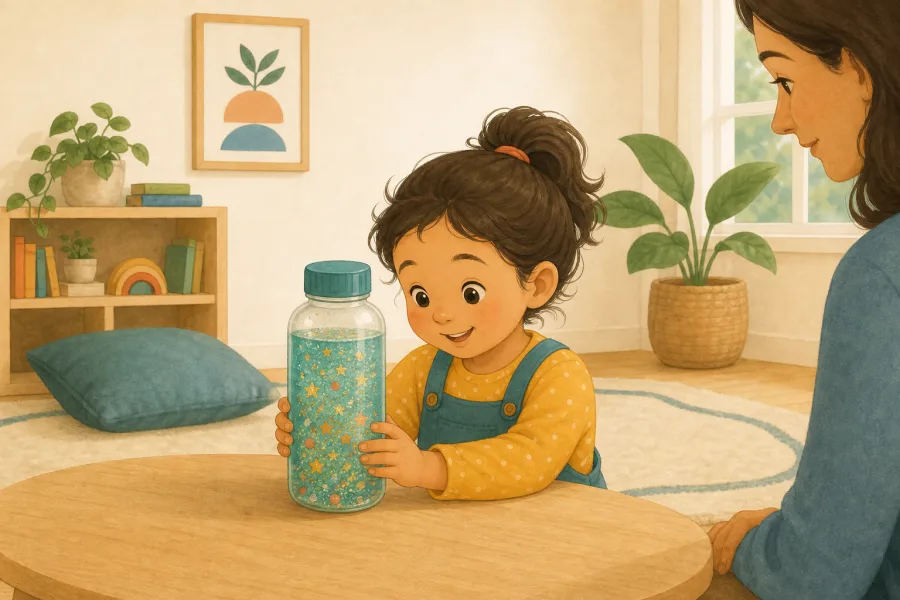
Shake it, watch the glitter storm settle, and feel your own storm settle too.
The slow fall of glitter gives eyes one uncomplicated place to rest.
For connection

Build a ridiculous story together, one sentence at a time.
Taking one sentence at a time keeps bodies still while imaginations remain active.
Browse the collection

Stretch like a cat, balance like a flamingo, roar like a lion — yoga disguised as a trip to the zoo.

Build a cozy den from blankets, then hide inside with books and a flashlight.
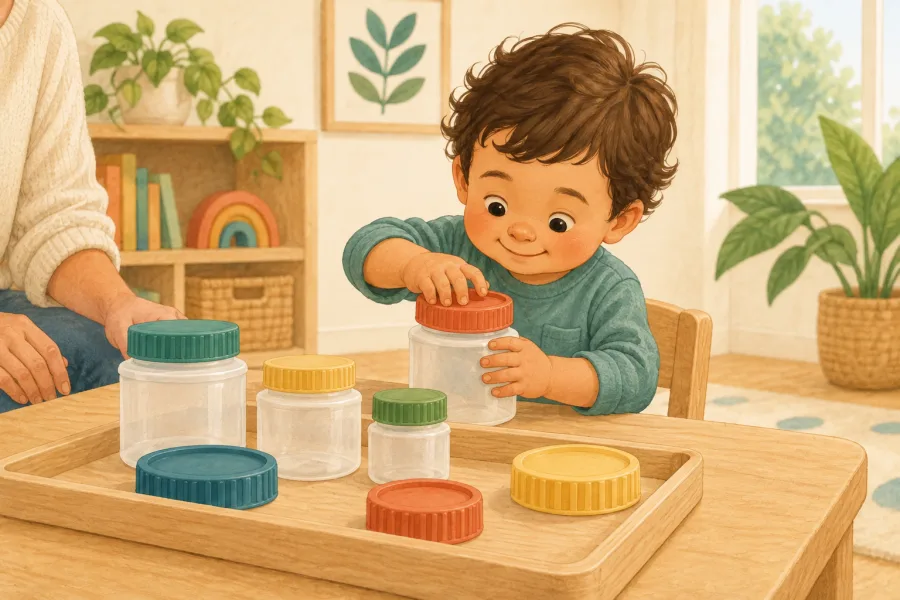
A tray of jars and bottles with caps to twist off and on — real work for small serious hands.
Shake it, watch the glitter storm settle, and feel your own storm settle too.
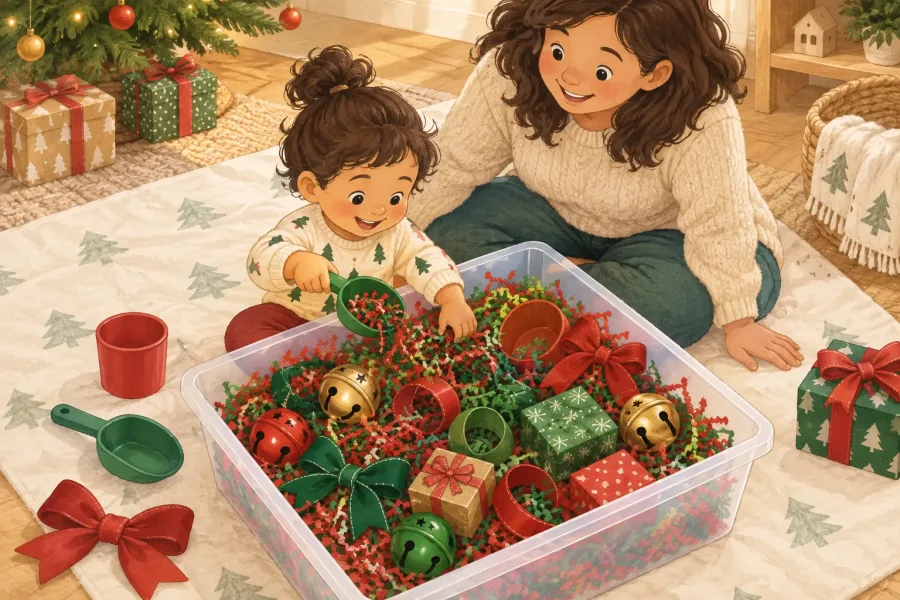
Bells, bows, ribbon and scoops in one tub: December in a box, hands-first.

A small vase, a jug of water, and autumn flowers: real florist work for very small florists.

Hand over a whole ear of corn and let those little hands rip, peel and discover dinner.

Toy animals meet their portraits: match the plastic elephant to the elephant on the page.
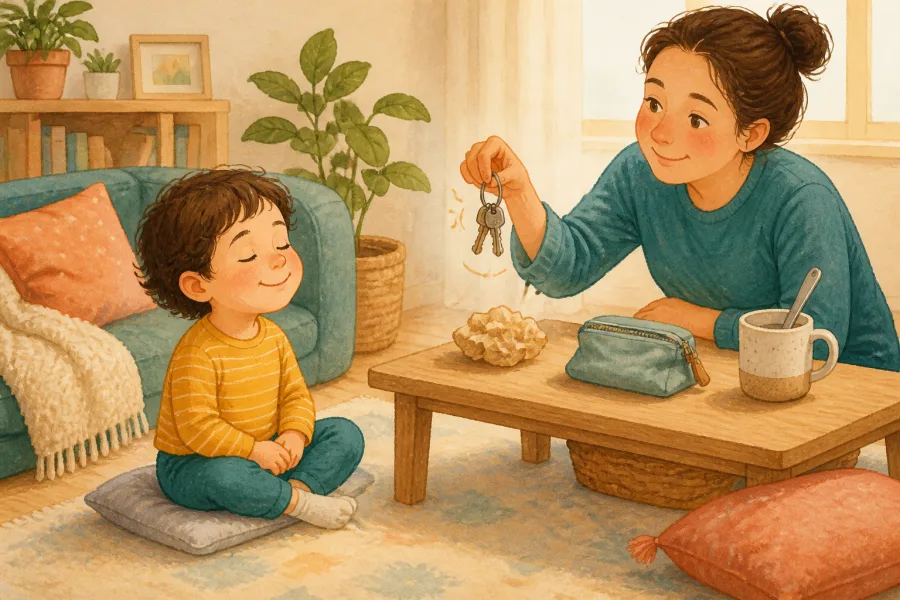
Close your eyes — was that keys, a zipper, or a spoon in a cup? Ears only.

Hum a song, no words allowed — first one to name it takes the next hum.
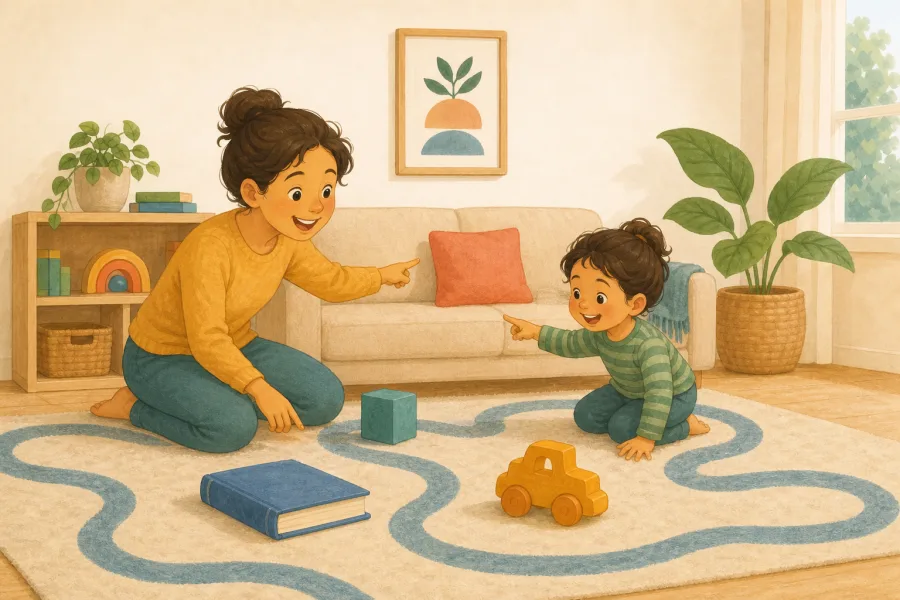
The classic guessing game tuned for little kids — spot things by color.
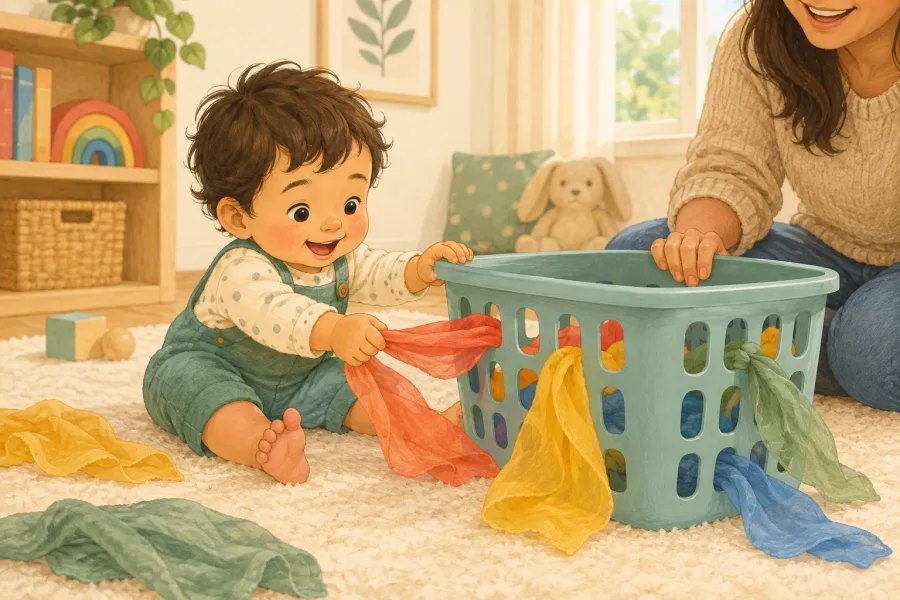
Thread short scarves through a laundry basket and give your baby a safe place to pull, tug, and try again.
Sort blocks, pom-poms, or cereal into a muffin tin by color.

Reach into the stocking without peeking and describe what you feel before making a guess.

A sealed paint bag gives little hands color to press and mix, with the mess kept inside.

A homemade book of familiar faces hidden under sticky-note flaps — peekaboo meets first words.
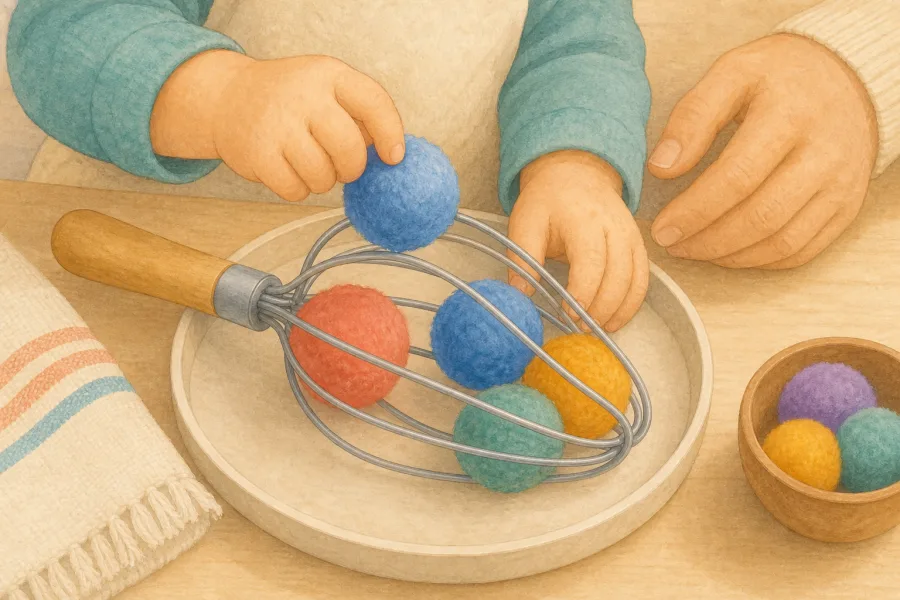
Stuff pom-poms into a whisk and let little fingers work them free.
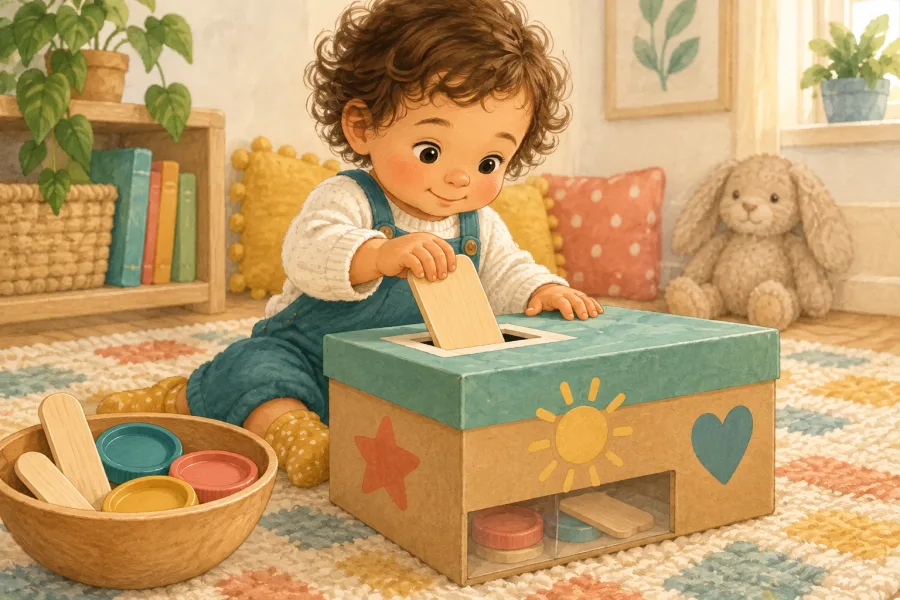
Cut a slot in a box and toddlers can post, listen for the drop, empty it, and begin again.

A tub of soapy water, a brush, and muddy pumpkins fresh from the patch: open for business.
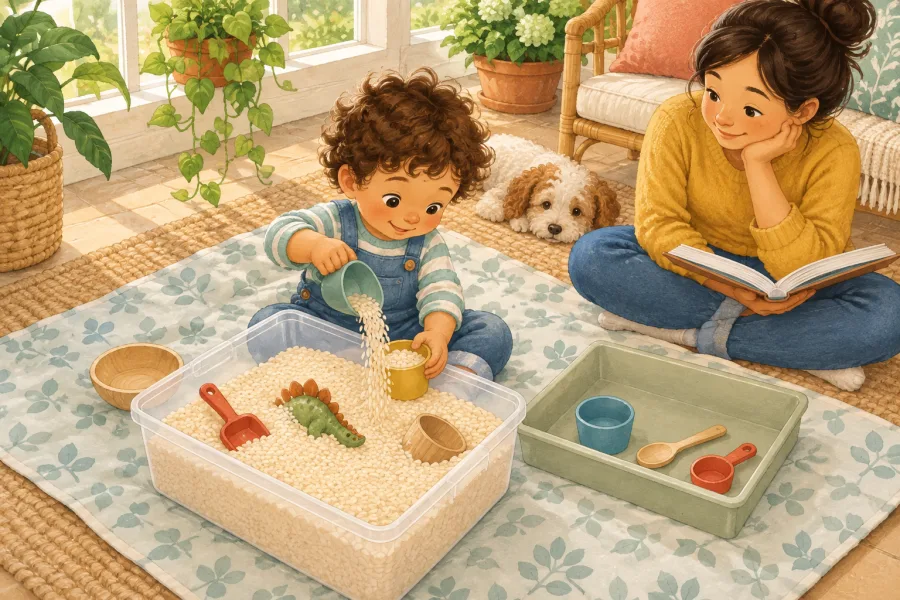
A tray of dry rice, a few scoops and hidden toys — the sandbox that lives in your kitchen.

Turn a flashlight and a wall into a stage for barking dogs and flying birds.
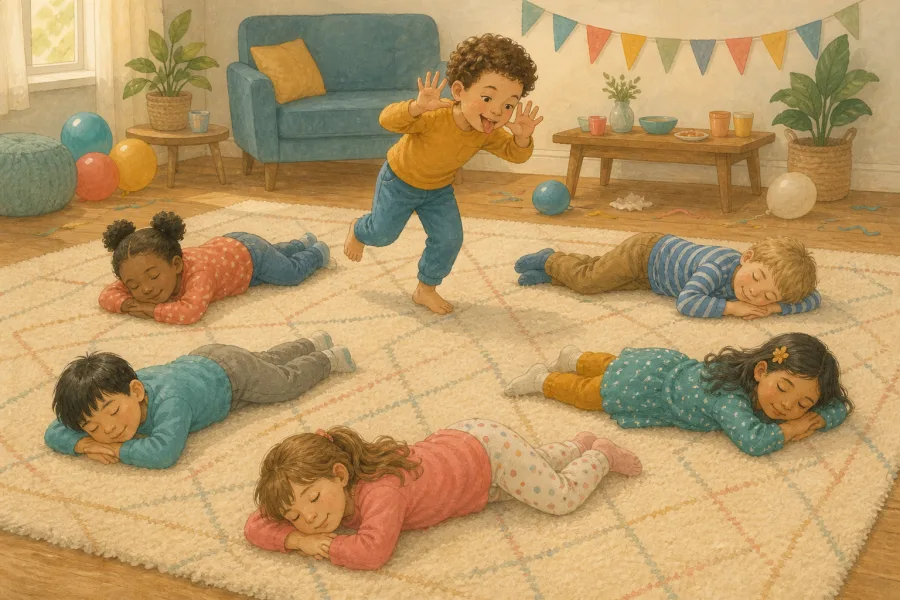
The only party game where lying perfectly still is the whole point. Parents love it for a reason.

Draw a face on a bottle, hand over the cotton balls, and watch a snowman come to life one snowflake at a time.
Build a ridiculous story together, one sentence at a time.

The stuffed animals are feeling poorly today — luckily, the doctor is in.
Lower the volume gradually
Children often settle more easily when the environment changes first and expectations stay concrete.
Present one or two calm invitations rather than a shelf full of possibilities.
Dim one light, move to a smaller space, or use the same short song before quiet time.
Rocking, squeezing a cushion, or working with the hands may help a child regulate better than forced stillness.
Helpful answers
Start with a period the child can succeed at—even five or ten minutes. Extend it gradually only if the routine remains comfortable.
Define a safe area rather than one seat and offer low-energy movement such as carrying books, arranging cushions, or walking a taped line slowly.