
An activity you can start today
Sock Match and Sort
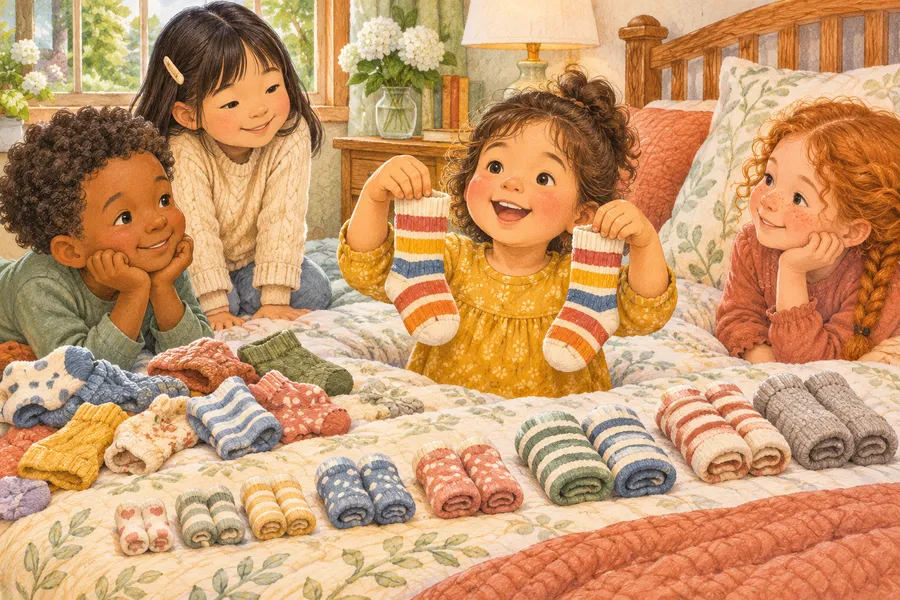
Dump a pile of clean socks on the bed and let your child pair, roll, and sort them into family piles.
Know before you start
At a glance
- Setup
- 1 min
- Cleanup
- 2 min
- Mess
- low
- Energy
- calm
- Adult help
- nearby
Before you start
- Start with clean socks from one laundry load, and pull out any that need mending.
- Clear a flat surface, like a bed or a low table, so the whole pile is easy to see and reach.
- Show one round first: lay two matching socks side by side, then roll them together.
Step by step
Let’s play
- Dump the socks. Tip a basket of clean socks onto a bed or table so the whole pile is spread out and easy to see.
- Find the pairs. Ask your child to lay matching socks side by side by color and pattern. Say the rule out loud: “Same color, same stripes, that’s a pair.”
- Roll each pair. Show how to stack two socks flat, then roll from the toe and tuck the top. Let your child do the rest.
- Sort into family piles. Make a pile for each person, biggest feet to smallest. Ask “Whose pile is this?” as they go.
- Count the pairs. Count out loud together. Point out any sock with no partner and set it aside in an odd sock pile.
- Add a challenge or a chart. Race a two-minute timer for fun, or add a sticker to a paper chart if this is a weekly job.
The child’s-eye view
Why kids love it
It feels like a real job, not a game. Finding the partner to a stripey sock is a small puzzle they can solve on their own, and rolling a pair tight is satisfying in the hands. The family piles at the end give them a visible win.
Built into the fun
What they’re learning
Children compare color, pattern, and size to decide which socks belong together, then sort the finished pairs by whose feet they fit.
Rolling a pair of socks takes two hands working together, one to hold and one to fold and tuck.
Counting pairs out loud, and noticing when one sock has no partner, builds early number sense in a real setting.
Make it fit your child
Ways to change the game
Timer race
Set a timer for two minutes and see how many pairs your child can match before it beeps. Cheer for the total, not the speed.
Odd sock hunt
Slip one extra sock into the pile on purpose and ask your child to find the one with no partner. Talk about what makes it different.
Weekly chart
Make a simple paper chart with the days of the week. Your child adds a sticker each time they finish the sock job.
Real-life fixes
If it’s not going to plan
The pile is too big and your child gives up
Pull out a smaller set of 8 to 10 socks and save the rest for next time. A finished small job beats an abandoned big one.
Socks get rolled into a ball instead of a pair
Show the flat lay first: two socks on top of each other, then roll from the toe. Let them practice the roll a few times before sorting.
Good to know
Frequently asked questions
What age can kids start matching socks?
Many children can match simple pairs around age 3 and get faster and more independent by 4 or 5. Start with a small pile and socks that are easy to tell apart.
How do I make sock matching a regular job?
Pick one laundry day each week and keep a small basket just for socks. A paper chart with a sticker for each finished job helps children see their progress.
Kidtivity Lab activity guide · Last updated
Try next
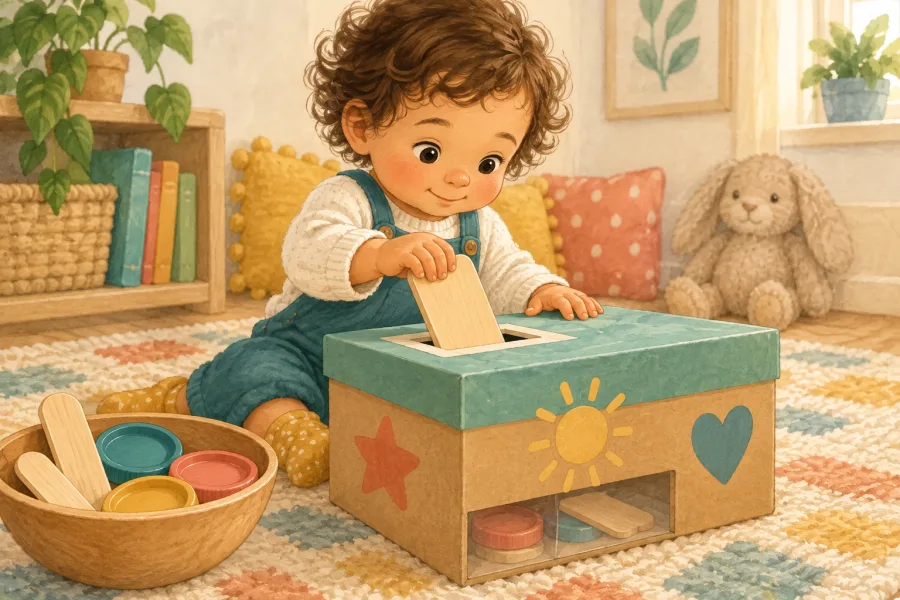
Posting Box
Cut a slot in a box and toddlers can post, listen for the drop, empty it, and begin again.
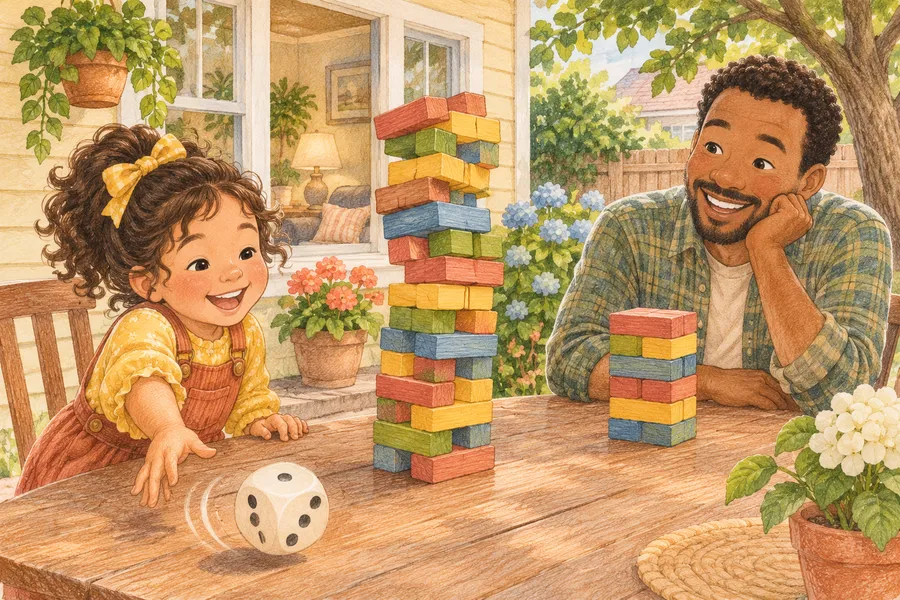
Roll and Build Tower
Roll a die, count the dots, stack that many blocks. Count your tower out loud after every turn.
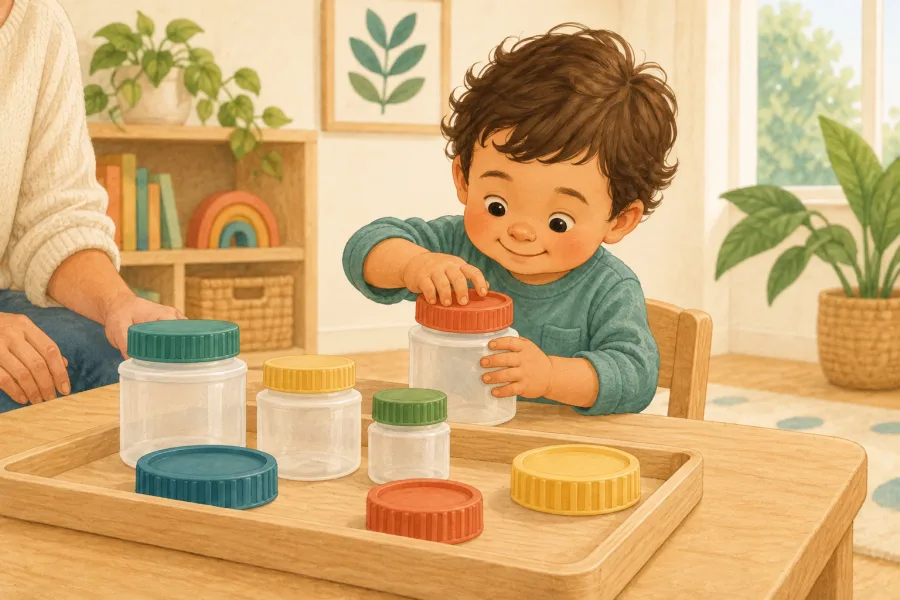
Bottle Cap Twist Station
A tray of jars and bottles with caps to twist off and on — real work for small serious hands.