
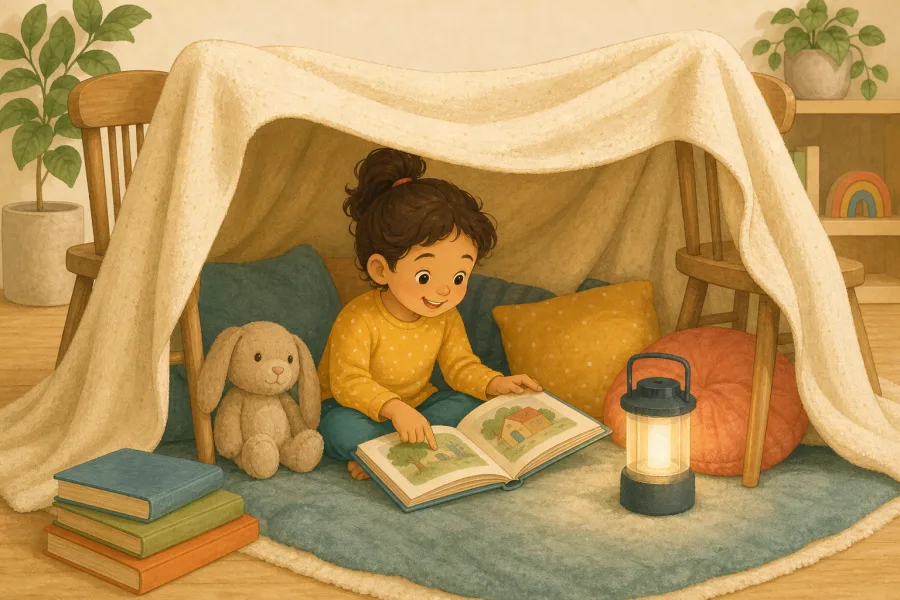
Blanket Fort Reading Den
Build a cozy den from blankets, then hide inside with books and a flashlight.
Ages 2–8 ⏱ 30 min Household items
Creative play does not need a perfect object at the end. These ideas prioritize making choices, testing materials, performing, and changing direction.
Browse the collection
Build a cozy den from blankets, then hide inside with books and a flashlight.
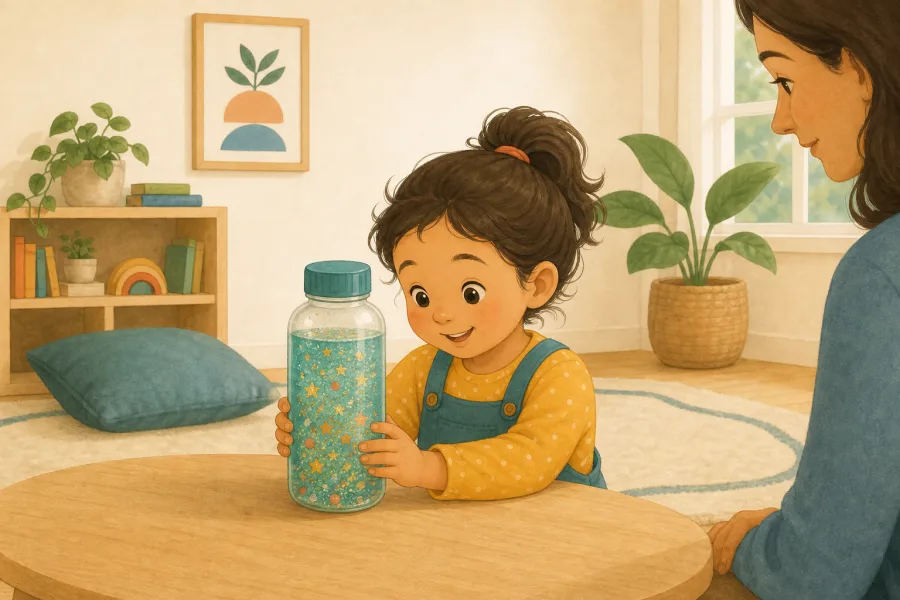
Shake it, watch the glitter storm settle, and feel your own storm settle too.
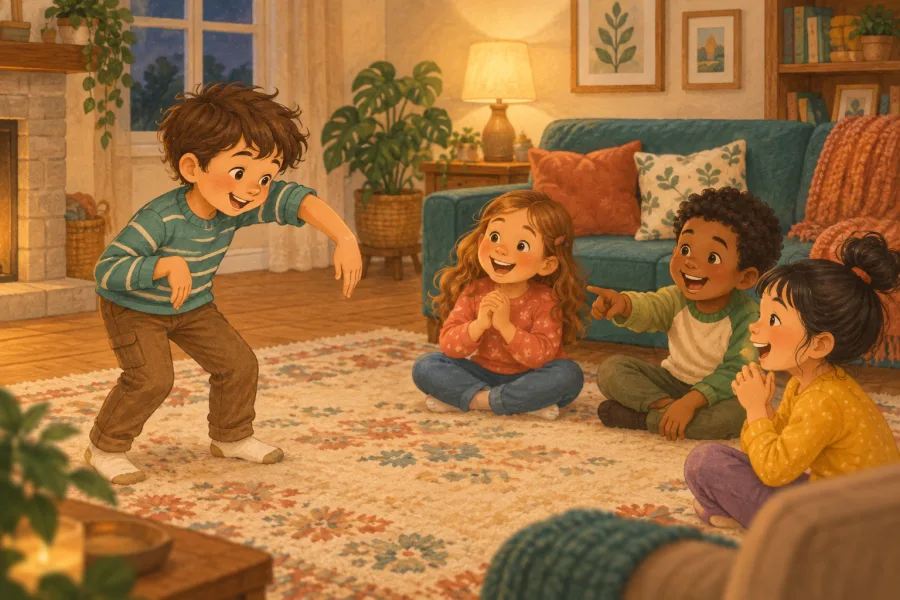
Act it out, no words allowed — the classic guessing game sized down for kid-sized actors.
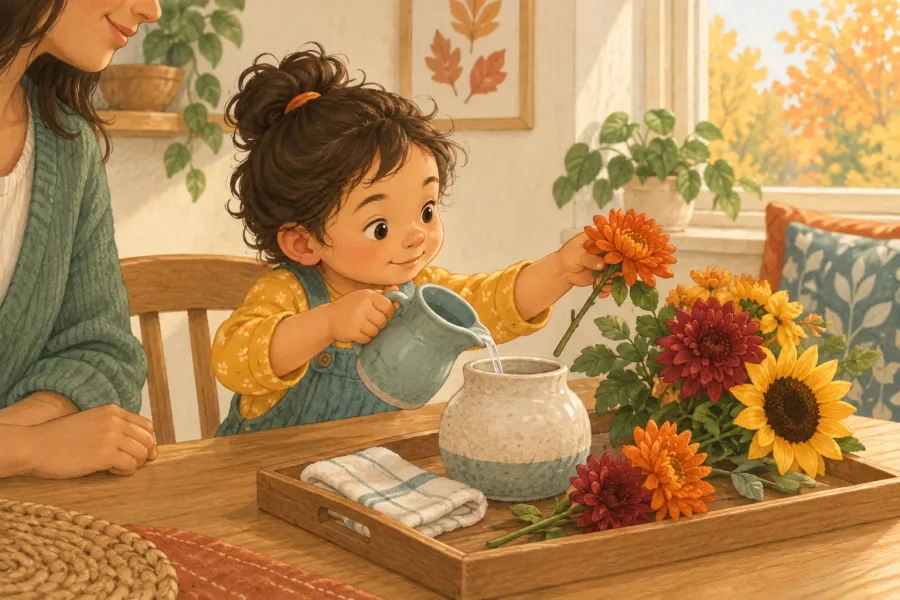
A small vase, a jug of water, and autumn flowers: real florist work for very small florists.
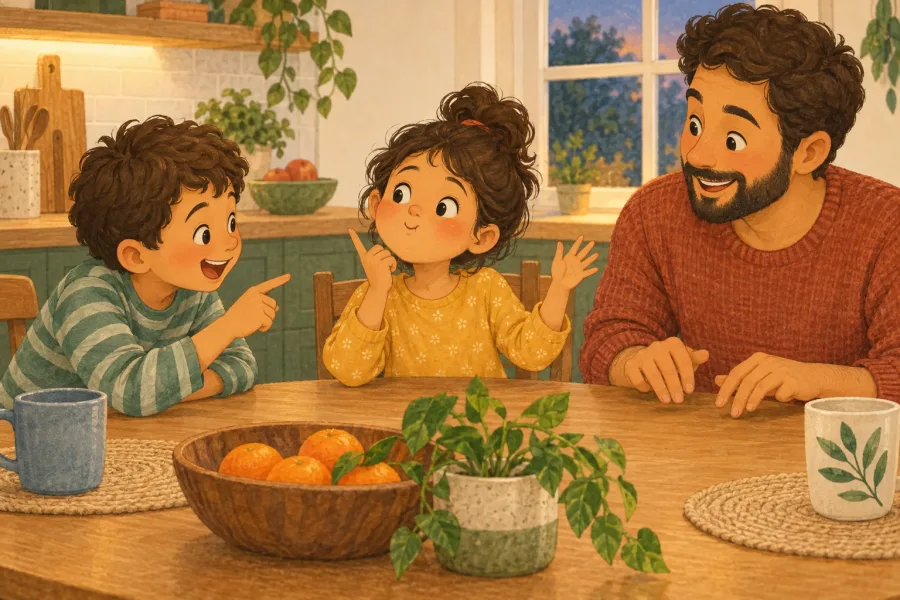
Hum a song, no words allowed — first one to name it takes the next hum.
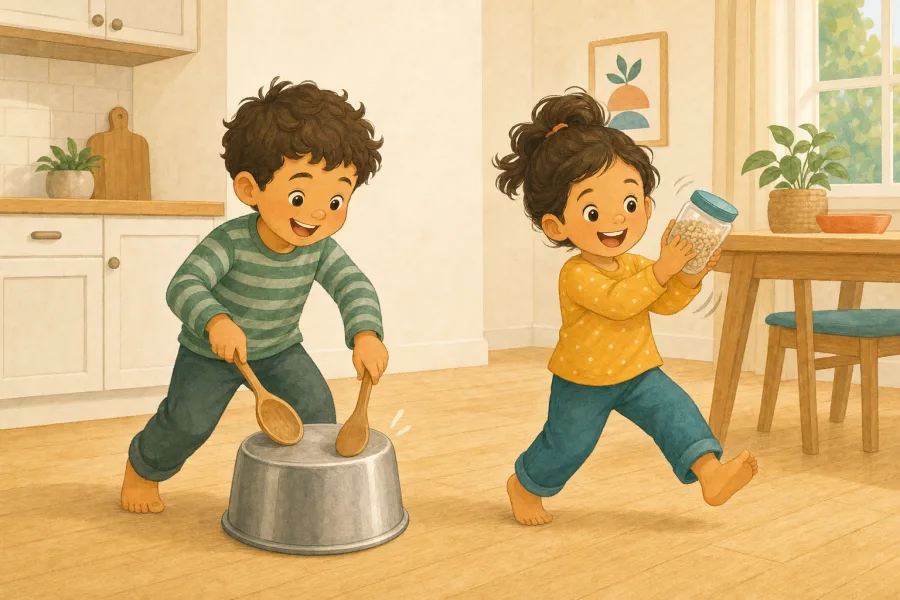
Pots become drums, spoons become drumsticks — march and make some noise.
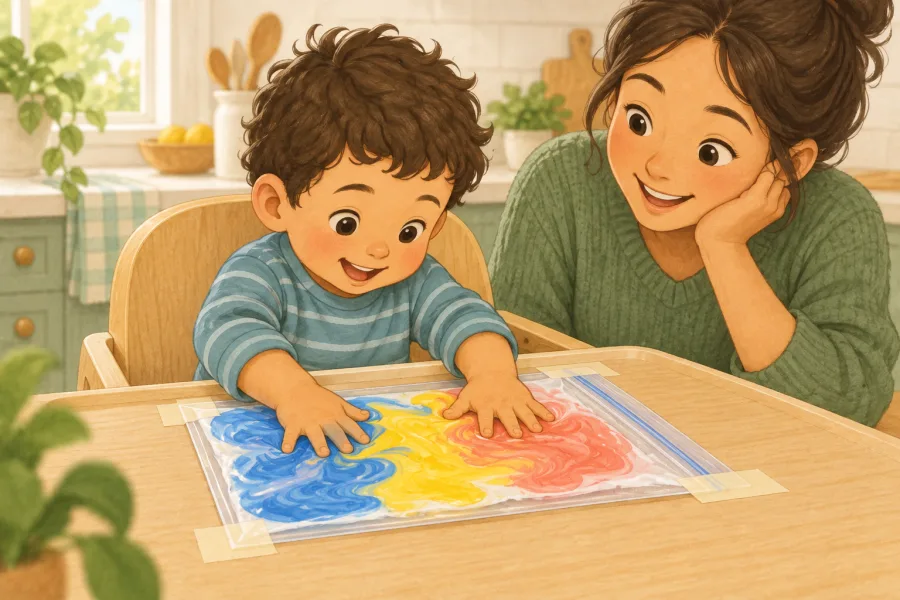
A sealed paint bag gives little hands color to press and mix, with the mess kept inside.
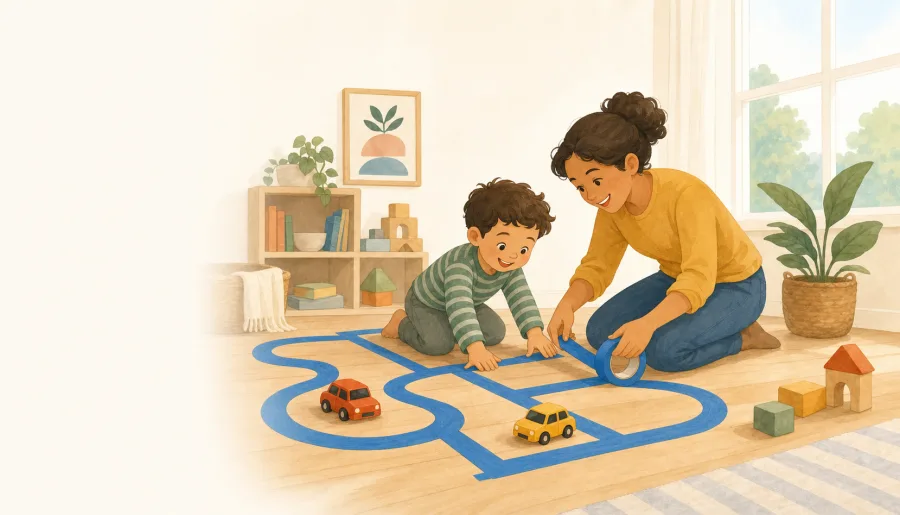
Build a winding road across the floor and go on a pretend adventure.
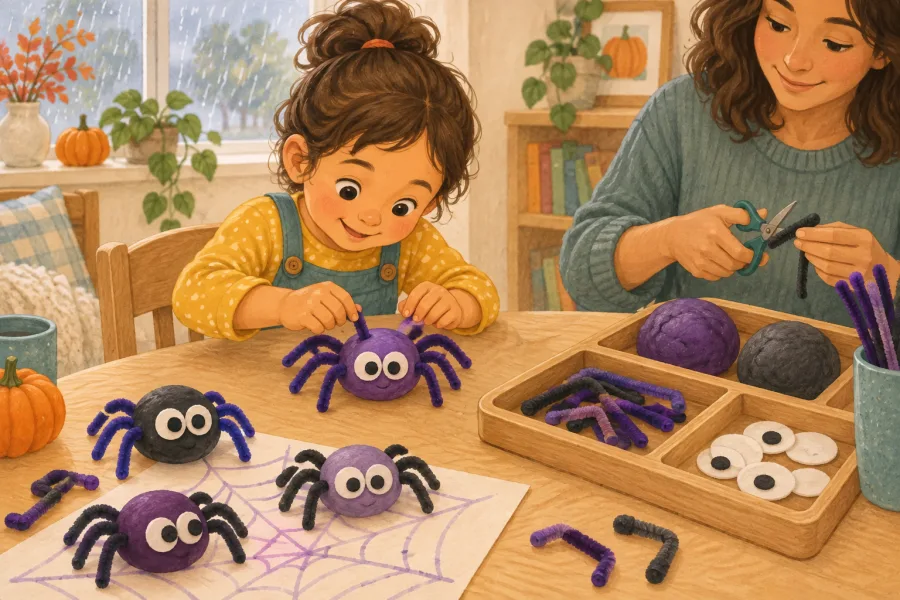
Roll a play-dough body, count eight soft legs, and build a spider ready for pretend play.
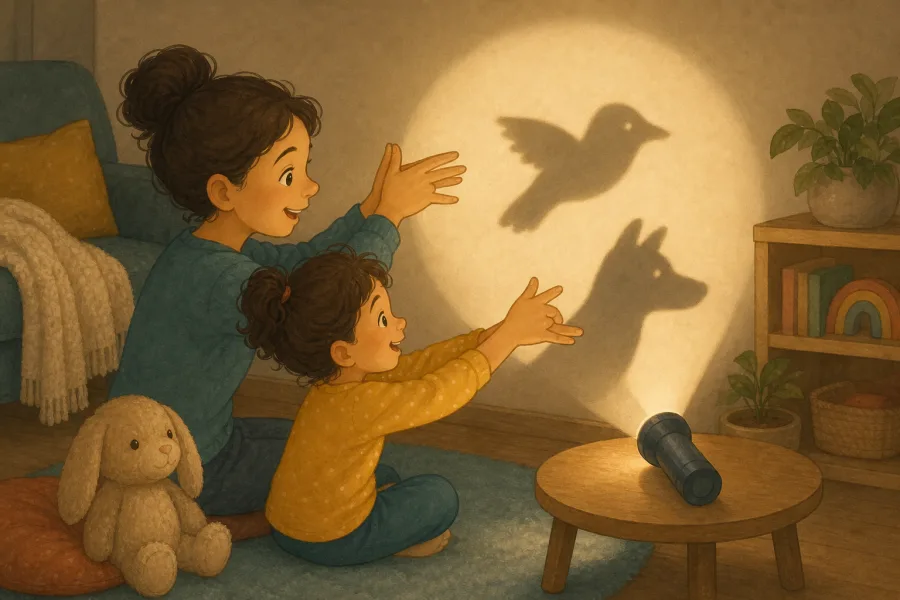
Turn a flashlight and a wall into a stage for barking dogs and flying birds.
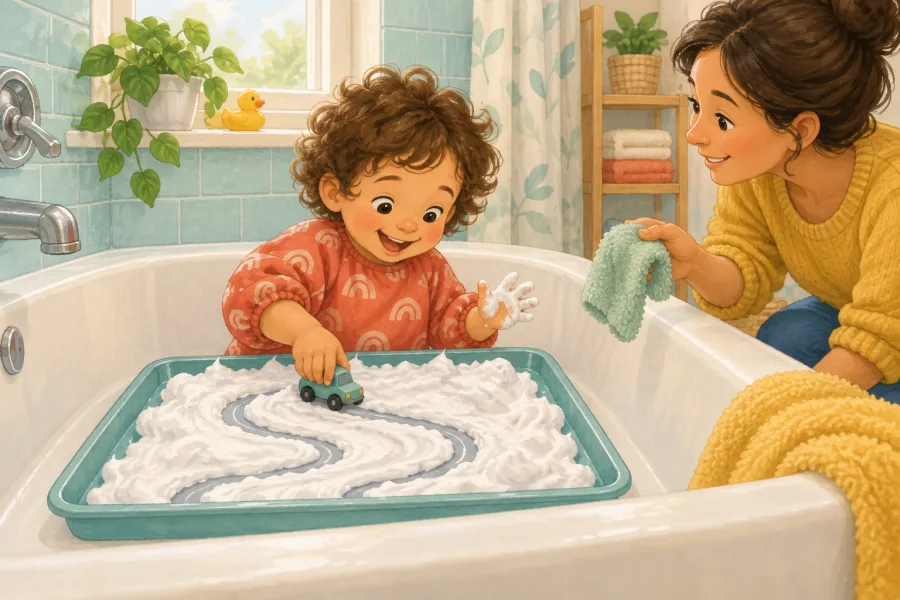
A mountain of foam on the high chair tray: the messiest-looking activity with the easiest cleanup.
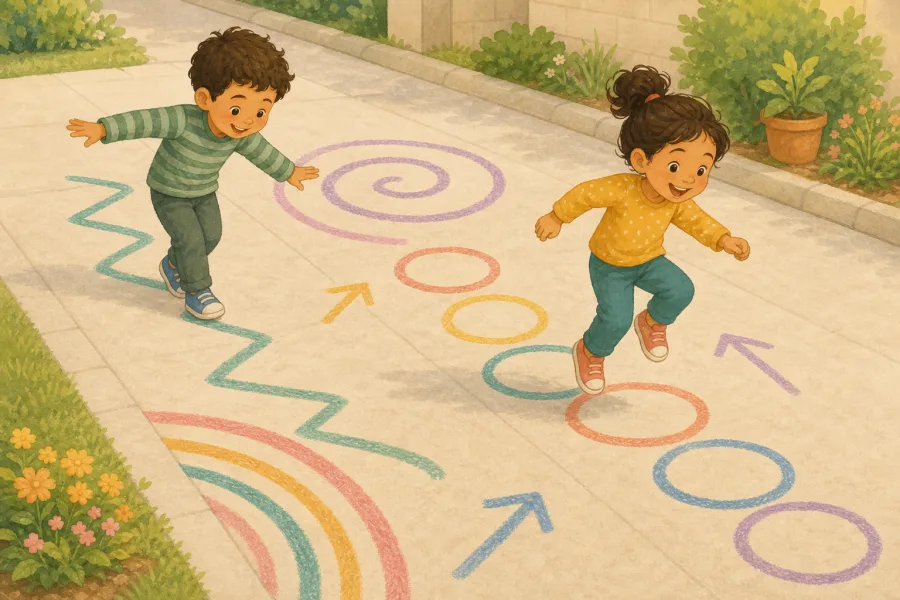
Draw a course of zigzags, spirals, and jumps — then run it again and again.
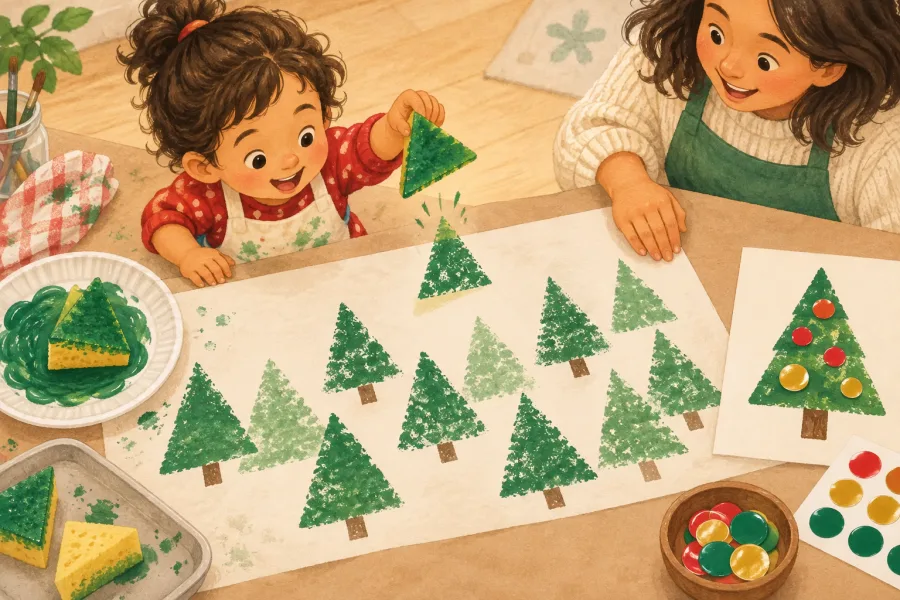
Stamp a forest of green sponge trees, let the paint dry, then add large sticker ornaments.
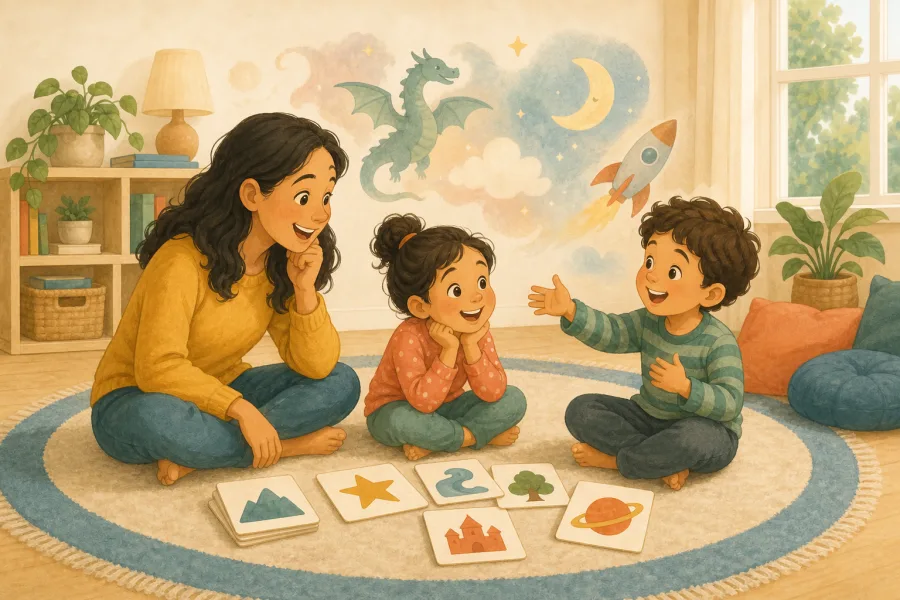
Build a ridiculous story together, one sentence at a time.
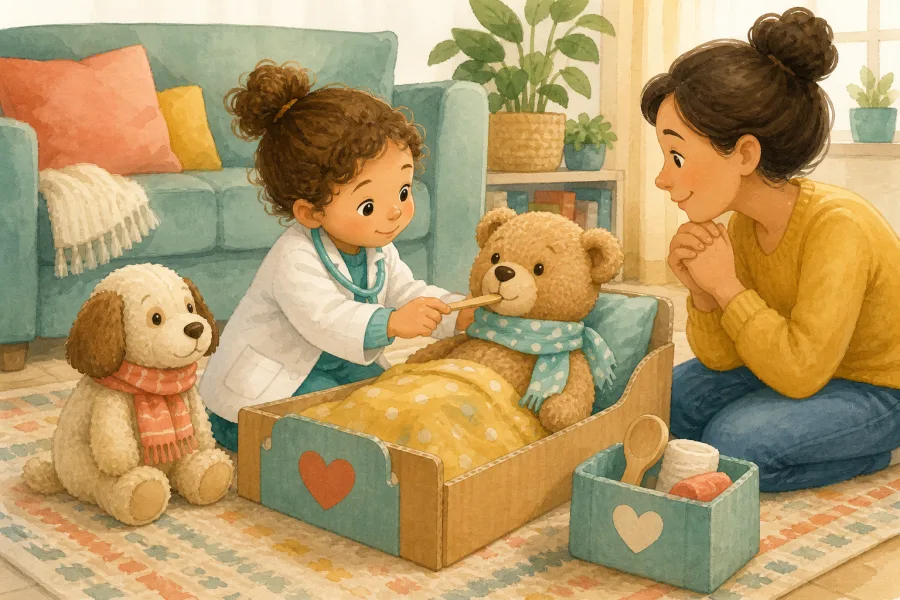
The stuffed animals are feeling poorly today — luckily, the doctor is in.
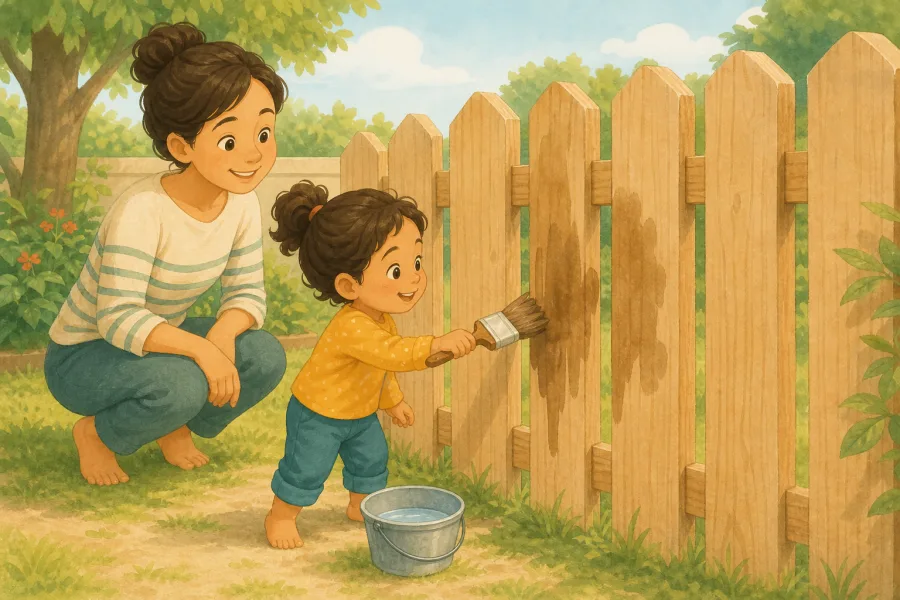
"Paint" the fence, the steps, and the sidewalk with plain water and a big brush.
Process over product
A finished adult sample can turn exploration into copying before the child has formed an idea.
Notice pressure, color, sound, story, and persistence instead of judging whether the result is pretty.
A small selection of tools often supports deeper experimentation than a table covered with everything.
Helpful answers
Help with the part beyond their motor ability, then return the meaningful decisions—color, placement, character, sound, or next step—to the child.
No. Building a temporary fort, creating shadows, making rhythms, and painting with water are valid creative experiences even when nothing is kept.