
An activity you can start today
No-Mess Paint Bag
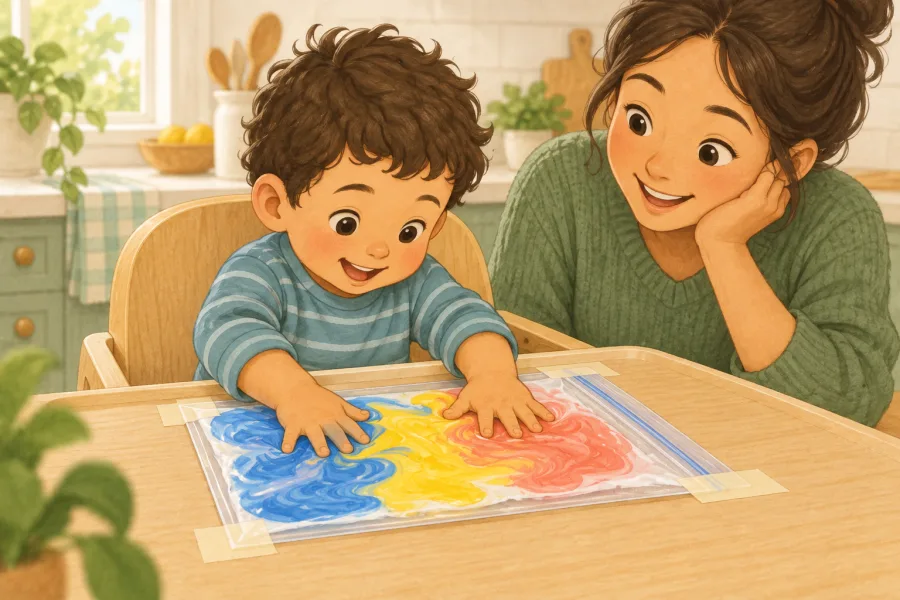
A sealed paint bag gives little hands color to press and mix, with the mess kept inside.
Know before you start
At a glance
- Setup
- 5 min
- Cleanup
- 1 min
- Mess
- low
- Energy
- calm
- Adult help
- nearby
Before you start
- Put the paper inside the bag first — the colors will smear against it and the result can be kept as accidental abstract art.
- Use blobs of 2–3 contrasting colors placed apart, so mixing happens gradually instead of turning brown in a minute.
- Squeeze out the air before sealing; a flat bag smears better and pops less.
Step by step
Let’s play
- Load the bag. Slide the paper in flat, then add blobs of 2–3 paint colors, spaced apart.
- Seal it tight. Squeeze the air out, zip it shut, and tape over the seal and edges.
- Fix it down. Tape the bag to the floor, tray, table, or a low window.
- Hand over the canvas. Show one squish, then let fingers, palms, and fists do the rest.
- Save it if you like. An adult can open the bag over a protected surface and leave the paper flat to dry; otherwise, keep the bag sealed and discard it.
See it in action
Watch this activity
Video: “10 Simple Sensory Activities for Babies” by The Hidden Gem on YouTube — cued to the moment this activity is shown.
The child’s-eye view
Why kids love it
Every press leaves a visible trail as the colors spread and meet. Babies can use whole palms, while toddlers can draw lines and circles with one finger.
Built into the fun
What they’re learning
Pressing in one place moves the paint somewhere else, giving babies an immediate and repeatable result to watch.
Pressing, poking, and dragging against the paint's resistance works the small hand muscles without holding any tool.
Blue and yellow becoming green in real time beats any flashcard — name the colors as they merge.
Make it fit your child
Ways to change the game
Tummy-time canvas
Tape the bag flat on the floor during supervised tummy time so the baby can reach, press, and shift weight between their arms.
First writing pad
For 2–3 year olds, use one dark color spread thin: they can 'draw' lines and circles with a fingertip and erase with a palm swipe.
Clear color bag
Use clear hair gel with one or two drops of food coloring for a slower-moving bag. Keep it double-sealed and supervise just as closely as the paint version.
Real-life fixes
If it’s not going to plan
The child only slaps the bag instead of smearing
That's the entry-level game — join in, then slowly model one finger dragging a line. Smearing follows within a session or two.
The bag drifts around and frustrates them
Tape all four edges down. A fixed target turns random slaps into aimed pokes.
Good to know
Frequently asked questions
What age can babies start the paint bag?
It can work from the sitting or supervised tummy-time stage if the bag is securely fixed and the child is watched closely. Older toddlers can use the same setup to draw lines and simple shapes.
Can I keep the picture afterwards?
Yes. An adult can cut the bag open over a protected surface, lift out the paper, and leave it flat to dry. This final step can be messy, so do it away from the child.
Kidtivity Lab activity guide · Last updated
Try next
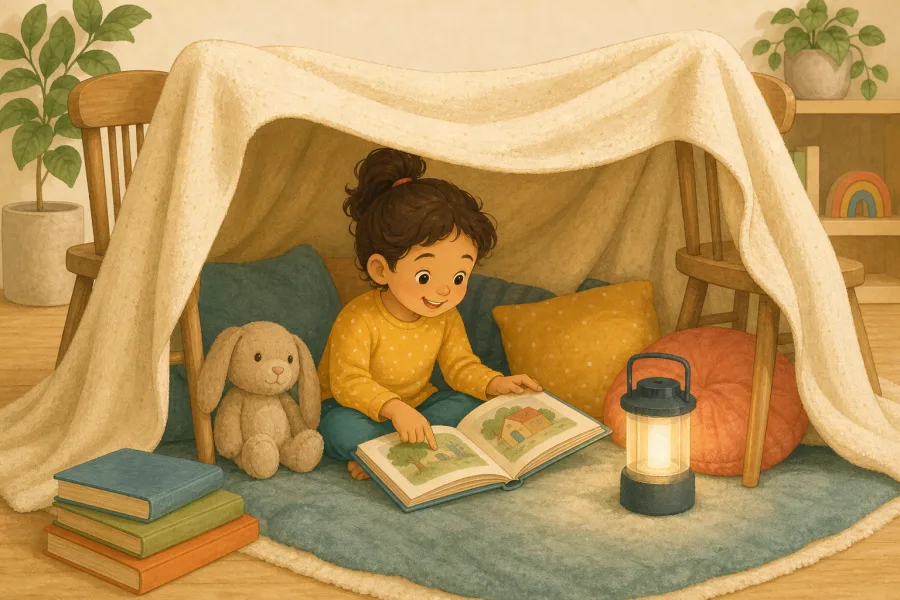
Blanket Fort Reading Den
Build a cozy den from blankets, then hide inside with books and a flashlight.
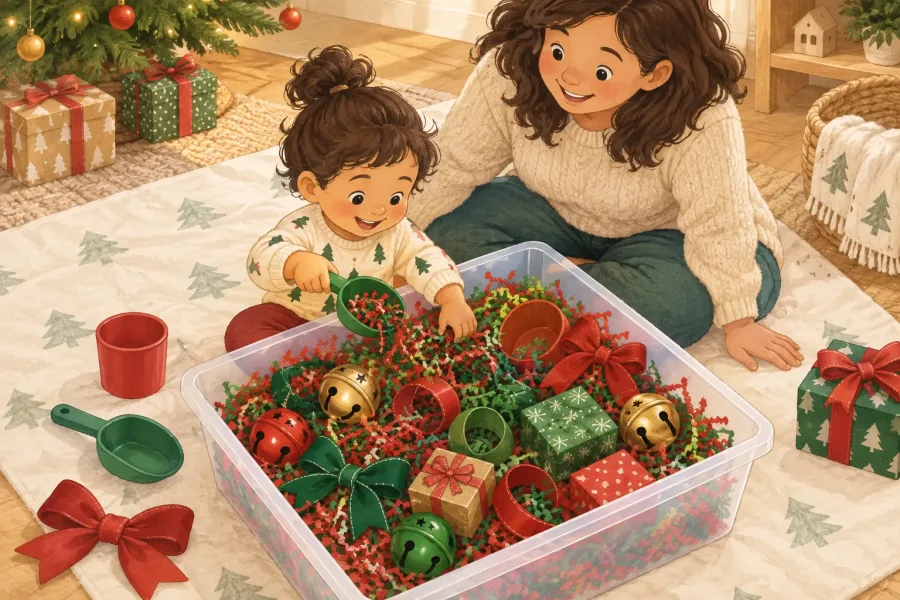
Christmas Sensory Bin
Bells, bows, ribbon and scoops in one tub: December in a box, hands-first.
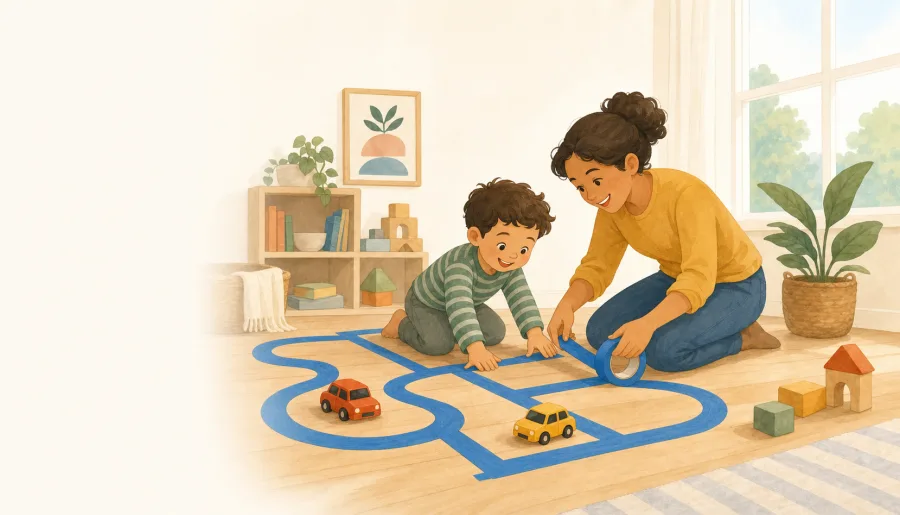
Painter's Tape Road
Build a winding road across the floor and go on a pretend adventure.