
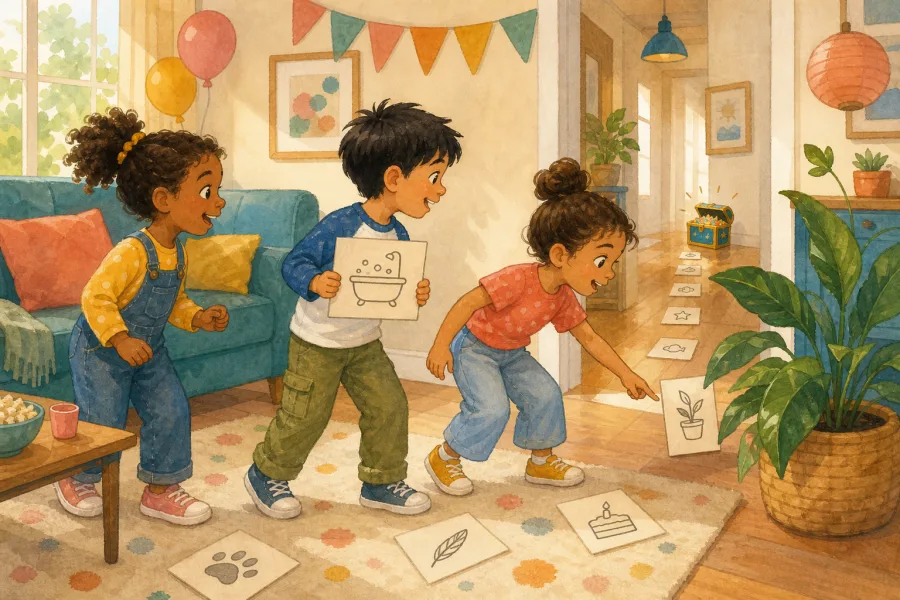
Picture Clue Treasure Hunt
A trail of simple drawn clues leads from spot to spot — with real treasure at the end.
Ages 3–9 ⏱ 30 min Paper & pencils
Party games that actually work with a living room full of excited kids: quick to explain, fair to play, and easy to run without special equipment.
Start here
Every party has three phases: arrivals, the energy peak, and the wind-down before cake. Plan one game for each.
While guests arrive
A trail of simple drawn clues leads from spot to spot — with real treasure at the end.
Early arrivals join the hunt one by one — nobody waits awkwardly for the party to start.
For the energy peak
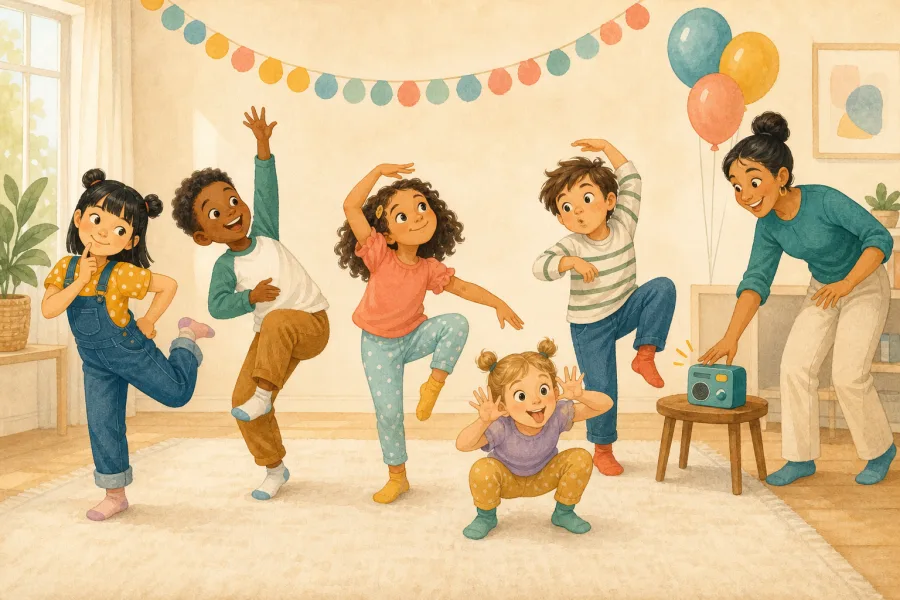
Dance like crazy, freeze like a statue — the classic party game that needs only a pause button.
Everyone plays at once, nobody is eliminated for long, and the adult controls the volume with the pause button.
To calm the room before cake
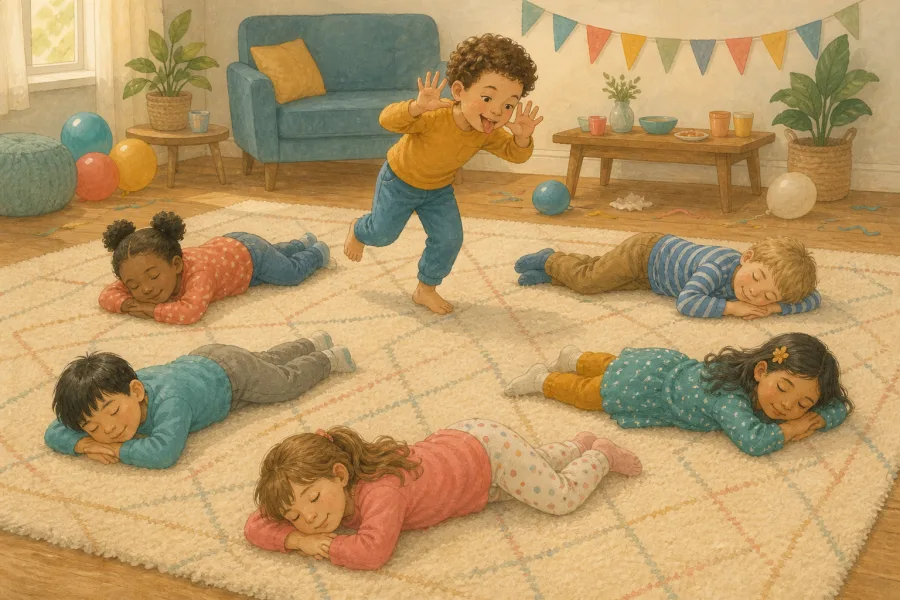
The only party game where lying perfectly still is the whole point. Parents love it for a reason.
The whole group lies still on purpose — the only party game where quiet is the goal.
Browse the collection
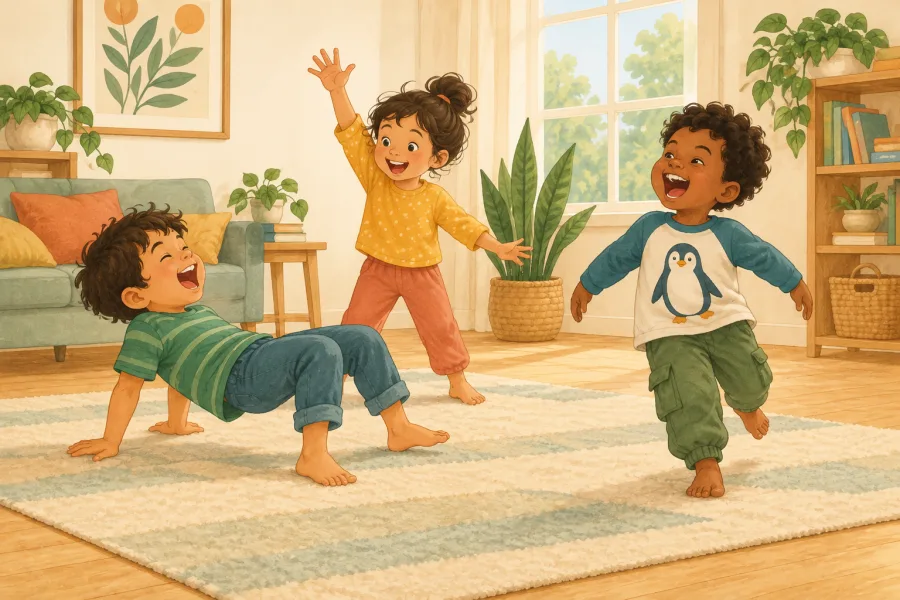
Walk like a crab, roar like a lion — at the same time. Instant giggles, zero supplies.
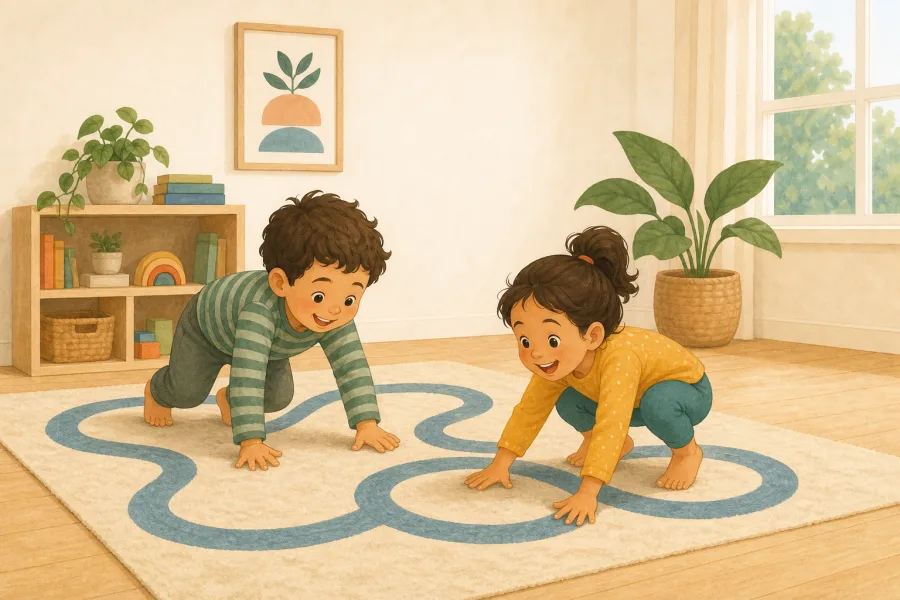
Crawl, hop, and stomp to the finish line like your favorite animals.
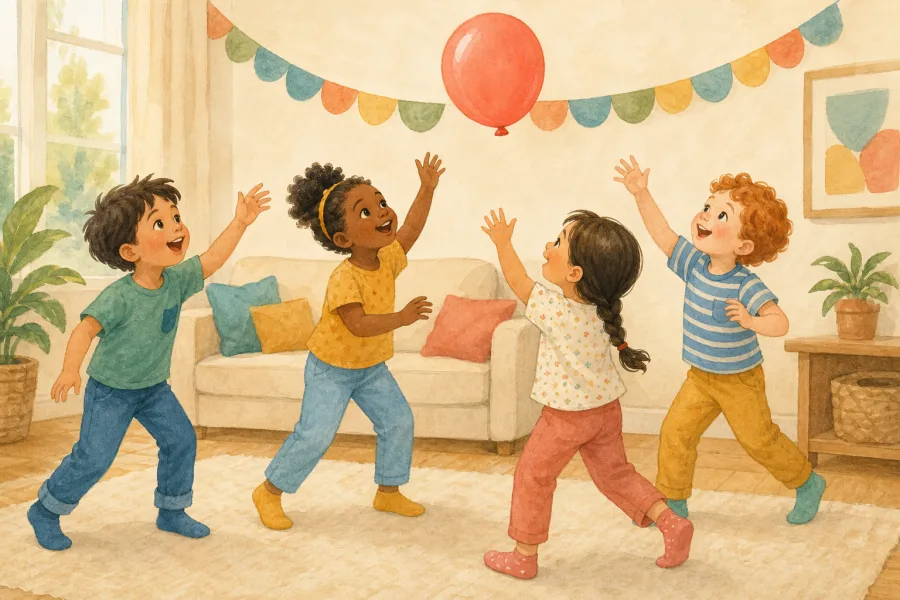
One balloon, one rule: don't let it touch the floor. Instant cooperative chaos.
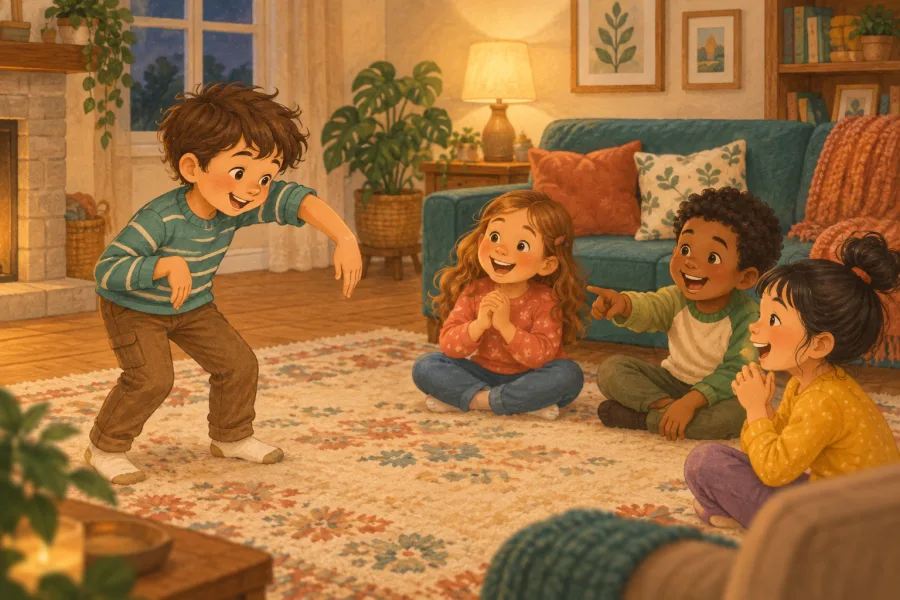
Act it out, no words allowed — the classic guessing game sized down for kid-sized actors.
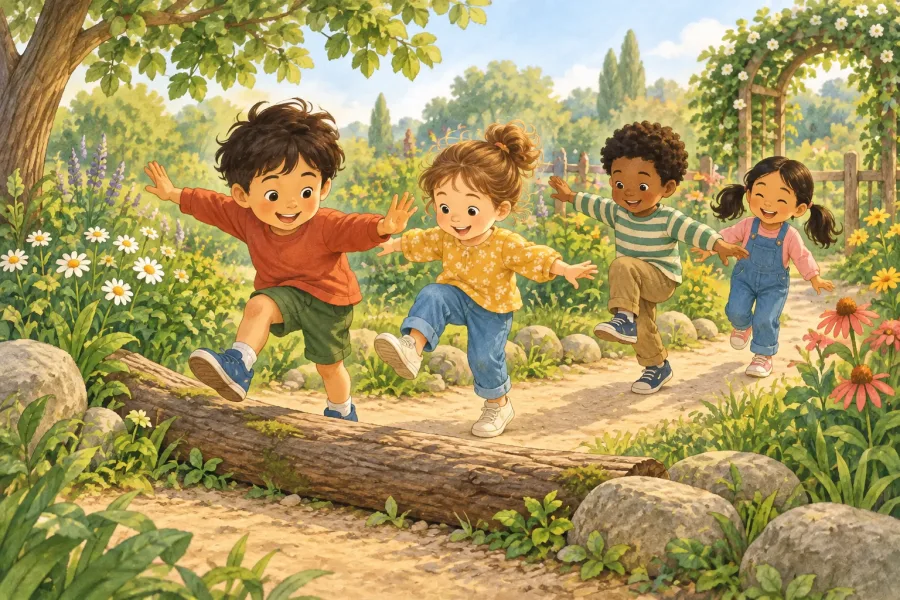
March, hop, wiggle — one child chooses the movement and everyone else tries to keep up.
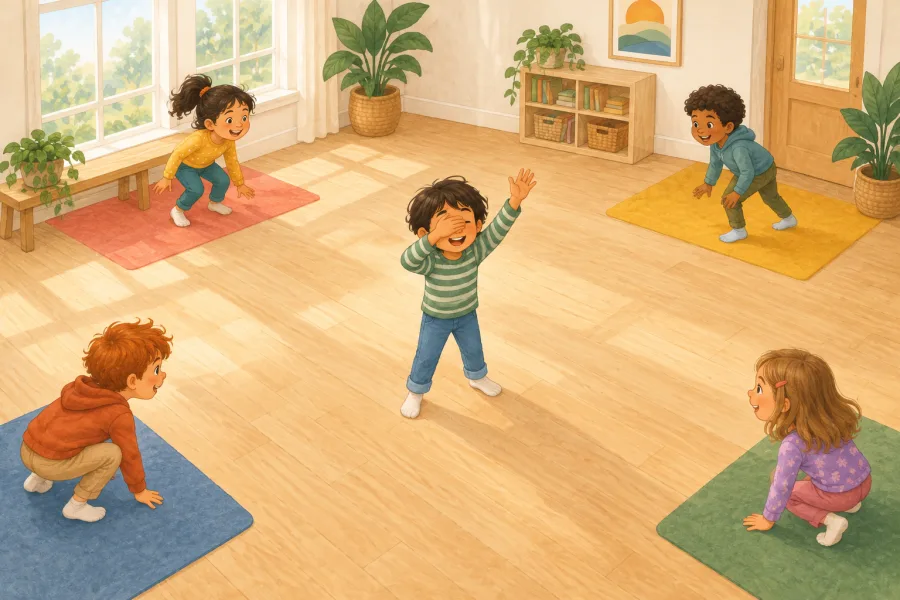
Four corners, one caller, quick feet: the classroom classic that turns any room into a game board.
Dance like crazy, freeze like a statue — the classic party game that needs only a pause button.
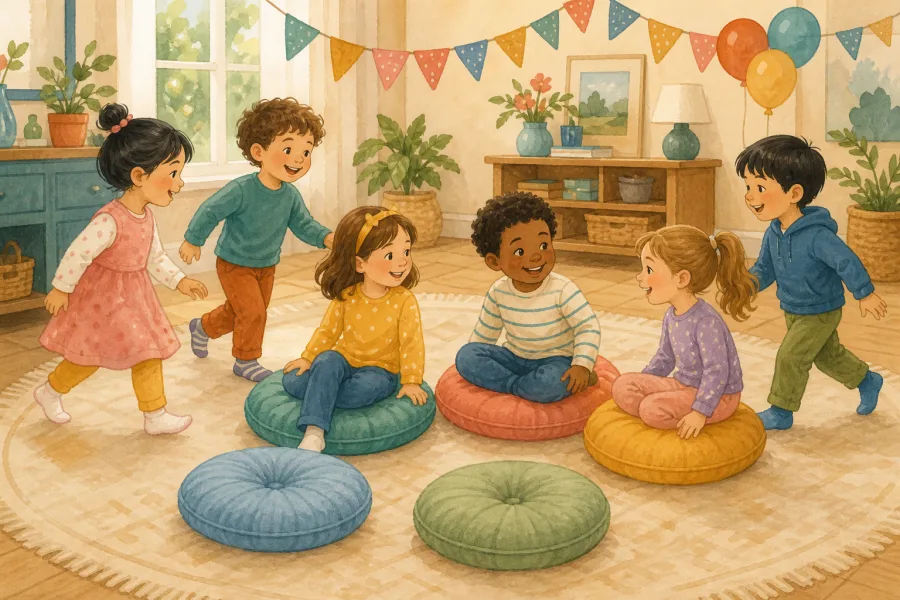
Musical chairs, rebuilt so nobody sits out crying: lose a cushion, share a cushion.
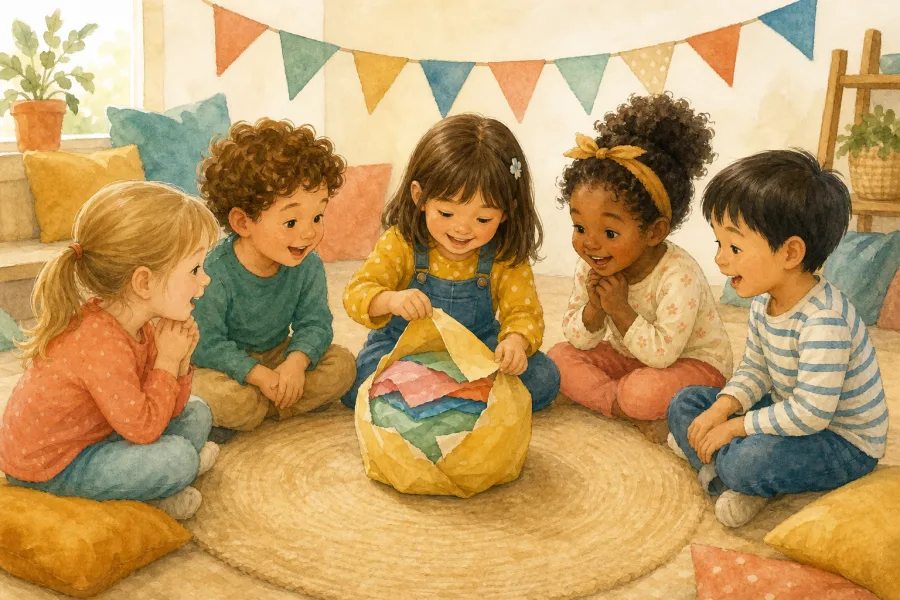
One gift, many layers of wrapping, and music that decides who unwraps next.
A trail of simple drawn clues leads from spot to spot — with real treasure at the end.
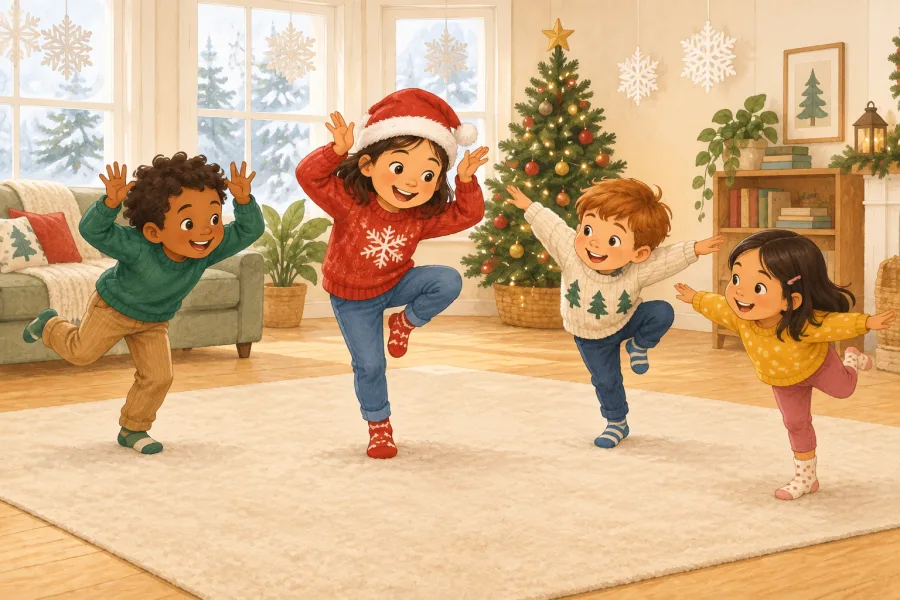
Give Simon Says a Christmas twist with reindeer hops, elf steps, and plenty of listening.
The only party game where lying perfectly still is the whole point. Parents love it for a reason.
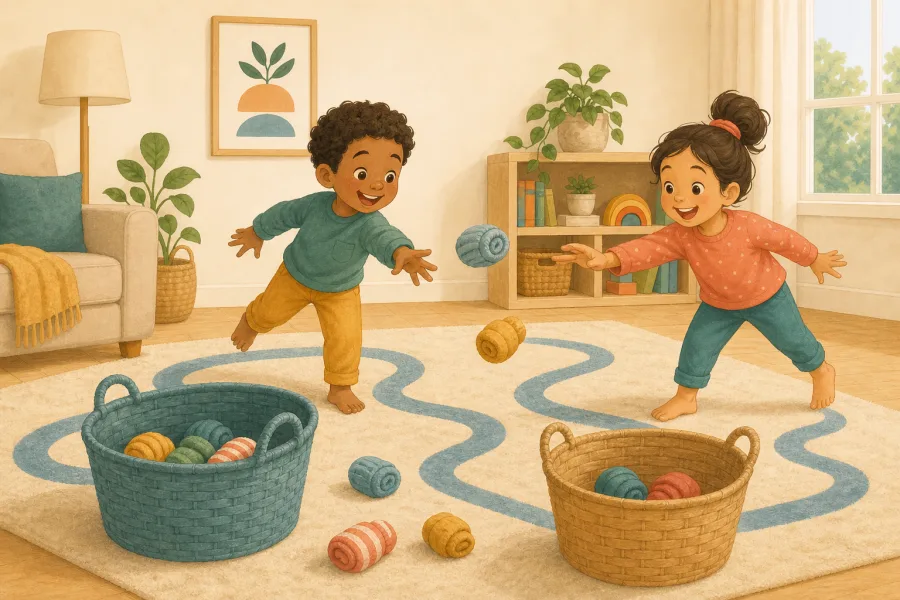
An indoor snowball fight with zero snow and zero mess — just rolled-up socks.
Party survival
Party games fail for predictable reasons: rules explained too long, eliminated kids with nothing to do, and prizes that matter more than playing.
Play one fast example round yourself. Thirty seconds of showing beats three minutes of telling a crowd of five-year-olds.
Kids who are "out" should re-enter within a round — collecting points, judging, or doing a silly task — or the game ends with most guests bored.
Have five ready, expect to use three. Cut a game the moment energy dips instead of pushing it to the planned end.
Helpful answers
Three to four organized games of 10–15 minutes each is usually enough, spaced between free play, food, and cake. Keep one or two backups ready in case a game ends early.
Choose games where each child performs at their own level rather than competing head-to-head: freeze dance, treasure hunts with picture clues, cooperative balloon games, and Sleeping Lions all scale across ages.
No — and skipping individual prizes avoids most party tears. If you want rewards, give the same small favor to everyone at the end, tied to the whole set of games rather than winning one.