
An activity you can start today
Hide and Seek
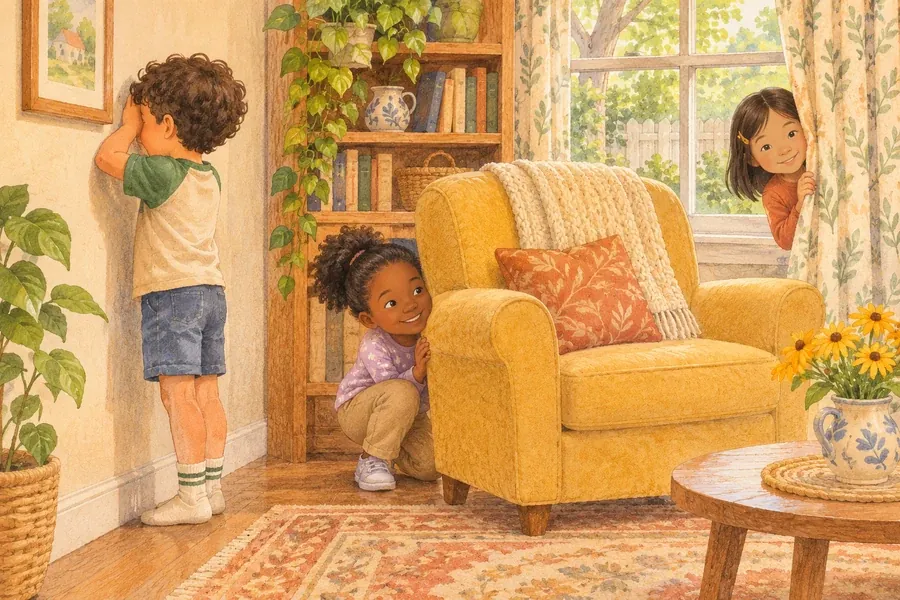
One player counts, everyone else hides. The classic that works in any house, yard or park, no supplies needed.
Know before you start
At a glance
- Setup
- 2 min
- Cleanup
- 0 min
- Mess
- low
- Energy
- moderate
- Adult help
- nearby
Before you start
- Walk the boundaries together and name the rooms or areas that are off-limits.
- Choose a home base where the seeker counts with eyes covered.
- Decide how high to count: 10 for little ones, 20 to 50 for bigger kids or bigger spaces.
Step by step
Let’s play
- Set the boundaries. Name where you can hide and where you can’t.
- Pick a seeker. The seeker covers their eyes at home base and counts out loud.
- Everyone hides. Hiders find a spot before the count ends and stay quiet.
- “Ready or not, here I come!” The seeker calls it out and starts searching.
- Find everyone. Found players can help search or wait at home base.
- Switch roles. The last person found becomes the next seeker.
See it in action
Watch this activity
Video: “21 EASY Games for CLASSROOMS ( NO SUPPLIES REQUIRED )” by ShawnMHowell on YouTube — cued to the moment this activity is shown.
The child’s-eye view
Why kids love it
There's a real thrill in being hidden while someone searches, and an even bigger one in being found. Under-5s also love the predictable surprise of 'Ready or not, here I come!'
Built into the fun
What they’re learning
The seeker counts out loud, which is real-world number practice. Older children can count by twos or fives to make it harder.
Hiders think about what the seeker can and can't see from different spots, and seekers plan a search route instead of running randomly.
Staying quiet and still while hidden, and counting all the way before peeking, are both small exercises in impulse control.
Make it fit your child
Ways to change the game
Sardines
One person hides and everyone else searches. Whoever finds the hider squeezes in with them until the last seeker finds the whole group.
Hide the toy
For 2 to 3-year-olds, hide a teddy bear while they cover their eyes and give 'warmer, colder' clues as they search.
Flashlight seek
Play in a dim room at dusk with the seeker holding a flashlight. Keep the space clear of tripping hazards.
Real-life fixes
If it’s not going to plan
My toddler keeps hiding in the same spot
That's normal and part of the fun at this age. Act surprised every time, then suggest one new spot together for the next round.
The seeker gives up and gets upset
Agree that after a count of 50, hiders make a small sound, like a cuckoo call, to give the seeker a clue.
Good to know
Frequently asked questions
What age can kids play hide and seek?
Around 2 and a half to 3, children enjoy simple versions with an adult as a partner. By 4 or 5 most can count, hide on their own and take a turn as seeker.
How do you make hide and seek safe indoors?
Set clear off-limits areas before the first round, including anything with a lid or latch, appliances, the garage and the bathroom. Check that every player is accounted for at the end of each round.
Kidtivity Lab activity guide · Last updated
Try next
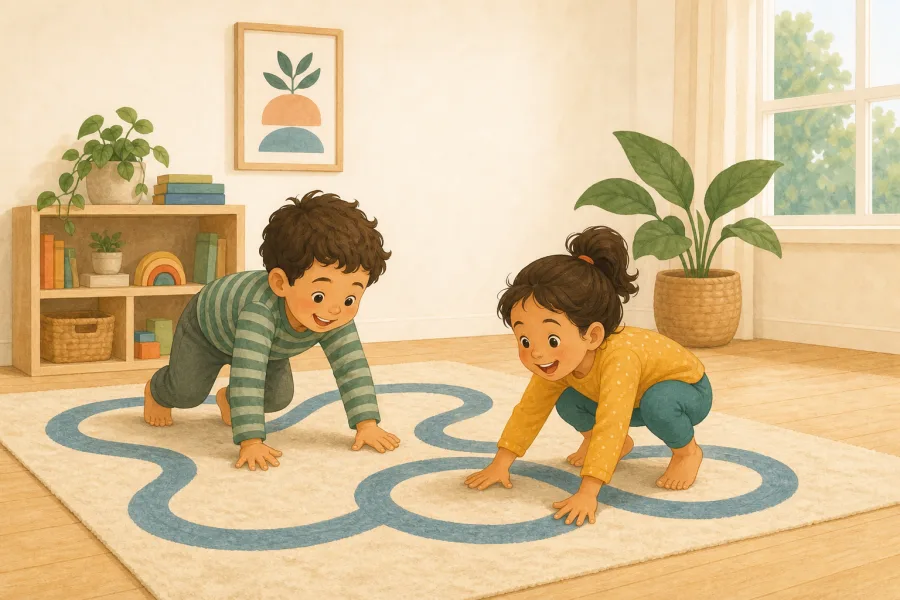
Animal Walk Race
Crawl, hop, and stomp to the finish line like your favorite animals.

Follow the Leader
March, hop, wiggle — one child chooses the movement and everyone else tries to keep up.
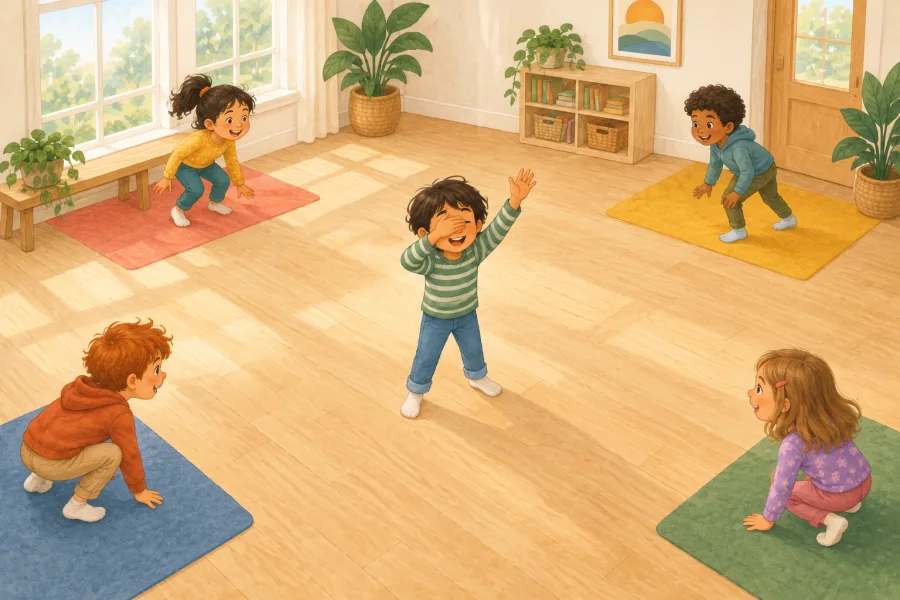
Four Corners
Four corners, one caller, quick feet: the classroom classic that turns any room into a game board.