
An activity you can start today
Four Corners
Four corners, one caller, quick feet: the classroom classic that turns any room into a game board.
Know before you start
At a glance
- Setup
- 3 min
- Cleanup
- 1 min
- Mess
- low
- Energy
- active
- Adult help
- hands-on
Before you start
- Mark corners clearly: colored paper taped to the floor beats pointing at vague walls.
- Walk the route once and clear furniture, bags, and rugs from the paths between corners.
- Decide the elimination rule by group: called corner sits one round only, or joins the caller team.
Step by step
Let’s play
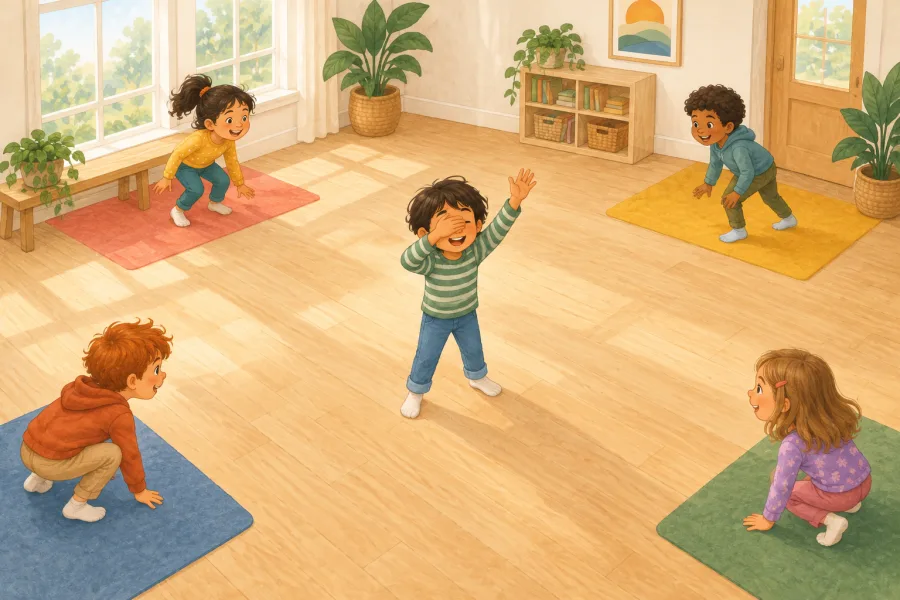
- Mark the map. Tape a different colored sheet in each corner of the room.
- Position the caller. The caller stands still in the center or at the edge, closes their eyes, and counts to ten out loud.
- Sneak and commit. Players tiptoe to a corner before the count ends — then freeze.
- Call the corner. Eyes still closed: “Blue!” Everyone on blue is called — one round out, or joins the caller’s advisory team.
- Rotate and rerun. Last survivor becomes the next caller; rounds take a minute, so everyone calls before the cake comes out.
The child’s-eye view
Why kids love it
Every round combines a quick choice with a moment of suspense. Because luck matters more than speed or skill, younger players can surprise the older ones.
Built into the fun
What they’re learning
Players decide whether to follow the group or choose an empty corner, then see that neither strategy guarantees a safe round.
Moving quietly while listening for the count to end, then freezing on the call, exercises the same listen-then-act control classrooms depend on.
A one-round break keeps disappointment brief and gives children another chance quickly. Use the no-elimination version if sitting out is not fun for the group.
Make it fit your child
Ways to change the game
Trivia corners
Corners become answers to a question about the caller. Guess right to stay in — suddenly it's a friendship quiz.
Toddler version
For 2–3s, drop elimination entirely: caller names a color, everyone runs to that corner together. Pure color-recognition sprinting.
Move like you go
Each round sets a travel style — hop, crab-walk, tiptoe — turning the sneaking phase into a movement workout.
Real-life fixes
If it’s not going to plan
Kids hover between corners to cheat the call
Set one clear rule: when counting stops, both feet must be on a marker. Practice a no-elimination round first so everyone understands.
Eliminated kids get bored
Called players join the caller as advisors, whispering which corner to pick. Being out becomes a promotion to the deciding side.
Good to know
Frequently asked questions
How do you play Four Corners at home?
Mark four corners of a room, one player closes their eyes and counts to ten while everyone sneaks to a corner, then the caller names one corner. Players caught there sit a round or join the caller. Last player standing calls next.
What age is Four Corners for?
The classic rules work from about 4–5, when kids can commit to a corner and accept being called. The no-elimination color version brings it down to age 2, making it a rare whole-party game for mixed ages.
Kidtivity Lab activity guide · Last updated
Try next

Animal Mashup
Walk like a crab, roar like a lion — at the same time. Instant giggles, zero supplies.
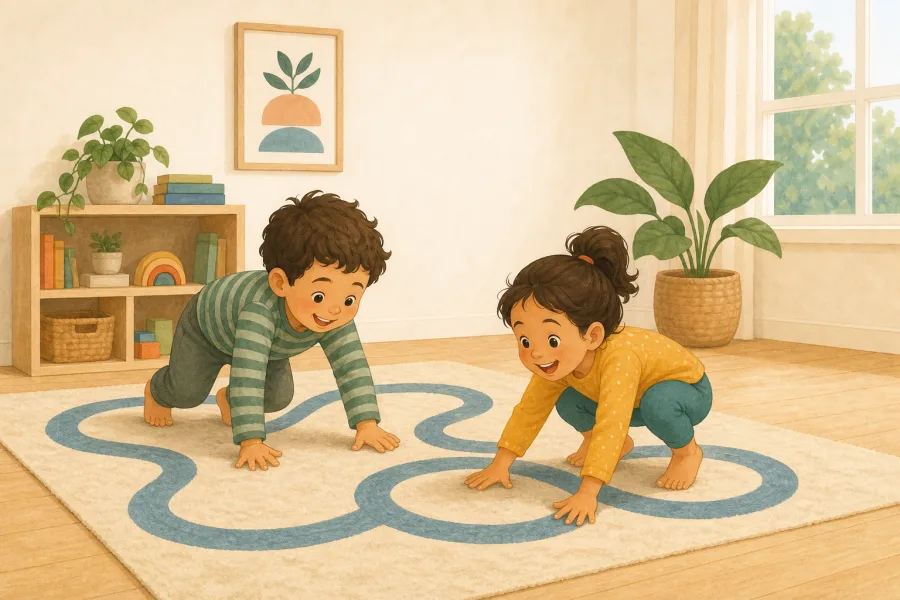
Animal Walk Race
Crawl, hop, and stomp to the finish line like your favorite animals.
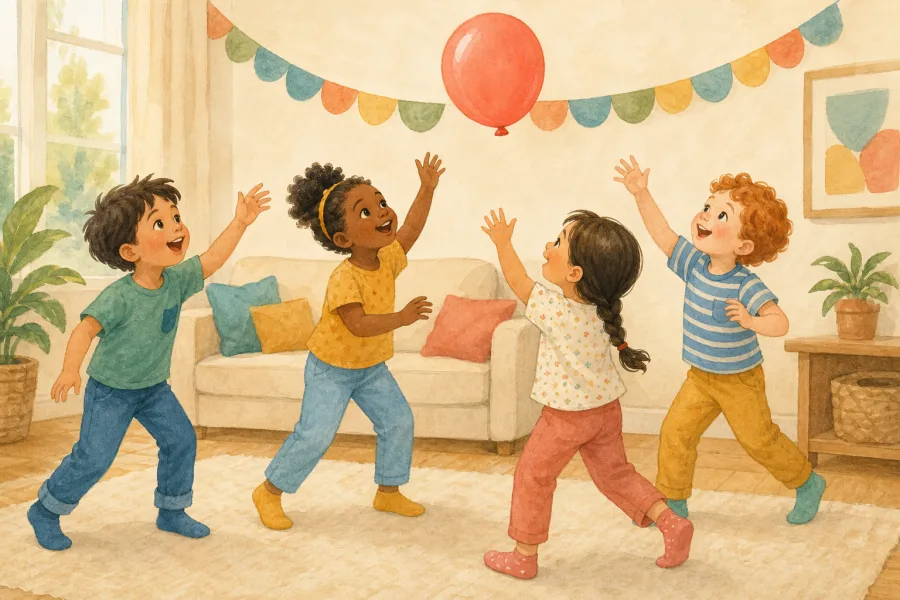
Balloon Keep-Up
One balloon, one rule: don't let it touch the floor. Instant cooperative chaos.