
An activity you can start today
Picture Clue Treasure Hunt
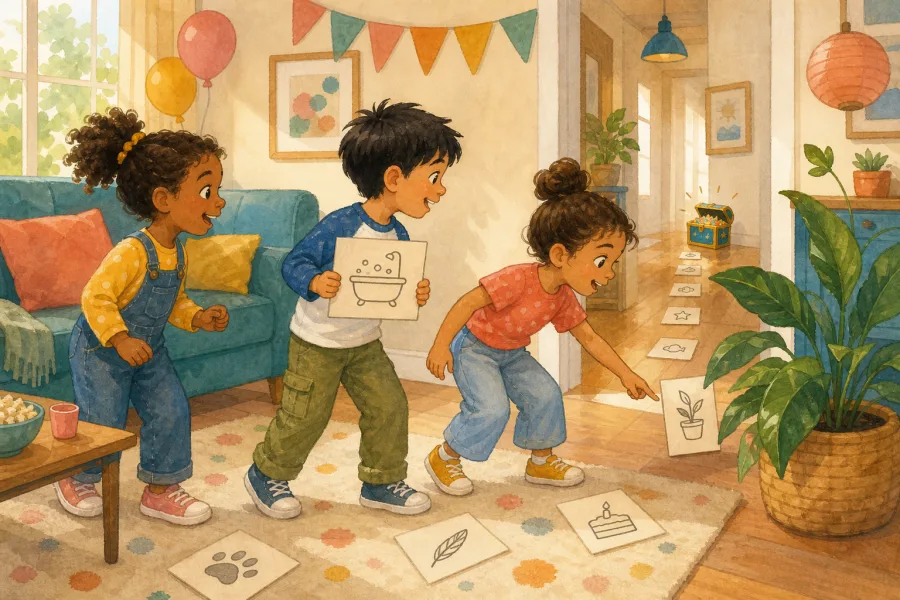
A trail of simple drawn clues leads from spot to spot — with real treasure at the end.
Know before you start
At a glance
- Setup
- 10 min
- Cleanup
- 2 min
- Mess
- low
- Energy
- moderate
- Adult help
- nearby
Before you start
- Walk the route once: each clue should picture the place where the NEXT clue hides.
- Hide clues at kid height and slightly visible — the hunt is in decoding, not in searching every drawer.
- For parties, make one clue chain for the whole group and rotate who decodes each clue, or teams will trample each other.
Step by step
Let’s play
- Plan the trail. Pick 5–8 hiding spots forming a route through the home.
- Draw the clues. On each paper, sketch the place where the next clue waits. Clue #1 stays in your hand; the treasure sits at the final spot.
- Hide them in reverse. Start from the treasure and work backwards — the only way to not confuse yourself.
- Hand over clue #1. Then follow the expedition, narrating discoveries and rationing hints.
- Celebrate the find. The treasure is shared, the drawings become fridge art, and “again!” is guaranteed.
The child’s-eye view
Why kids love it
Each clue is a small victory with an immediate reward: the next clue. The chain structure keeps momentum better than any single puzzle, and the promise of treasure makes even reluctant kids sprint to the fridge.
Built into the fun
What they’re learning
Reading a rough sketch as 'the washing machine' is the same leap children make when letters start standing for sounds.
Ambiguous clues force hypotheses: it looks like a chair — but which chair? Testing and revising guesses is early scientific thinking.
Hunts naturally produce under, behind, next to, inside — the prepositions preschoolers are still wiring in.
Make it fit your child
Ways to change the game
Photo hunt
For 3-year-olds, use phone photos of the hiding spots instead of drawings — same structure, zero ambiguity.
Riddle upgrade
For readers, write one-line riddles ('I'm cold inside and hum all day') instead of pictures.
Kid-made hunt
Flip it: the child draws the clues and hides the trail for YOU. Watching a 5-year-old encode locations is worth the wait.
Real-life fixes
If it’s not going to plan
A child gets stuck on a clue and frustration builds
Give graded hints: name the room, then warmer/colder, then walk toward it together. Never just reveal — the find must stay theirs.
At a party, one fast kid finds everything
Assign clue turns in order before starting, and make the treasure explicitly shared — one chest, equal favors for all.
Good to know
Frequently asked questions
How many clues should a treasure hunt have?
Five to eight is the sweet spot: enough to feel like an adventure, short enough to finish before attention runs out. For 3-year-olds, three or four picture clues are plenty.
What makes a good treasure?
It matters less than the hunt itself. A favorite snack, a small toy, stickers, or party favor bags all work — for groups, one shared treasure box prevents comparison tears.
Kidtivity Lab activity guide · Last updated
Try next
Animal Mashup
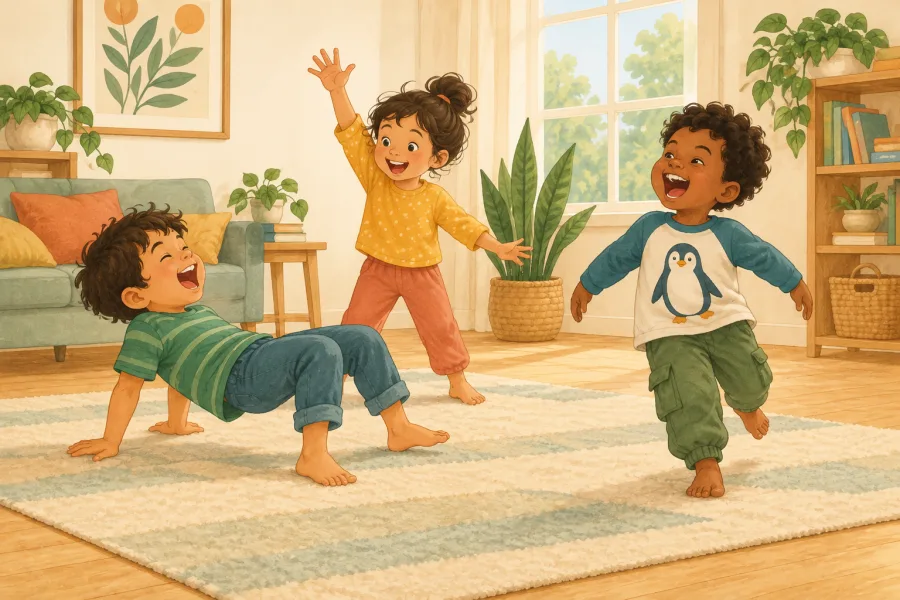
Walk like a crab, roar like a lion — at the same time. Instant giggles, zero supplies.
Charades for Kids
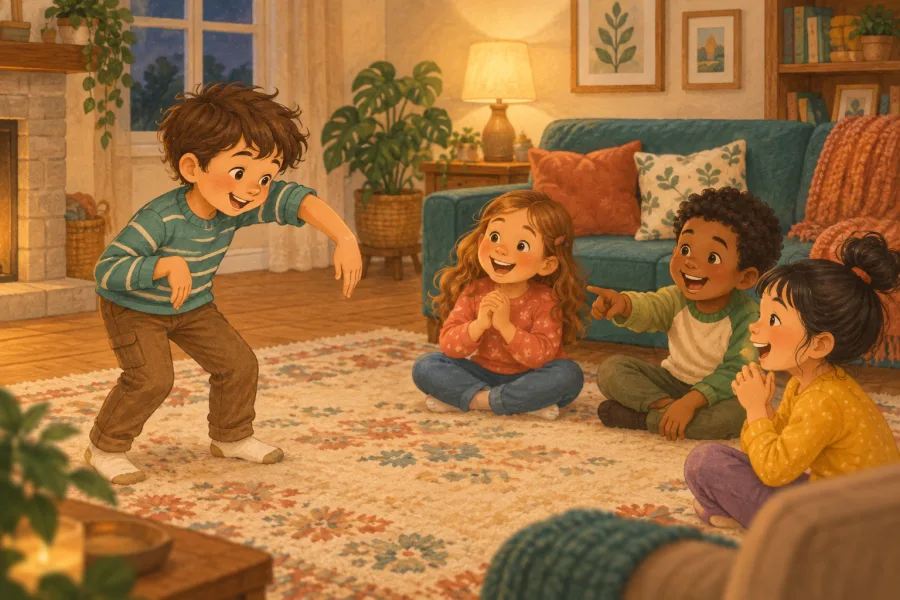
Act it out, no words allowed — the classic guessing game sized down for kid-sized actors.
Figurine Book Match
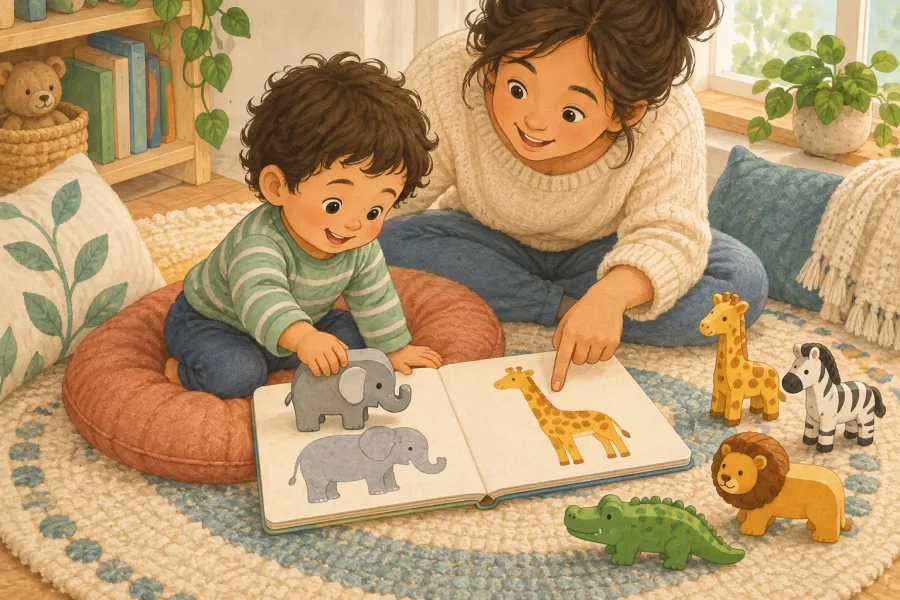
Toy animals meet their portraits: match the plastic elephant to the elephant on the page.