
An activity you can start today
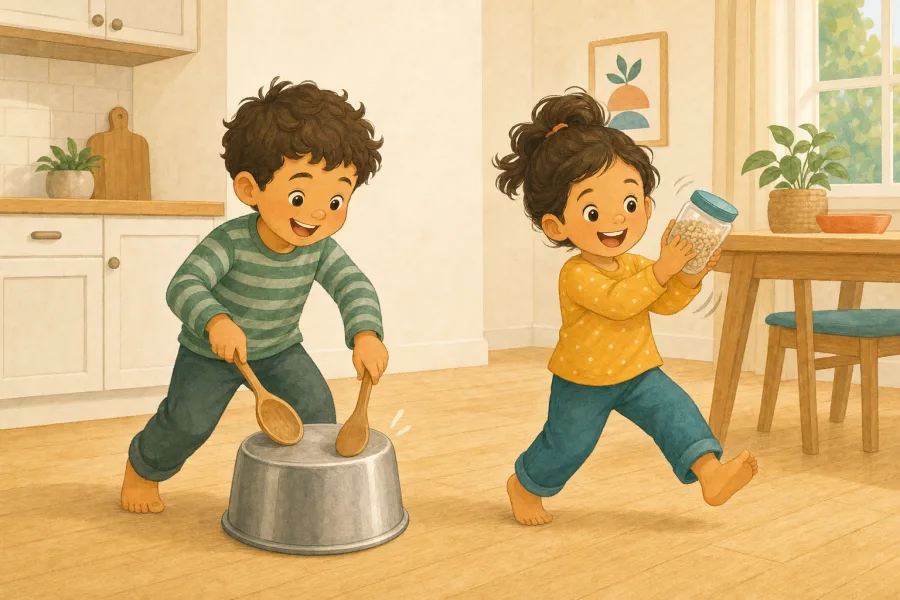
Kitchen Band Parade
Pots become drums, spoons become drumsticks — march and make some noise.
Know before you start
At a glance
- Setup
- 4 min
- Cleanup
- 3 min
- Mess
- low
- Energy
- active
- Adult help
- nearby
Before you start
- Choose lightweight pans and wooden utensils; put glass, ceramic, and sharp tools out of reach.
- Seal any homemade shaker twice and check it before every use.
- Agree on one room or a short parade route.
Step by step
Let’s play
- Hand out instruments. A pot drum, a spoon pair, a sealed rice shaker.
- Warm up. Loud! Quiet! Fast! Slooooow! (This is secretly a self-control game.)
- March. Lead a parade through the whole home, everyone playing their part.
- Big finale. Count down 3-2-1… CRASH! Then applause and a bow.
The child’s-eye view
Why kids love it
Every hit makes an immediate sound, and ordinary kitchen objects suddenly feel important. Marching turns noise into a shared event with a beginning, a conductor, and a grand finale.
Built into the fun
What they’re learning
Copying a short beat helps children hear patterns and coordinate movement with sound.
Responding to loud, quiet, start, and stop signals makes self-control part of the music.
Different containers let children compare high, low, ringing, and dull sounds.
Make it fit your child
Ways to change the game
Apartment-friendly band
Tap silicone utensils on cushions, clap patterns, and use sealed soft containers instead of metal pans.
Follow the conductor
Add gestures for faster, slower, louder, softer, and complete silence.
Real-life fixes
If it’s not going to plan
The sound becomes overwhelming
Switch to a copy-my-beat game with one instrument at a time, then finish with a deliberately quiet round.
Good to know
Frequently asked questions
What household objects make safe instruments?
Wooden spoons, plastic containers, silicone tools, upside-down lightweight pans, and securely sealed shakers are useful choices.
How do we protect children’s hearing?
Keep metal instruments away from ears, avoid prolonged crashing, and move to softer surfaces if the room begins to feel uncomfortably loud.
Kidtivity Lab activity guide · Last updated
Try next
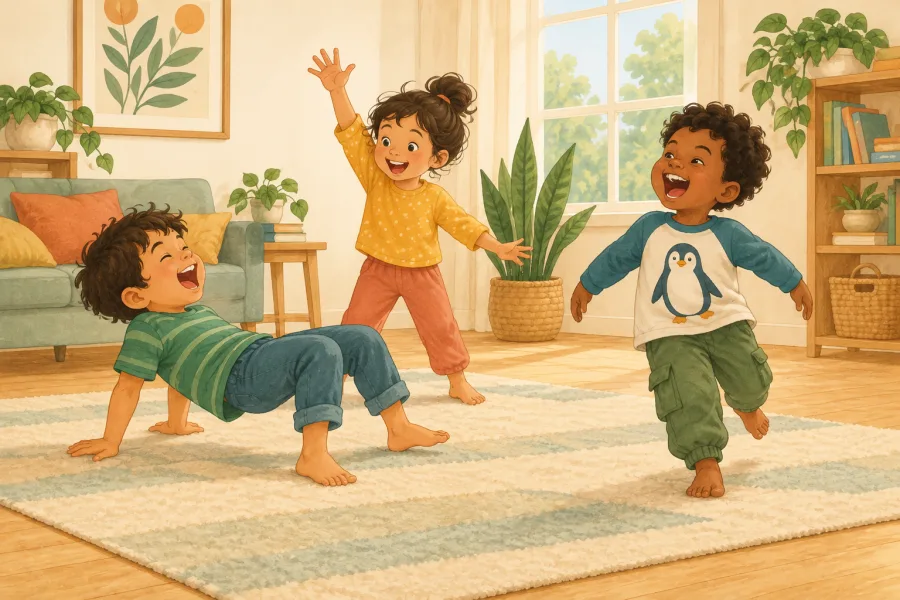
Animal Mashup
Walk like a crab, roar like a lion — at the same time. Instant giggles, zero supplies.
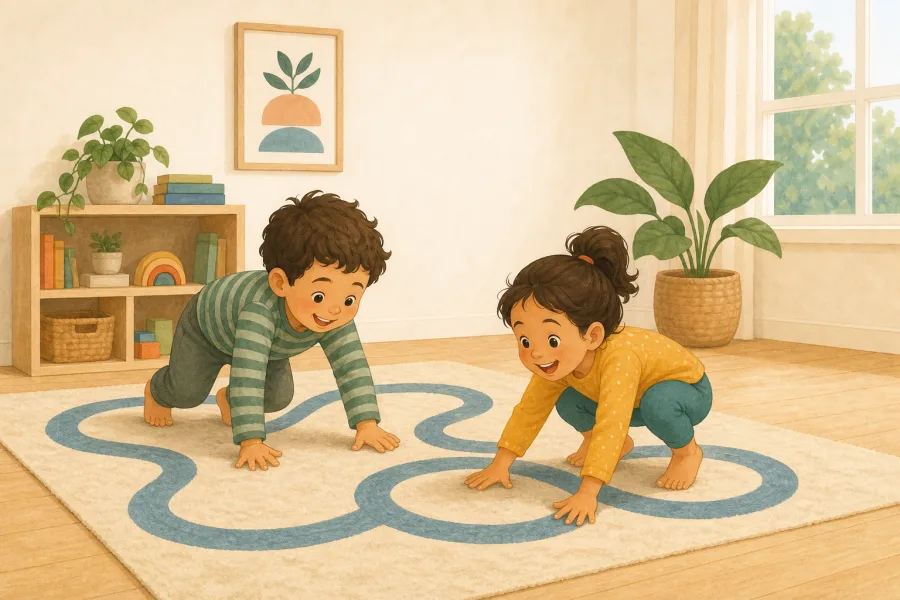
Animal Walk Race
Crawl, hop, and stomp to the finish line like your favorite animals.
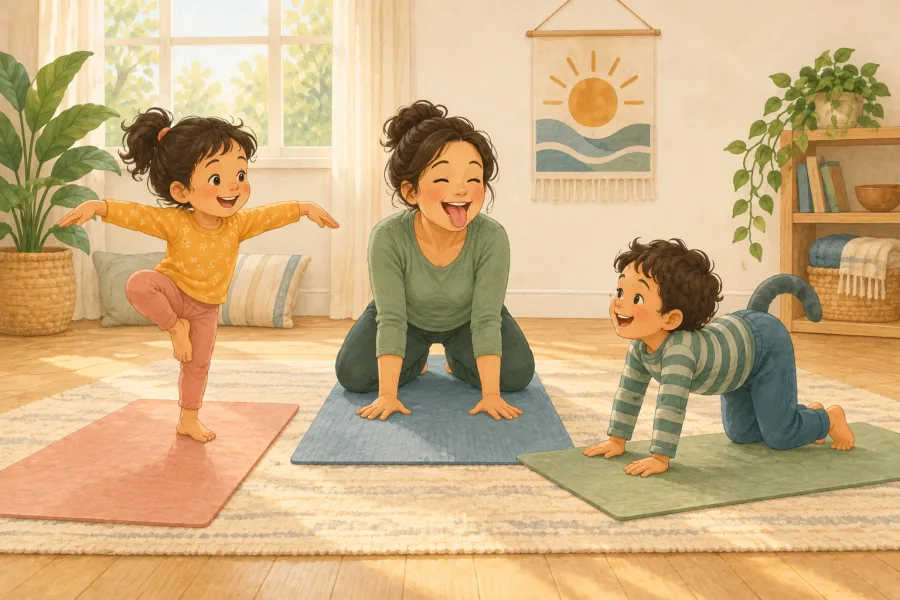
Animal Yoga
Stretch like a cat, balance like a flamingo, roar like a lion — yoga disguised as a trip to the zoo.