
An activity you can start today
Teddy Bear Check-Up
The stuffed animals are feeling poorly today — luckily, the doctor is in.
Know before you start
At a glance
- Setup
- 3 min
- Cleanup
- 3 min
- Mess
- low
- Energy
- calm
- Adult help
- nearby
Before you start
- Let the child choose which patients are sick and what's wrong — their choices often tell you what's on their mind.
- Set up a 'waiting room' so patients queue: the structure stretches the play and adds counting for free.
- Play along as a worried pet owner, not as the boss of the game.
Step by step
Let’s play
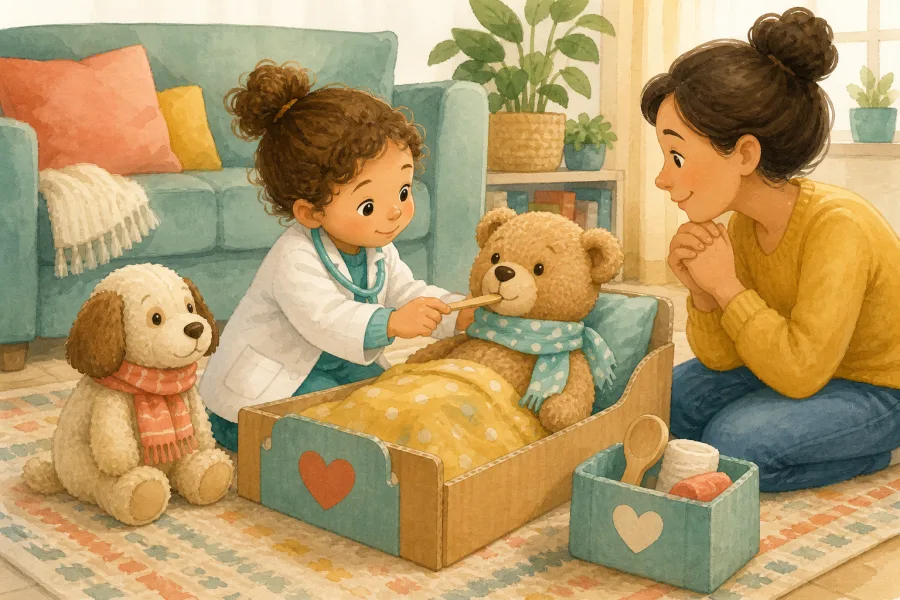
- Open the clinic. Line up 2–4 stuffed patients; the child gets the doctor tools (spoon-thermometer, cup of medicine, scarf bandages).
- Hear the complaint. You play the worried owner: “Doctor, Bunny won’t eat his carrots!”
- Run the check-up. Listen to the heart, check the temperature, look at ears and tummy — the doctor announces the diagnosis.
- Treat and bandage. Wrap the paw, pour the pretend medicine, prescribe “three cuddles and a nap”.
- Next patient! Rotate through the waiting room until every animal is on the mend.
The child’s-eye view
Why kids love it
Being the doctor means being the powerful one for once — the one who knows things, fixes things, and tells grown-ups (and bears) what to do. The ritual of check-up steps is soothing in itself.
Built into the fun
What they’re learning
Comforting a 'sick' bear rehearses perspective-taking: what does the patient feel, what would help?
Temperature, bandage, medicine, better, rest — words children need for their own doctor visits arrive through play first.
A check-up has an order: listen, look, measure, treat, comfort. Holding a multi-step routine is early executive function.
Make it fit your child
Ways to change the game
Vet clinic
Same game, animal patients only — with roars, feathers, and diagnoses like 'too much jumping'.
X-ray drawing
Trace a teddy on paper and draw what's inside — bones, a tummy full of honey — adding a quiet table activity to the game.
Real-visit rehearsal
Before an actual doctor appointment, walk teddy through exactly what will happen — pretend play is the best-known cure for check-up fear.
Real-life fixes
If it’s not going to plan
The child only wants to give endless injections
Add drama elsewhere: the bear is scared of the shot and needs comforting first — care and reassurance become part of the fun instead of just the jab.
Play collapses after two minutes
Introduce an emergency: a new patient arrives with a dramatic ailment ('this dinosaur ate TEN cakes'). A fresh case restarts the engine.
Good to know
Frequently asked questions
Why is doctor pretend play good for kids?
It builds empathy, teaches body vocabulary, processes real medical experiences, and gives children control over situations where they're usually the small, examined one. It's also a recognized way to reduce fear before real appointments.
Is this a good sick-day activity?
One of the best: it's physically calm, it can be played lying on a couch, and treating patients with the child's own symptoms helps them name and manage what they feel.
Kidtivity Lab activity guide · Last updated
Try next

Hum That Tune
Hum a song, no words allowed — first one to name it takes the next hum.

Blanket Fort Reading Den
Build a cozy den from blankets, then hide inside with books and a flashlight.
Glitter Calm-Down Bottle
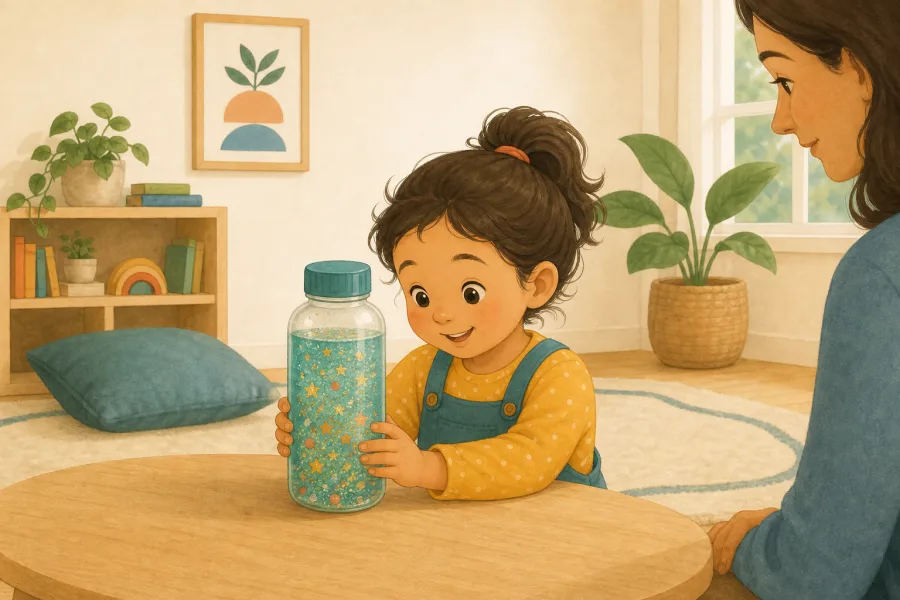
Shake it, watch the glitter storm settle, and feel your own storm settle too.