
An activity you can start today
Fall Flower Arranging
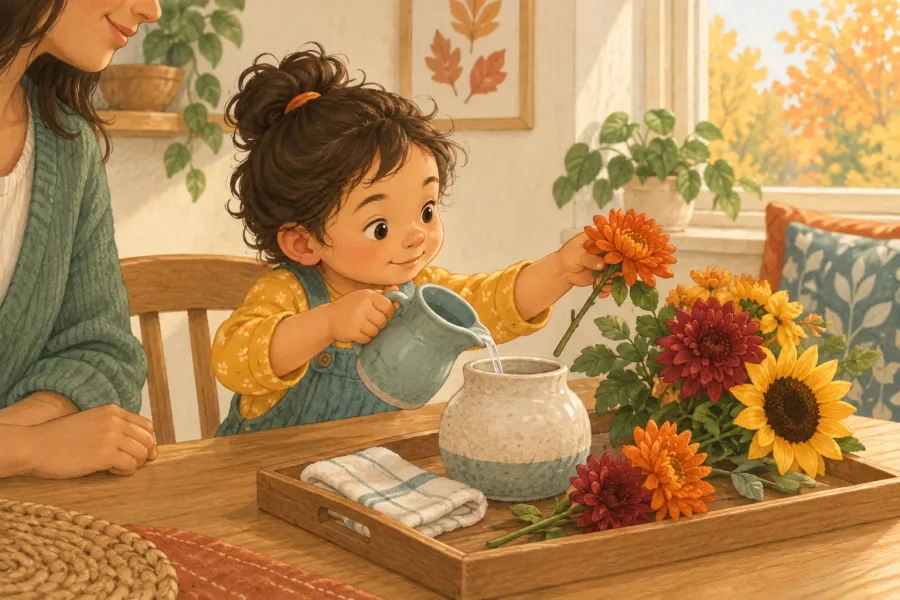
A small vase, a jug of water, and autumn flowers: real florist work for very small florists.
Know before you start
At a glance
- Setup
- 3 min
- Cleanup
- 3 min
- Mess
- low
- Energy
- calm
- Adult help
- nearby
Before you start
- Pre-trim stems to vase-friendly lengths, or let 4+ kids snip with safety scissors.
- Fill the little jug only as much as the vase should hold, self-limiting pouring.
- Show the sequence once, slowly and silently: pour, place, adjust, step back and LOOK.
Step by step
Let’s play
- Set the florist bench. Tray, vase, flowers on the left, little jug of water, cloth.
- Pour the water. Small jug into vase neck, the trickiest, proudest step.
- Place the flowers. One stem at a time; when it won’t fit, the puzzle begins.
- Adjust and admire. Step back, look with the eyes, smell with the nose, florist’s ritual.
- Deliver the masterpiece. The vase takes its place on the family table, maintained by its maker till the next bouquet.
The child’s-eye view
Why kids love it
This feels like meaningful grown-up work: pouring real water, handling flowers carefully, and deciding where each stem belongs. The finished vase gives the activity a visible purpose.
Built into the fun
What they’re learning
A narrow vase neck is the ultimate pouring target, wrist control with immediate wet feedback when it goes wrong.
Petals and stems respond to pressure, so children can practise holding something gently and adjusting their grip.
Stems block each other, tall ones flop, the fit changes with every addition, a physical puzzle with a pretty answer.
Stepping back to look and smell encourages children to notice color, balance, scent, and the choices they made.
Make it fit your child
Ways to change the game
Nature bouquet
No florist needed: dandelions, grasses, colored leaves and interesting twigs from the walk arrange just as proudly.
Color menu
Offer flowers in 2-3 colors and take their 'order': can you make one with two yellows and one red? Sorting meets styling.
Many tiny vases
A row of egg cups, one bloom each, marching down the dinner table, easier for young hands and maximally decorative.
Real-life fixes
If it’s not going to plan
The water misses the vase entirely
Offer a smaller jug and a vase with a wider neck. Keep the cloth on the tray so wiping a spill feels like part of the job.
Petals get plucked instead of arranged
Offer one designated sacrifice-flower for petal research, and guard the rest as 'workers'. Curiosity satisfied, arrangement survives.
Good to know
Frequently asked questions
What age can toddlers do flower arranging?
From about 18 months with hand-over-hand pouring and chunky stems, independently around 2.5-3. Scissors for stem-trimming join at 4+. It's a staple practical-life activity in Montessori toddler classrooms.
What flowers are best for kids to arrange?
Sturdy fall mums are ideal: cheap, tough-stemmed, non-toxic for handling, and they come in the whole autumn palette. Carnations and sunflowers also survive small hands well; skip lilies (toxic pollen) and anything thorny.
Kidtivity Lab activity guide · Last updated
Try next

Blanket Fort Reading Den
Build a cozy den from blankets, then hide inside with books and a flashlight.
Glitter Calm-Down Bottle
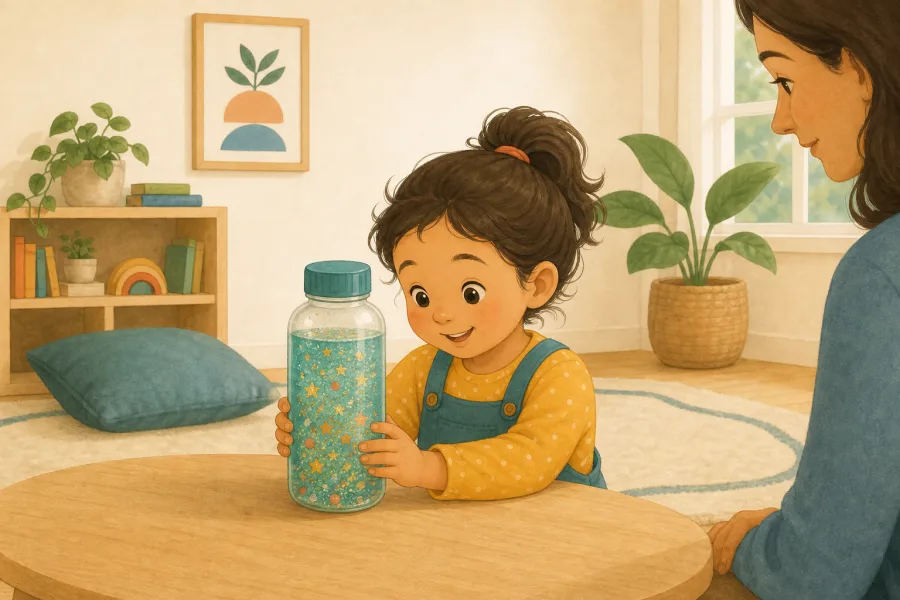
Shake it, watch the glitter storm settle, and feel your own storm settle too.

Shadow Puppet Theater
Turn a flashlight and a wall into a stage for barking dogs and flying birds.