
An activity you can start today
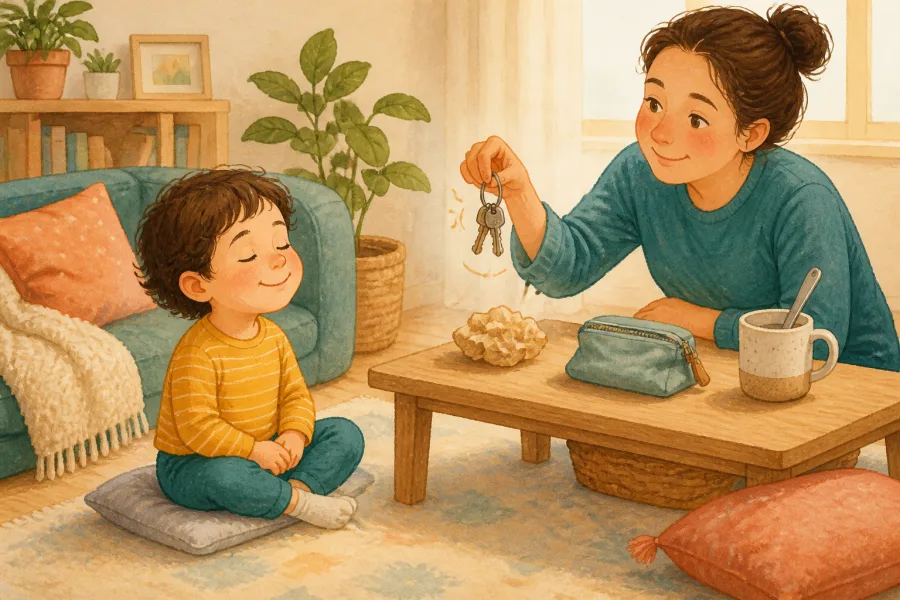
Guess the Sound
Close your eyes — was that keys, a zipper, or a spoon in a cup? Ears only.
Know before you start
At a glance
- Setup
- 1 min
- Cleanup
- 0 min
- Mess
- low
- Energy
- calm
- Adult help
- nearby
Before you start
- Gather 5–6 sound-makers behind your back or under a cloth before the first round.
- Agree on the ritual: eyes closed (or a scarf blindfold if that's exciting rather than scary), no peeking, one replay allowed.
- Start with easy, distinct sounds — crinkling paper vs. jingling keys — and save the sneaky ones.
Step by step
Let’s play
- Collect the noisemakers. Quietly gather 5–6 objects — keys, paper, a zipper, a cup and spoon — out of sight.
- Eyes closed. The guesser shuts their eyes or snuggles under the blanket.
- Make one sound. Jingle, crinkle, tap. One replay allowed on request.
- Guess and reveal. Right or wrong, show the object and talk about what gave it away.
- Swap roles. Now the child collects the sounds and stumps you — the best half of the game.
The child’s-eye view
Why kids love it
Closing your eyes turns the ordinary room mysterious. Every correct guess feels like a superpower — 'I knew it with my EYES SHUT' — and swapping roles means they get to trick you right back.
Built into the fun
What they’re learning
Telling apart similar sounds — teaspoon in a mug vs. keys — is the same ear-training that underpins hearing the difference between similar speech sounds.
Wrong guesses are the good part: 'it was scratchy... like paper but heavier' pushes children to describe qualities of sound with real precision.
The game only works in silence, so children hold themselves still and focused voluntarily — no reminders needed.
Make it fit your child
Ways to change the game
Sound memory chain
Make two sounds in a row, then three — the guesser must name them in order. A pure working-memory workout.
Sound treasure hunt
After guessing, the child opens their eyes and finds the object that made the sound somewhere in the room.
Voice edition
Hum, whisper, click, or imitate animals instead of using objects — a zero-prop version for waiting rooms and car rides.
Real-life fixes
If it’s not going to plan
The child peeks every time
Make peeking pointless instead of forbidden: hold the object inside a pillowcase or under the blanket while sounding it.
Guesses are wild and random
Offer two choices — 'was it the keys or the spoon?' — then three, building toward open guessing as their ear sharpens.
Good to know
Frequently asked questions
What age is Guess the Sound good for?
From about two and a half, children can match obvious sounds to familiar objects, especially with two-choice prompts. Older kids handle sequences, subtle differences, and love running the game themselves.
Is this a good activity for a sick child?
Yes — it's one of the few genuinely fun games that requires zero movement and zero shared touching. The guesser can play entirely from under a blanket, and rounds can stop the moment energy fades.
Kidtivity Lab activity guide · Last updated
Try next
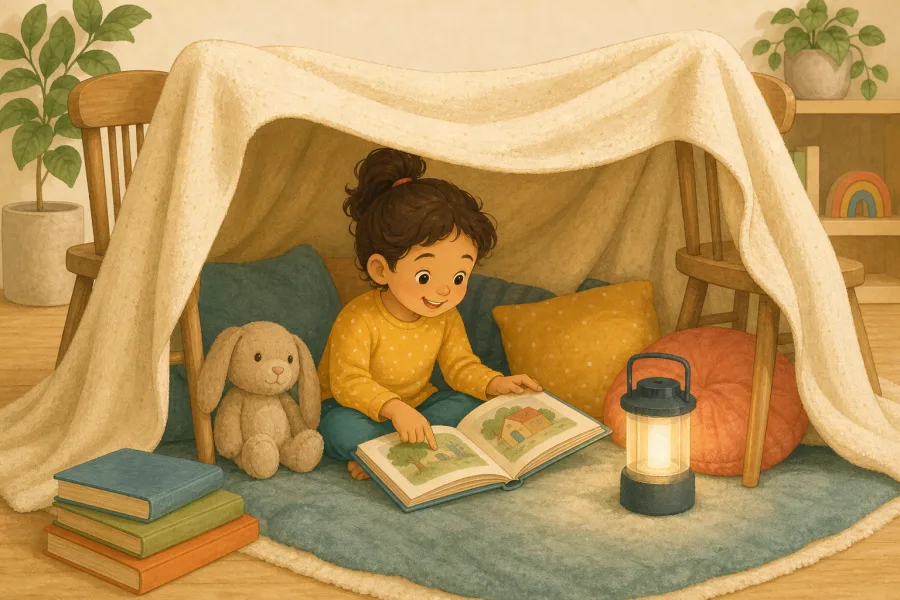
Blanket Fort Reading Den
Build a cozy den from blankets, then hide inside with books and a flashlight.
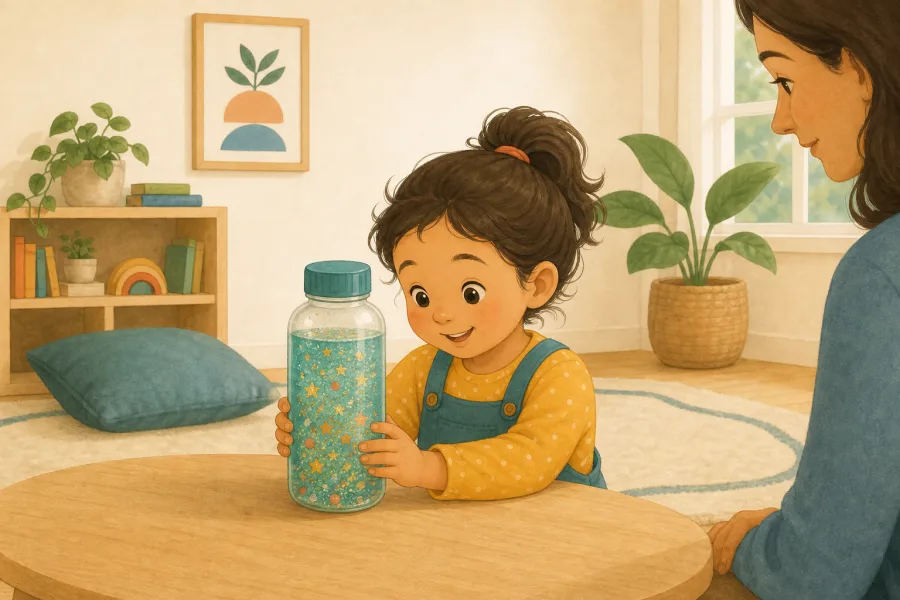
Glitter Calm-Down Bottle
Shake it, watch the glitter storm settle, and feel your own storm settle too.
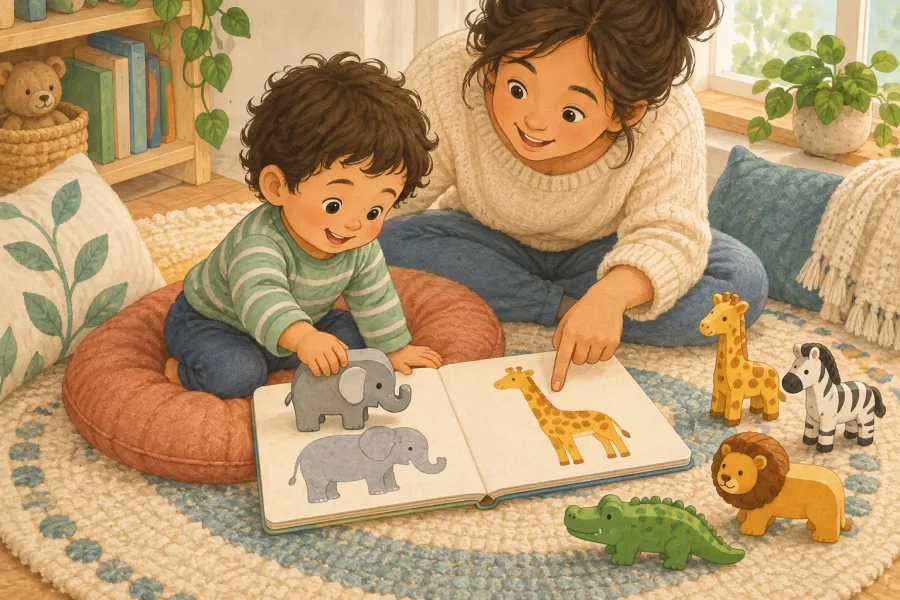
Figurine Book Match
Toy animals meet their portraits: match the plastic elephant to the elephant on the page.