
An activity you can start today
Sponge Water Transfer
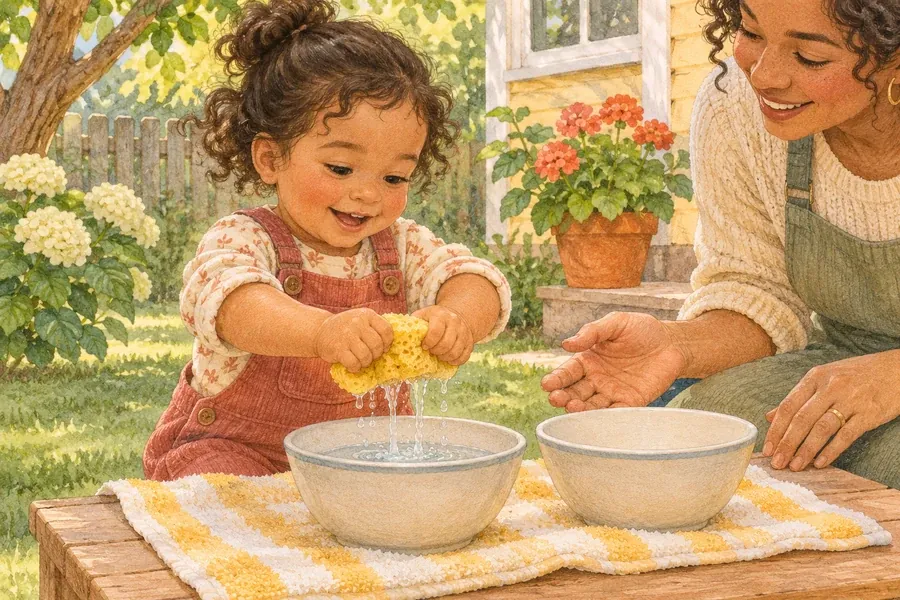
Two bowls, one sponge, and a simple job: soak up the water, squeeze it into the other bowl, repeat.
Know before you start
At a glance
- Setup
- 2 min
- Cleanup
- 3 min
- Mess
- medium
- Energy
- calm
- Adult help
- nearby
Before you start
- Set both bowls on a towel or tray so drips stay in one spot.
- Pour just an inch of water into one bowl, not more.
- Show one slow soak and squeeze, then hand over the sponge.
Step by step
Let’s play
- Set up two bowls. Put an inch of water in one bowl and leave the other empty. Place both on a towel.
- Show the squeeze. Soak the sponge, lift it, and squeeze it slowly into the empty bowl while your child watches.
- Hand it over. Give your child the sponge and let them try. Stay close for under-3s.
- Let them repeat. Fill, lift, squeeze, and watch the bowls slowly swap. Refill as needed.
- Add a tool. Bring in a baster or small cup for a new way to move the water.
- Empty and dry. Pour the water out right after play and wring the sponge dry.
See it in action
Watch this activity
Video: “Easy TODDLER ACTIVITIES to Entertain a 2-3 Year Old at Home” by The Purple Alphabet on YouTube — cued to the moment this activity is shown.
The child’s-eye view
Why kids love it
The sponge does something immediately: it gets heavy, then water runs out when they squeeze. Fill, squeeze, fill, squeeze is a loop they can run all by themselves, and the bowls slowly trade places.
Built into the fun
What they’re learning
Wringing water out of a sponge asks children to close their whole hand and hold the squeeze, which builds the same muscles used for gripping crayons and utensils.
Children see right away that a dry sponge stays light and a wet one gets heavy, and that squeezing changes where the water goes.
The fill and empty cycle repeats without a set finish line, so many children settle into a quiet rhythm and keep going for several minutes.
Make it fit your child
Ways to change the game
Add a baster
Offer a turkey baster or bulb syringe alongside the sponge. Squeezing the bulb pulls water up, and releasing it pushes water out.
Color swap
Put a drop of food coloring in one bowl so children can watch the clear water change as they transfer it.
Sidewalk squeeze
On a warm day, move the bowls to the sidewalk and let kids squeeze water onto chalk drawings or a dry patch of pavement.
Real-life fixes
If it’s not going to plan
Water ends up all over the table
Use smaller bowls and less water. Keep the towel underneath and refill only when the first bowl is nearly empty.
The child loses interest after a minute
Add a second tool, like a small cup or baster, or switch the bowls to different sizes so the transfer looks different.
Good to know
Frequently asked questions
What age can kids do sponge water transfer?
Around 18 months is a good start if your child is past constant mouthing. Younger toddlers may need you to guide their hands at first. Older kids can try the baster version.
What can I use instead of a sponge?
A clean kitchen sponge cut in half works well. You can also try a washcloth, a cotton ball for older kids, or a bulb syringe for a different squeeze.
Kidtivity Lab activity guide · Last updated
Try next
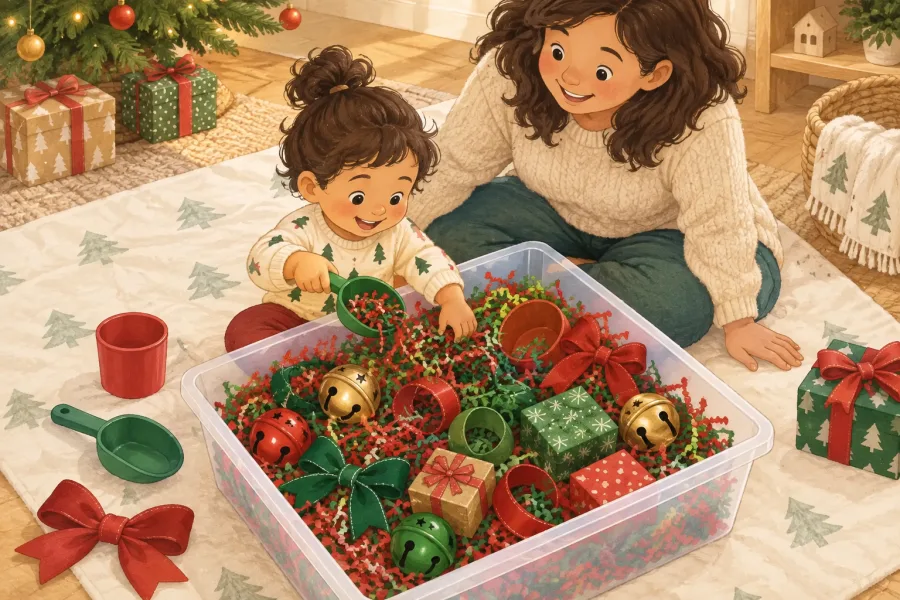
Christmas Sensory Bin
Bells, bows, ribbon and scoops in one tub: December in a box, hands-first.
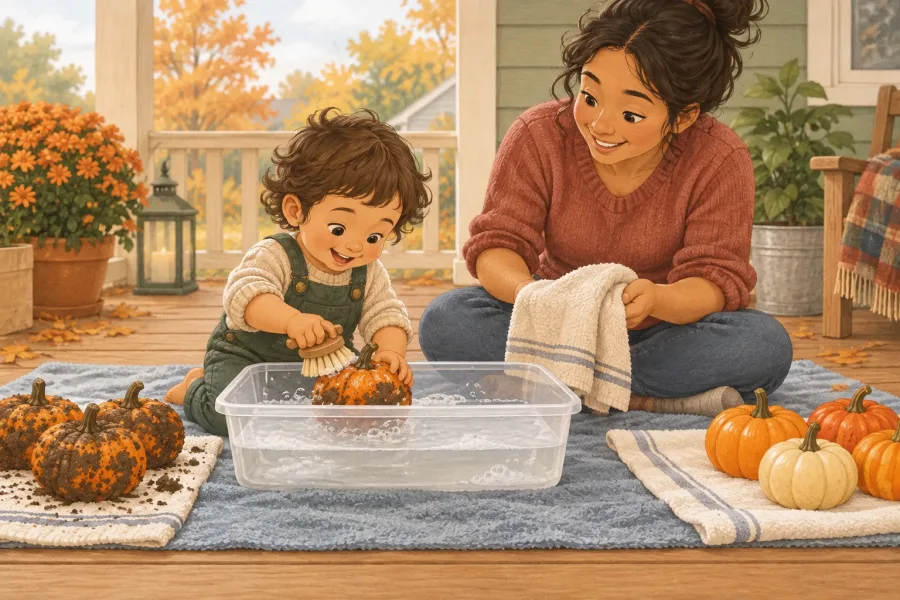
Pumpkin Wash Station
A tub of soapy water, a brush, and muddy pumpkins fresh from the patch: open for business.
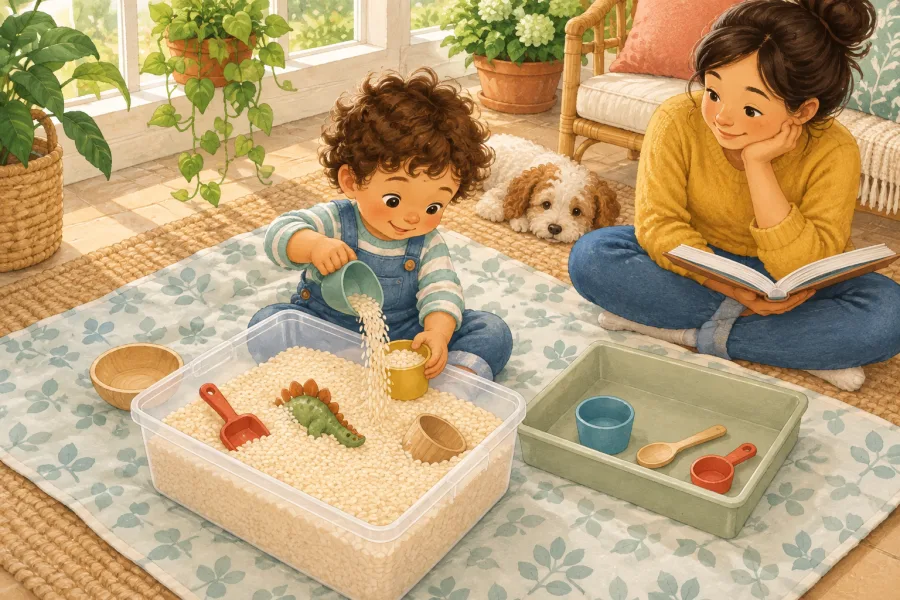
Rice Sensory Bin
A tray of dry rice, a few scoops and hidden toys — the sandbox that lives in your kitchen.