
An activity you can start today
Sink or Float Predictions
Guess which objects sink, then drop them in and see. The surprises are the best part.
Know before you start
At a glance
- Setup
- 5 min
- Cleanup
- 5 min
- Mess
- medium
- Energy
- calm
- Adult help
- nearby
Before you start
- Fill a clear bin or the sink with about 4 inches of water and put a towel underneath.
- Draw a simple two-column chart on paper: SINK on one side, FLOAT on the other.
- Set out the 10 objects in a row so your child can see the whole collection.
Step by step
Let’s play
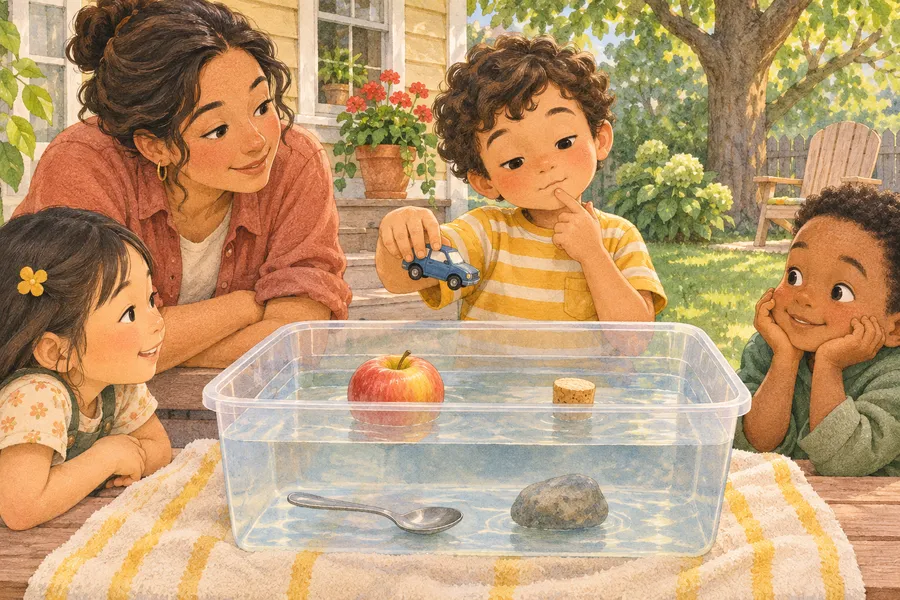
- Set up the water and the chart. Fill a clear bin or the sink with a few inches of water. Draw two columns on paper, one for sink and one for float.
- Line up the objects. Put all 10 in a row: metal spoon, cork, apple, coin, leaf, crayon, sponge, toy car, plastic lid, rock.
- Guess first. Your child holds one object and says “sink” or “float” before it goes in. Write or draw the guess on the chart if you like.
- Drop and watch. Let them drop it in and watch what happens. Then move it to the matching column on the chart.
- Talk about the surprises. The apple floats, the coin sinks. Ask “did that surprise you?” and let them try a reason.
- Try the extra round. See if they can make the coin float on a plastic lid boat, or squeeze water into the sponge underwater and see if it still floats. Empty the water right after.
The child’s-eye view
Why kids love it
Every object is a tiny surprise. The apple floats, the little coin sinks, and the sponge changes as it soaks up water. They get to be the scientist and the judge of their own guesses.
Built into the fun
What they’re learning
Your child says what they think will happen before testing. A guess that turns out wrong is still useful, because it gives you both something to talk about.
Objects that look similar can behave differently. A big apple floats and a small coin sinks, which invites talk about weight, size and what something is made of.
Naming what happened, and trying a reason for it, builds science vocabulary and back-and-forth conversation.
Make it fit your child
Ways to change the game
Make it float
Challenge your child to keep the coin on top of the water. A plastic lid turned into a little boat usually does the trick.
Can the sponge sink?
Push the sponge under, squeeze it a few times so water replaces the air, then let go. Some sponges sink, many just float lower. Either answer is a good result to talk about.
Chart it big
For older kids, draw the chart on a big sheet and let them write or draw each object in its column, then count the surprises at the end.
Real-life fixes
If it’s not going to plan
Your child just wants to splash and dump everything in
Let them have a few minutes of free splashing first, then start the guessing game. A calm start usually follows the splashing.
They get upset when a guess is wrong
Call wrong guesses 'surprise results' and celebrate them out loud. Say something like 'Whoa, I did not see that coming either.'
Good to know
Frequently asked questions
What objects should we test for sink or float?
A metal spoon, cork, apple, coin, leaf, crayon, sponge, toy car, plastic lid and a rock make a good mix. You get a few clear floaters, a few clear sinkers, and some real surprises.
What age is sink or float good for?
Around 3 is a good start, with an adult doing the chart. By 6 to 8, kids can write their own guesses and talk about why something floated.
Kidtivity Lab activity guide · Last updated
Try next
Figurine Book Match
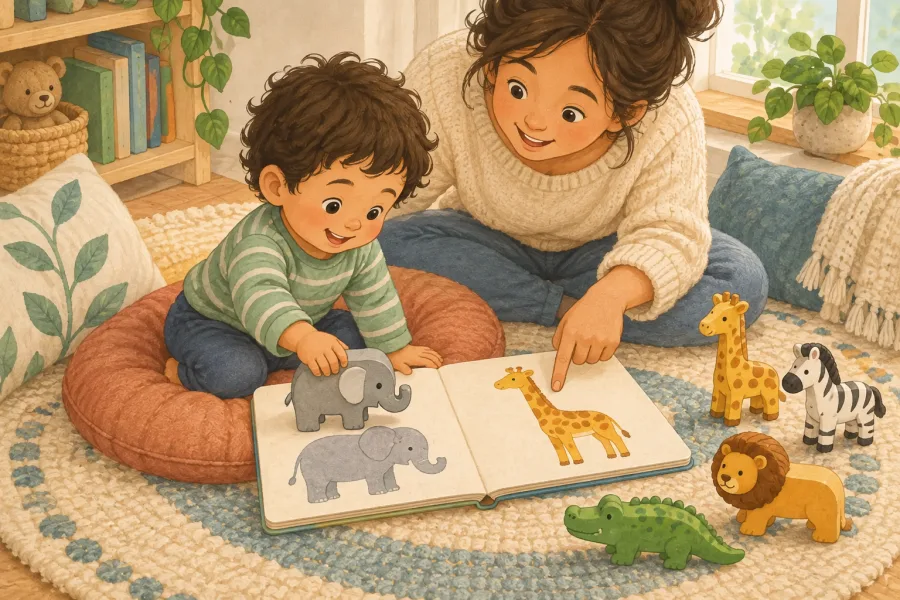
Toy animals meet their portraits: match the plastic elephant to the elephant on the page.

Follow the Leader
March, hop, wiggle — one child chooses the movement and everyone else tries to keep up.
Picture Clue Treasure Hunt
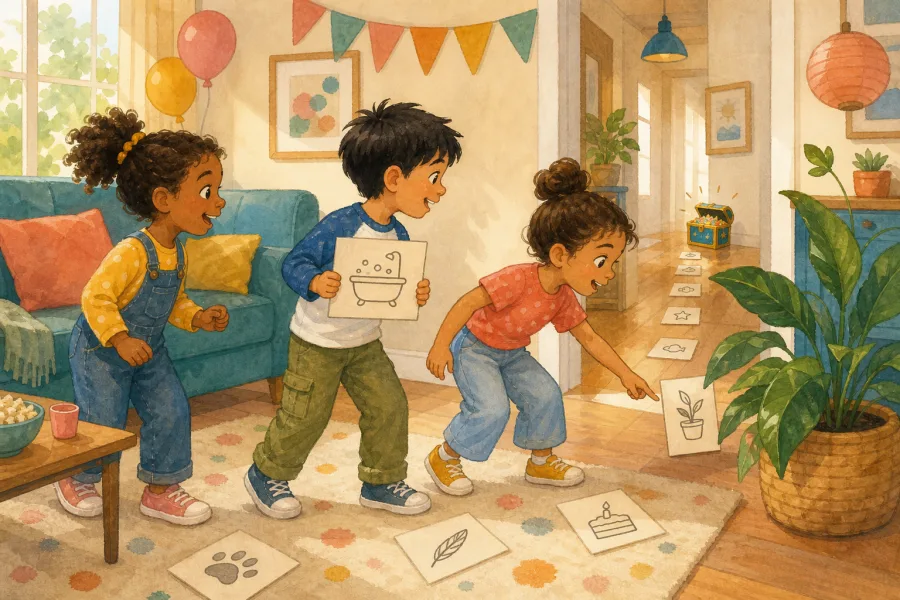
A trail of simple drawn clues leads from spot to spot — with real treasure at the end.