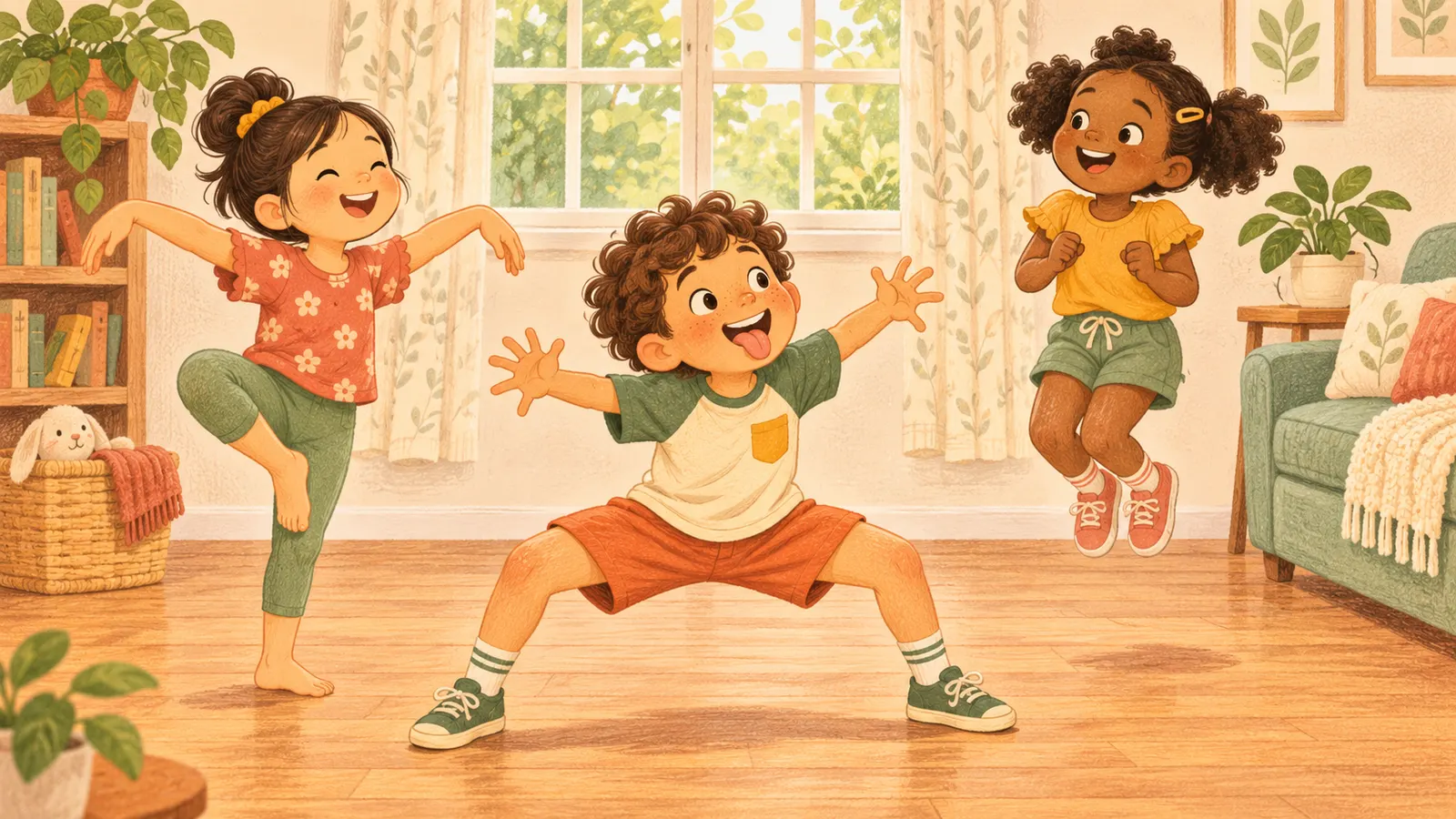
It’s 4:30 on a rainy Tuesday, and your 4-year-old is launching himself off the couch cushions while your 8-year-old spins in circles. You don’t need a gym or a screen. Short games with one clear rule (“move the way I say”) give all that energy somewhere to go and keep the chaos manageable.
Quick answer
- Pick one game, not ten. Ten minutes of Freeze Dance beats an hour of planning.
- Set the play space first: push back furniture, clear sharp corners, take off slippery socks.
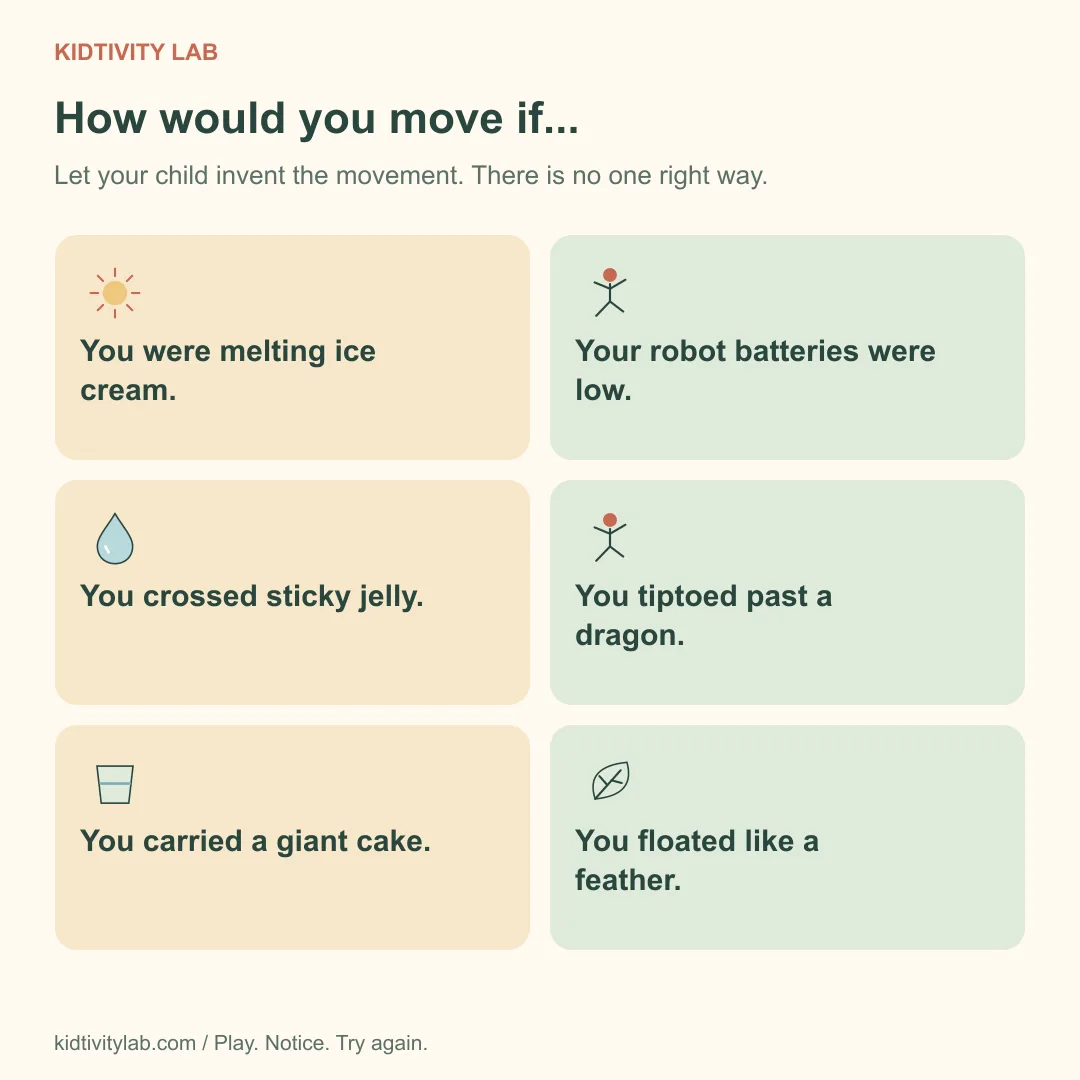
- Let your child invent the movement (a melting ice cream, a low-battery robot) instead of copying an exercise.
- End with something slow, like Animal Yoga or Sleeping Lions, plus a drink of water.
- Match the game to the space you have: hallways and living rooms work for most of these.
How much movement kids need
The CDC’s activity guidance says children ages 3 to 5 should be physically active every day, throughout the day, through active play of all kinds. For ages 6 to 17, it points to 60 minutes or more of moderate-to-vigorous activity daily, including running, climbing, and jumping at least three days a week. Treat that as a compass, not a scorecard. A rainy day with three short dance breaks still counts.
10 creative movement activities for kids
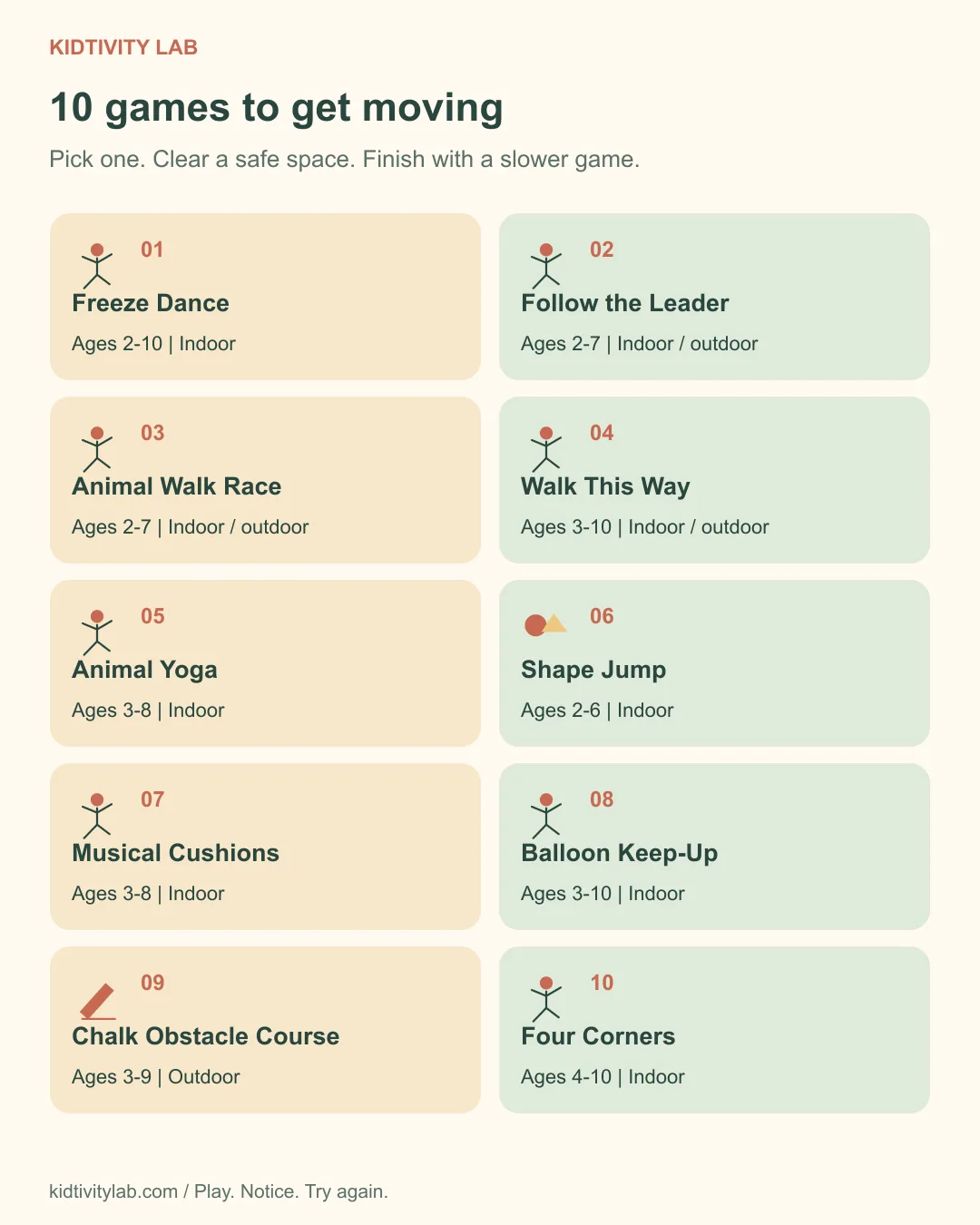
We’ve ordered these from easiest to set up to ones that need a little more room or a few materials. Ages come from each activity page, so you can scan for your kid’s number.
1. Freeze Dance
Ages: 2-10 · Space: a living room or hallway · You need: music and a clear floor
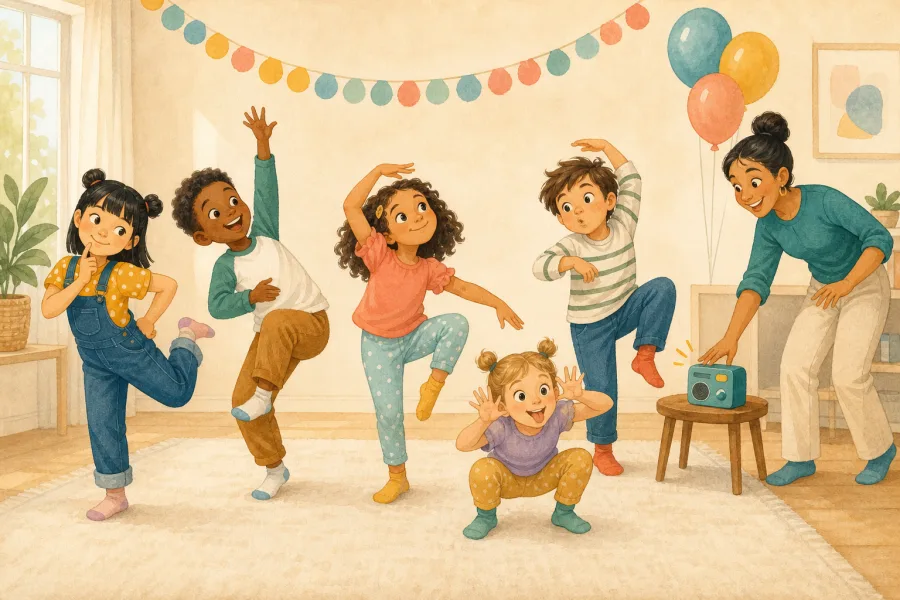
Play music and let everyone dance, then pause it and call “Freeze!” Walk around and admire the statues. Wobblers just laugh and reset, so nobody sits out. Freeze Dance works in a hallway, a living room, or a driveway, and it’s the one game that reliably works for a 3-year-old and a 9-year-old at the same time.
2. Follow the Leader
Ages: 2-7 · Space: any room, hall, or yard · You need: nothing but a leader
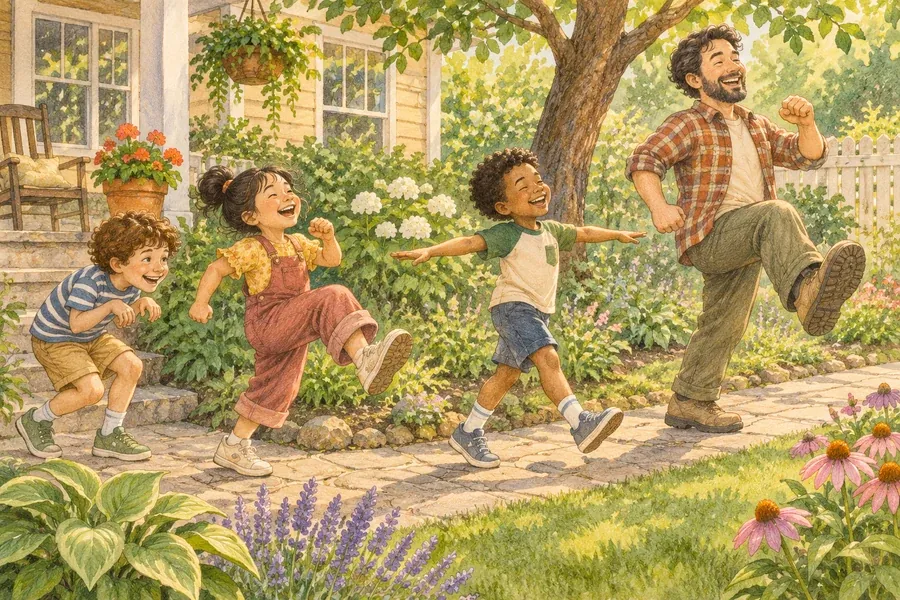
Take turns being the leader and copy whatever they do: tiptoe, stomp, flap like a chicken, crawl under the table. Follow the Leader is the easiest way to get a reluctant mover going, because the child is in charge half the time.
3. Animal Walk Race
Ages: 2-7 · Space: a clear stretch of floor or yard · You need: a stretch of floor or yard
Race from one end of the room to the other as a bear, a crab, a frog, or a bunny. Call the animal out loud and let your child pick the next one. Animal Walk Race builds strength in the arms and legs without anyone noticing they’re exercising.
4. Walk This Way
Ages: 3-10 · Space: a clear path across a room · You need: a clear path
Call out a way to move (“walk like you’re on the moon,” “walk like the floor is hot”) and everyone crosses the room that way. Walk This Way is our go-to for a mixed group, since older kids can invent harder challenges for the younger ones.
5. Animal Yoga
Ages: 3-8 · Space: a mat-size spot per child · You need: a mat or rug
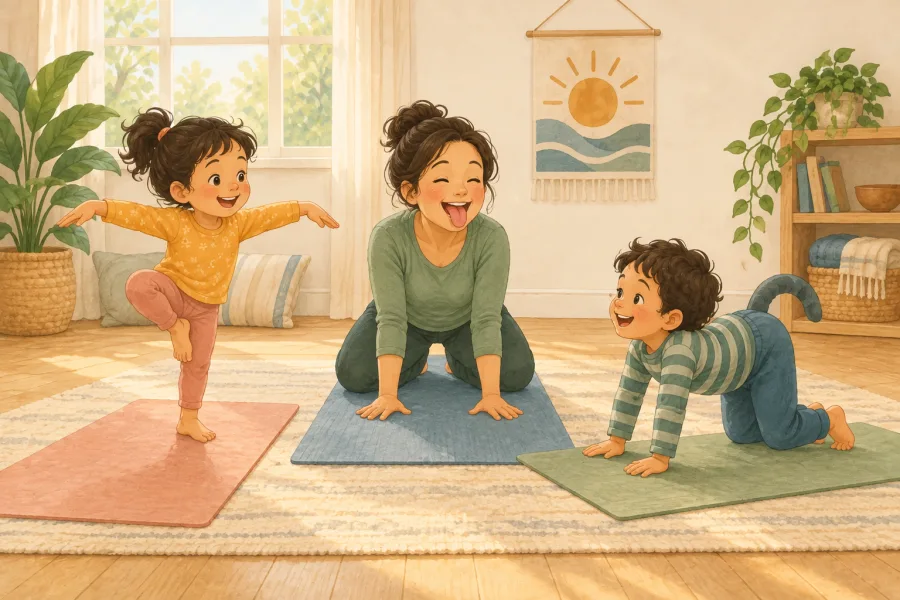
Move through simple poses named after animals: cat stretch, frog jumps, flamingo balance, butterfly sit, and a sleeping swan to finish. Hold each one for a breath or two and let your child suggest the next animal. Animal Yoga doubles as a wind-down, which makes it a good pick for the last ten minutes before dinner.
6. Shape Jump
Ages: 2-6 · Space: a small clear floor · You need: masking or painter’s tape
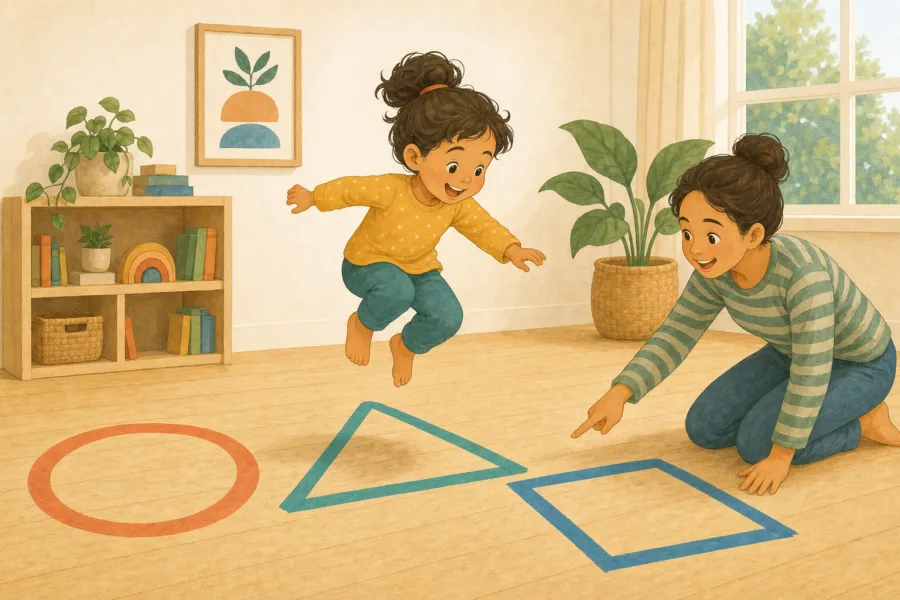
Tape a few big shapes on the floor (a square, a circle, a triangle) and call out which one to jump to. Add a color or a number to make it harder for older kids. Shape Jump needs a little setup time but keeps a preschooler busy for ages, Test a small piece of tape on your floor first, and play barefoot, since tape gets slick under socks.
7. Musical Cushions
Ages: 3-8 · Space: a living room · You need: floor cushions or pillows
Lay out one cushion per child in a wide ring and march around while the music plays. When it stops, everyone touches a cushion. Each round, take one cushion away, and players share instead of sitting out. Musical Cushions is musical chairs without the tears, and it ends with everyone piled on the last cushion.
8. Balloon Keep-Up
Ages: 3-10 · Space: a room with nothing breakable · You need: a balloon
Tap a balloon back and forth and see how many hits you can get before it touches the floor. Count out loud together, or add a rule that you can only use your elbows. Balloon Keep-Up is slow enough to be safe indoors but still gets everyone reaching and jumping.
Safety: Uninflated balloons and broken pieces are a choking hazard. Keep spare balloons away from children under 8, and pick up every fragment right away.
9. Sidewalk Chalk Obstacle Course
Ages: 3-9 · Space: a driveway or sidewalk · You need: sidewalk chalk
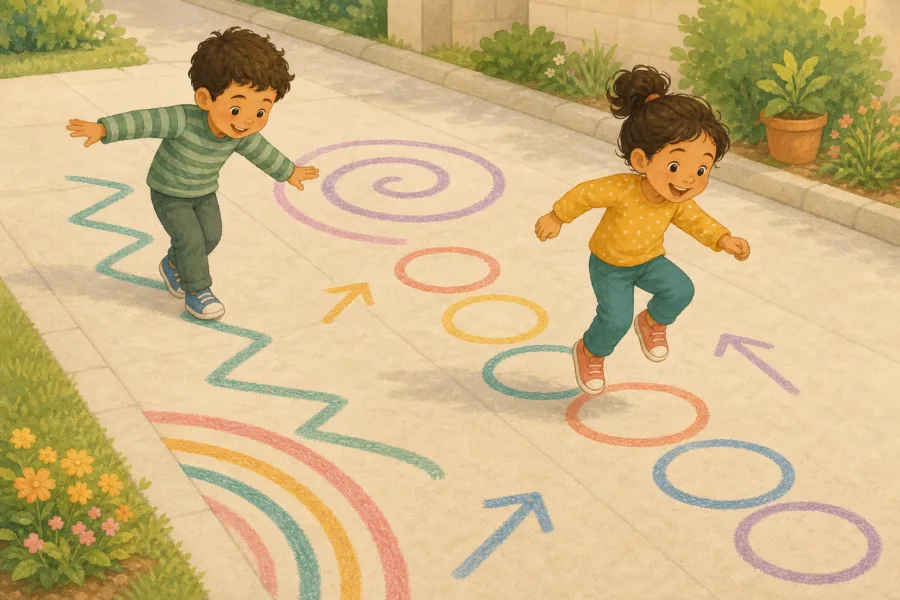
Draw a course on the driveway or sidewalk: a line to balance on, circles to hop between, a squiggle to walk like a snake. Let your child add a station or two. Sidewalk Chalk Obstacle Course gets everyone outside and works for a range of ages, since each kid can run it at their own speed.
10. Four Corners
Ages: 4-10 · Space: a room with four reachable corners · You need: four sheets of colored paper, tape
Tape a different colored sheet in each corner. The caller closes their eyes and counts to ten while everyone tiptoes to a corner. With eyes still closed, the caller names a color, and anyone in that corner sits out one round or joins the caller. Four Corners is the most “big kid” game on this list, and it works best with at least four players.
What makes movement “creative”
In a creative movement game, your child isn’t copying a workout. They’re deciding how a melting ice cream would move, or what a robot with low batteries looks like when it walks. That small shift, from “do this” to “show me how,” is what keeps them interested past the first round and lets a 4-year-old and a 9-year-old play the same game. The AAP’s report on the power of play links play with executive function, the skills kids use to plan, switch gears, and control impulses, and with handling stress.
Keep a few prompts in your back pocket and pull one out when the energy spikes:
- “Move like melting ice cream.”
- “Walk like a robot with low batteries.”
- “Float like a feather in a breeze.”
- “Stomp like a dinosaur who just woke up.”
- “Wiggle like jelly on a plate.”
- “Creep like a cat in tall grass.”
Calm it back down
The hard part isn’t starting. It’s stopping. Plan the ending before you start, and say it out loud: “Two more songs, then we do sleepy animals.”
Finish with something slow. Animal Yoga works, and so does Sleeping Lions, where everyone lies still while a hunter tries to make them laugh, and anyone who moves joins the hunt. Then hand out water, dim the lights a little, and move to a quiet activity like books or drawing. A 15-minute buffer between wild play and bedtime saves everyone a fight.
Small-space and safety notes
You don’t need a big room, but you do need to clear one. Push the coffee table back, check for sharp corners, and take off socks or switch to non-slip ones so nobody slides into a wall. If you have a toddler in the mix, keep the running games in one zone and the jumping games in another.
Balloons are the one material to think twice about. Latex balloons and their pieces are a choking hazard, so an adult blows up the balloon, keeps the spares, and sweeps up every scrap if one pops. For everything else on this list, the main rule is simple: clear the floor, then let them go.
Common questions
What are creative movement activities?
They’re games where kids move their bodies and also make choices about how to move. Instead of a set exercise, your child decides what a sleepy bear or a melting ice cream looks like, which builds coordination and imagination at the same time.
How do I get my child moving indoors on a rainy day?
Pick one game from this list that fits your space and start it yourself. Freeze Dance, Follow the Leader, and Animal Walk Race need almost nothing and work in a hallway. Set a timer for ten minutes so it feels like a game rather than a chore. If screens usually fill that hour, our guide to balancing screen time and social play has more swaps.
How much physical activity does a preschooler need?
The CDC says children ages 3 to 5 should be active every day, throughout the day, through active play. It doesn’t have to be one long session. Three short bursts of dancing, jumping, or chasing count.
What movement games work for a mixed-age group?
Games with a “you decide” rule work best, because each kid can play at their own level. Walk This Way, Freeze Dance, and Follow the Leader let a 4-year-old and a 9-year-old play together without anyone getting bored or left behind.