A preschool adaptive skills checklist helps you notice how your child manages daily tasks, from pulling on pants to asking for help. Use it to choose one small skill to practice, rather than to score your child’s readiness for school. The age guide below separates published milestones from everyday practice ideas, and the printable includes 25 specific items with age and source notes to record what happens at home.
Quick answer
- Adaptive skills include practical routines, communication, and getting along with others.
- At 3, look for growing participation; at 4 and 5, look for more steps done independently.
- Observe normal routines for a week and mark “alone,” “with help,” or “not yet.”
- Pick one manageable next step, and keep necessary adult supervision.
- Bring missed milestones, lost skills, or concerns to your pediatrician.
This is general information, not a diagnosis. If something worries you, talk to your pediatrician.
What adaptive skills look like in the preschool years
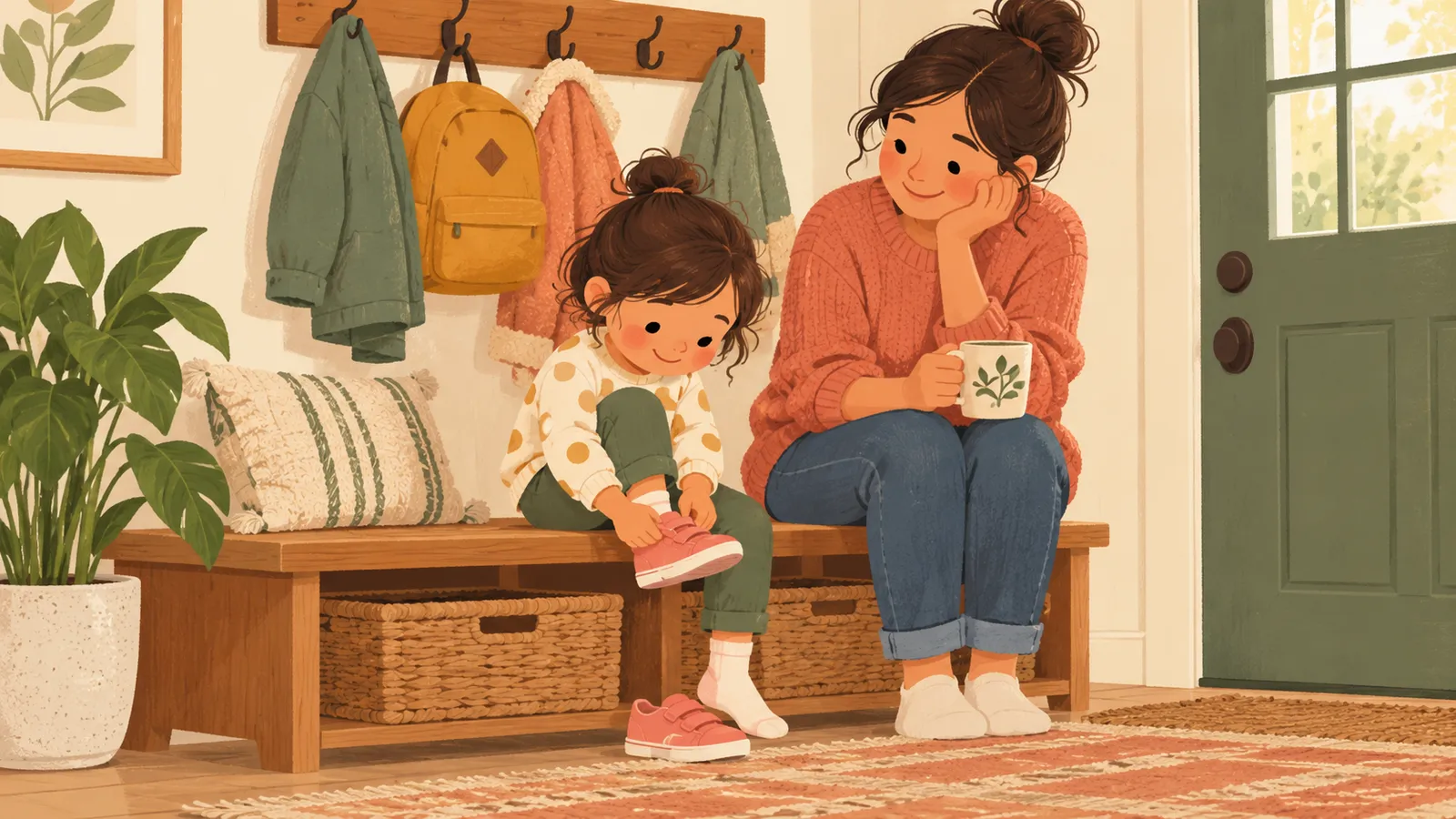
Picture your 4-year-old sitting by the door, trying to pull a shoe over a folded sock. You could finish in five seconds, but they’re working on a real daily living skill. Asking, “Can you hold the back?” counts as useful communication, too.
AAIDD describes adaptive behavior in three groups: conceptual, social, and practical skills. For a preschooler, those might mean understanding what comes next, asking another child for a turn, and getting dressed.
“Self-help skills” usually refers to the personal care part: eating, dressing, toileting, and hygiene. Adaptive skills are broader, including following routines, making everyday choices, and staying safe with adult support.
A child may know every dinosaur name and still need help managing a bathroom trip. Another may serve their own snack but find joining a game difficult. Notice each area separately instead of assigning one overall independence level.
Why daily routines belong beside letters and numbers
Knowing letters is useful, but a school day also includes opening lunch, putting away a backpack, waiting, and telling an adult something hurts. Practicing those situations gives children familiar actions to try when the room is busy.
You don’t need to turn breakfast into a lesson. “Put your cup beside your plate” offers a real task with a clear ending. The goal is participation and a way to get help, including gestures, pictures, or communication devices when a child uses them.
Independence doesn’t mean doing everything without accommodations. An easy-grip utensil, visual schedule, or quieter bathroom can be part of a workable routine. Keep supports that help your child participate.
An age guide for adaptive skills, from 3 to 5
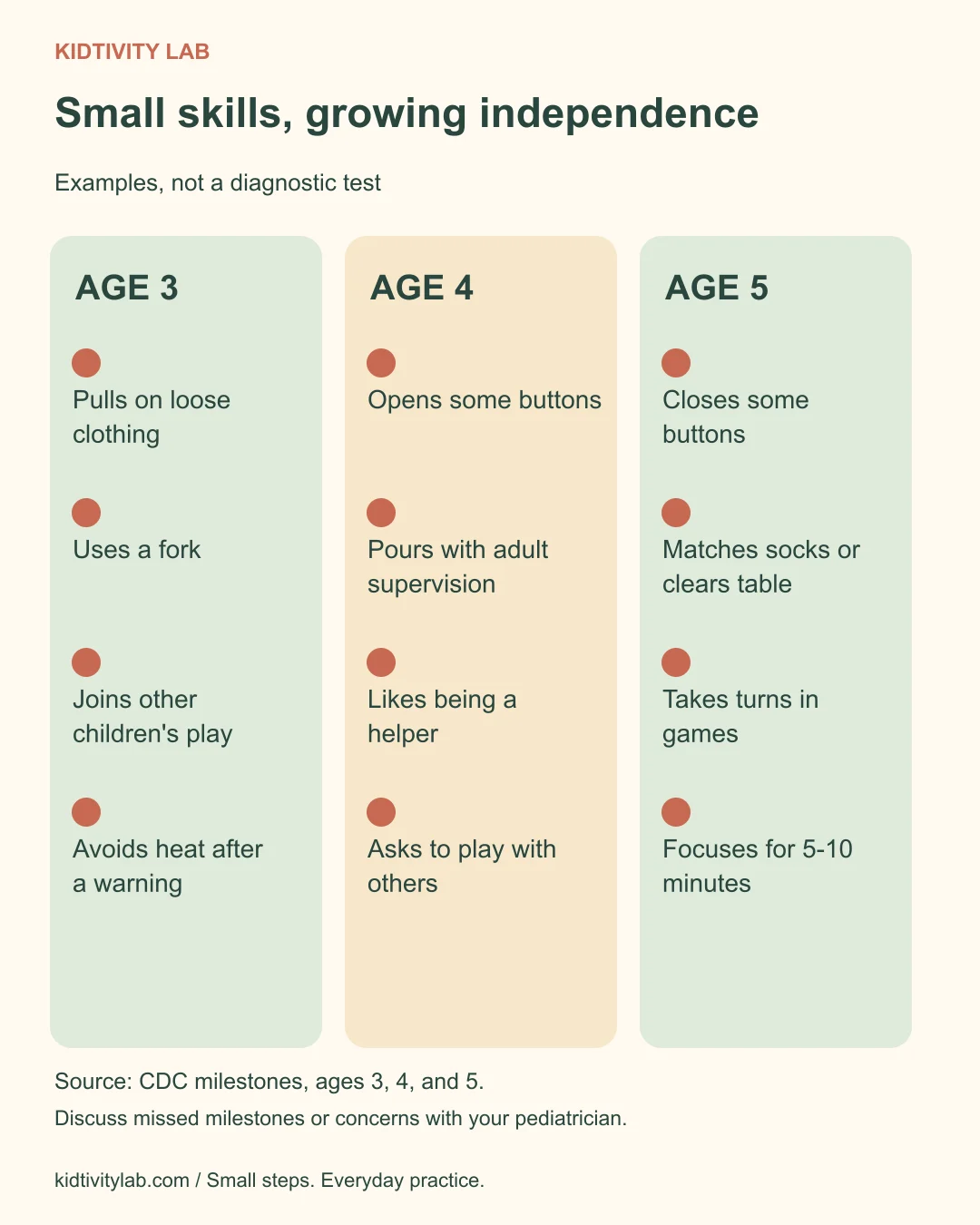
The CDC’s milestone pages describe skills that 75% or more of children can do by the listed age. Missing a milestone is a reason to discuss development with your child’s doctor, rather than proof of a diagnosis or something to dismiss automatically.
This table is a family observation guide, not a validated assessment. Entries marked CDC summarize that age’s milestones; AAP refers to its broader 4-to-5-year range. Entries marked practice are suggestions, not age deadlines.
| Area | Around age 3 | Around age 4 | Around age 5 |
|---|---|---|---|
| Dressing | Puts on some loose clothing (CDC) | Opens some buttons (CDC) | Closes some buttons (CDC); dressing with little help is in AAP’s 4–5 range |
| Eating | Uses a fork (CDC) | Serves food or pours water with adult supervision (CDC) | Uses a fork and spoon (AAP, 4–5 range) |
| Toileting and hygiene | Helps with one part of washing or dressing after toileting (practice) | Practices the bathroom sequence with needed help (practice) | Usually manages toilet needs; washes and dries hands (AAP, 4–5 range) |
| Helping at home | Carries an unbreakable cup to the counter (practice) | Enjoys being a helper (CDC) | Does simple chores, such as matching socks or clearing the table (CDC) |
| Safety | Avoids touching something hot after a warning (CDC) | Avoids some playground dangers (CDC) | Practices stopping at the curb with an adult (practice) |
| Playing with others | Notices children and joins their play (CDC) | Asks to play with other children (CDC) | Follows rules or takes turns in games (CDC) |
| Handling feelings | Settles within 10 minutes after a caregiver leaves at drop-off (CDC) | Adjusts behavior to different places (CDC) | Practices asking for a break or help during frustration (practice) |
Sources: CDC, age 3, age 4, age 5, and AAP, ages 4–5.
The bathroom row isn’t a toilet-training deadline. Record the part your child can do, the help they need, and any pain or difficulty to discuss with their doctor. Likewise, opening buttons and closing buttons are different tasks; don’t bundle them into one pass-or-fail item.
Use the checklist during an ordinary week
Download the two-page printable checklist, with 25 items across seven areas, and write your child’s age and the date at the top. Each item includes an age guide and a CDC, AAP, or practice label, matching the table above. Choose familiar tasks rather than staging a test when everyone’s tired.
For each task, use one of three marks: does it alone, with some help, or not yet. “Alone” can include an established accommodation, such as a picture schedule; write that in the notes so the result stays meaningful.
Watch across several opportunities. A child who can put on shoes after breakfast may need help doing it after a long preschool day. Record the difference instead of deciding the harder moment cancels the easier one.
Add a short note about the sticking point: “Gets both feet in pants, needs help pulling the waistband over hips.” That’s more useful than “Can’t dress.” Review the sheet in two or three months as a family planning habit, and bring concerns sooner rather than waiting for that review.
Your 3-year-old may spill water twice while learning to pour from a small pitcher. Keep “pours with adult supervision” distinct from “pours without spilling.” Perfection isn’t the skill you’re observing.
Six ways to teach the next small step
Let your child finish the last part
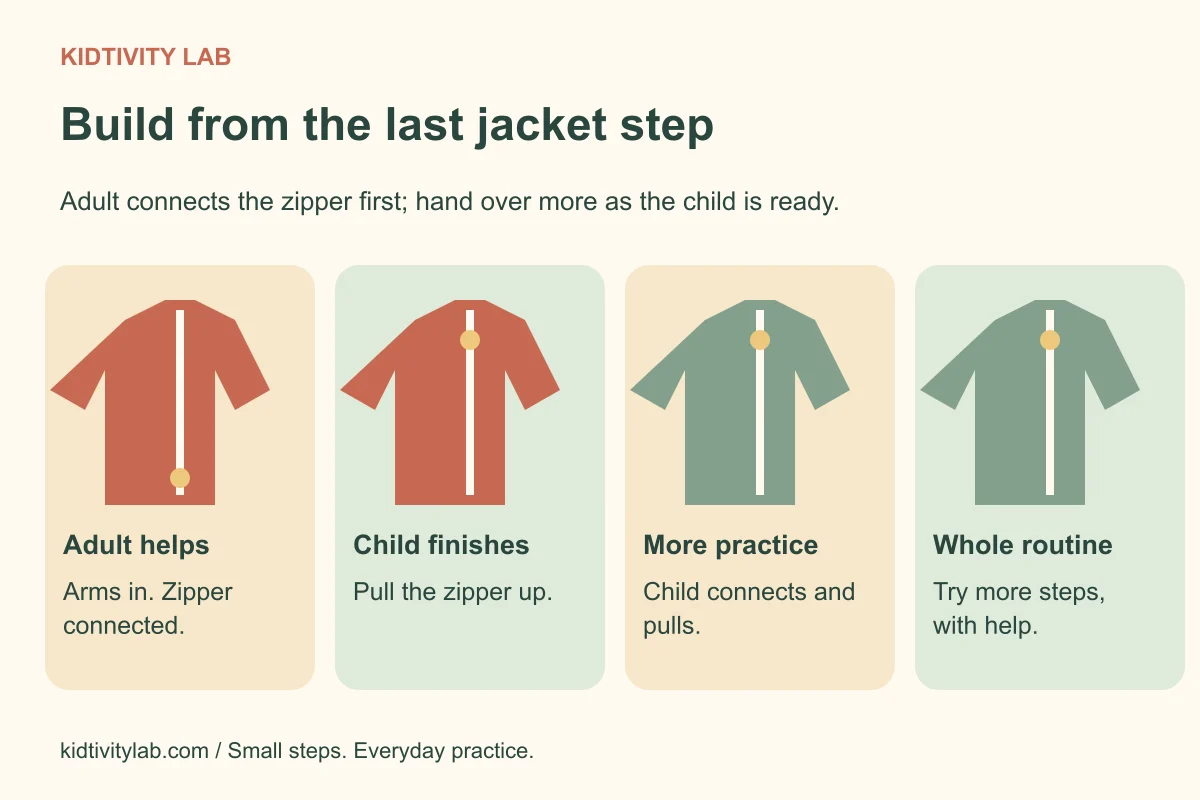
For a routine with several steps, do the early parts and let your child finish something achievable. With a jacket, you might guide arms into sleeves, connect the zipper, and let your child pull it up.
Once that feels familiar, hand over an earlier part. This approach is often called backward chaining, but you can think of it as building from a successful ending. Say, “I’ll start it, and you pull,” rather than asking for the whole job at once.
Put the routine where your child can see it
Draw a few simple pictures for bathroom, teeth, clothes, breakfast, and shoes. Hang them at your child’s eye level and point to the next one together.
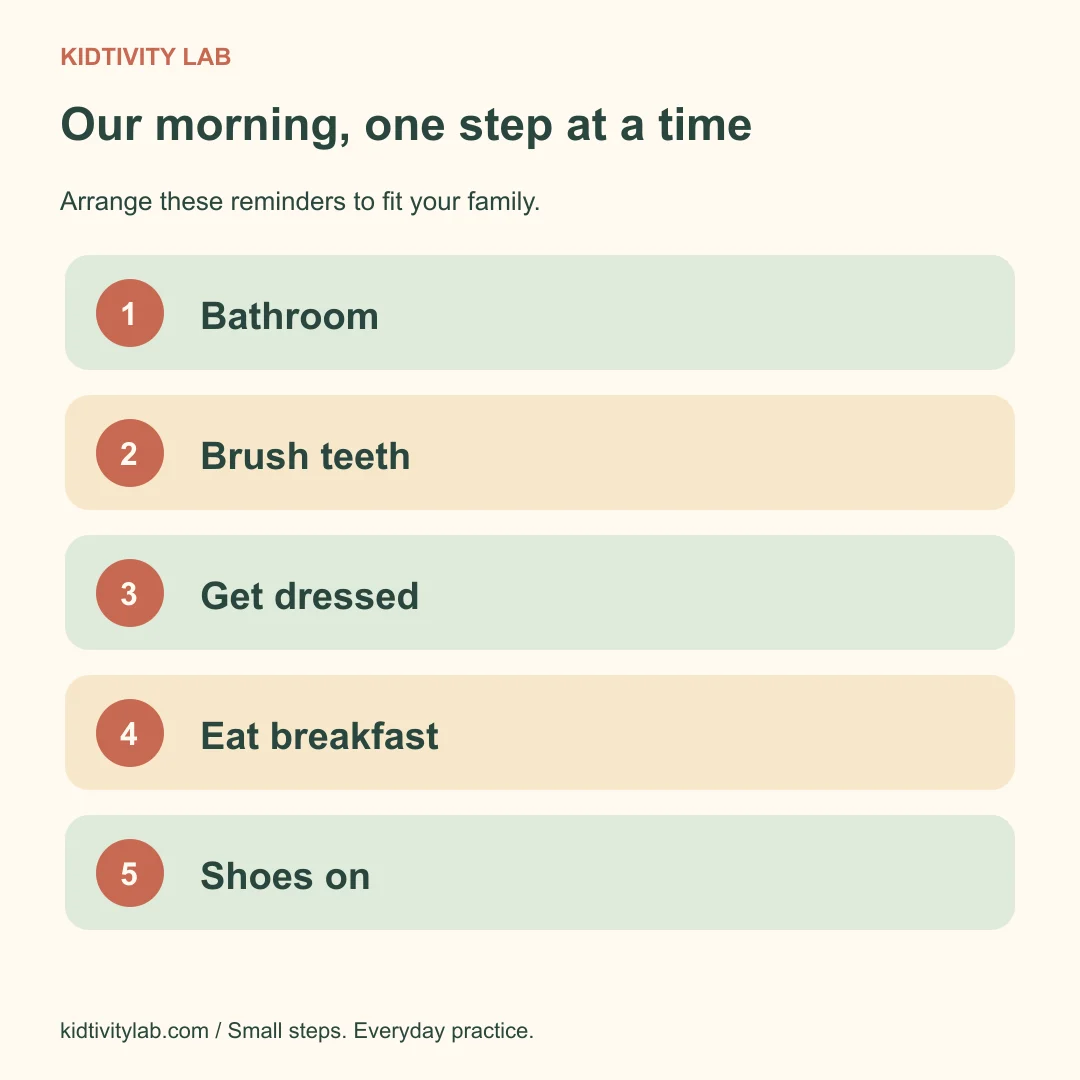
Keep the sequence close to what your family actually does. If breakfast comes before getting dressed, arrange the pictures that way. A useful schedule is a reminder, not another thing your child has to get right.
Try “I do, we do, you do”
Show one action slowly, help your child try it, then offer a turn with less help. For washing hands, work on reaching the soap pump or drying between fingers, rather than giving five instructions together.
Ask before taking over: “Would you like me to hold it still?” That offers help without removing the child’s part of the job. Adults still manage hot water, medications, and other hazards.
Make room for a practice morning
Choose one morning when you can allow an extra 10 minutes. Practice a single task, such as pulling on pants, while you handle the rest of the departure routine.
On a rushed day, it’s fine to help more. You can say, “Today I’ll help us get out the door; you can practice after snack.” One hurried morning doesn’t erase a skill.
Change the setup before adding reminders
Try elastic waistbands, a reachable hook, a stable footstool, or a small pitcher with a little water. Put the items in order so your child can find what they need.
If your 5-year-old can manage a large button but struggles with tiny shirt buttons, choose clothing that lets them participate now. Keep difficult fasteners for a calm practice time, rather than making them the price of getting dressed.
Give a real household job
Offer a job with an obvious finish: pair three pairs of socks, place napkins on the table, or carry a light plate. Show where the task starts and where the item goes.
Describe the action you noticed: “You put everyone’s napkin by their plate.” If the job was too large, shrink it next time. Helping works better as participation than as a test of willingness.
When to talk with your pediatrician
Contact your child’s doctor if a milestone is missing, a skill seems unusually difficult, or your child has lost an ability they previously used. A lost skill deserves attention even if other parts of development seem to be going well.
The AAP’s guidance for ages 4–5 lists difficulties with eating, sleeping, toileting, taking off clothes, and washing hands among concerns to discuss. Bring concrete examples, including when the problem happens and what help changes it.
You can also use the free CDC Milestone Tracker app to organize observations. CDC checklists and this family sheet don’t replace developmental screening or an evaluation.
If you’re asking about an IEP, contact your public school district’s preschool evaluation team. Ask how to request an evaluation and what information to provide; a home checklist can support the conversation but cannot determine eligibility.
Games that make practice feel like play
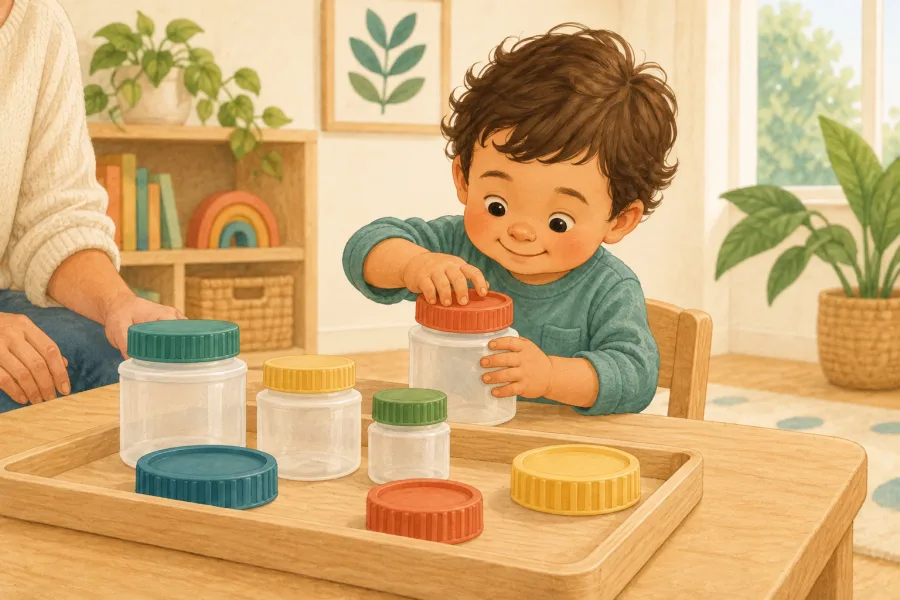
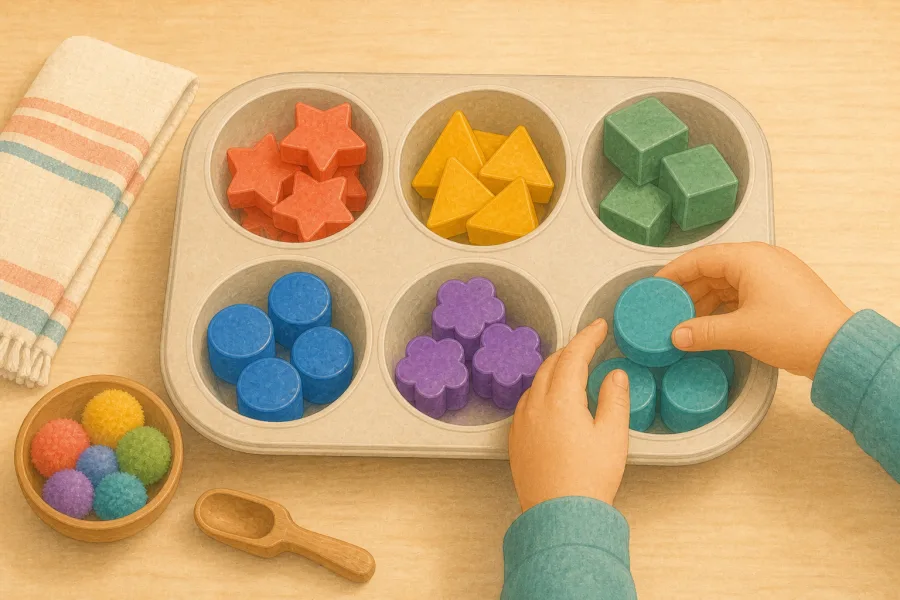
Choose a game your child already enjoys, then connect it to one everyday action. Bottle-cap twisting offers supervised hand practice, while muffin-tin sorting gives you a playful way to practice matching before pairing socks.
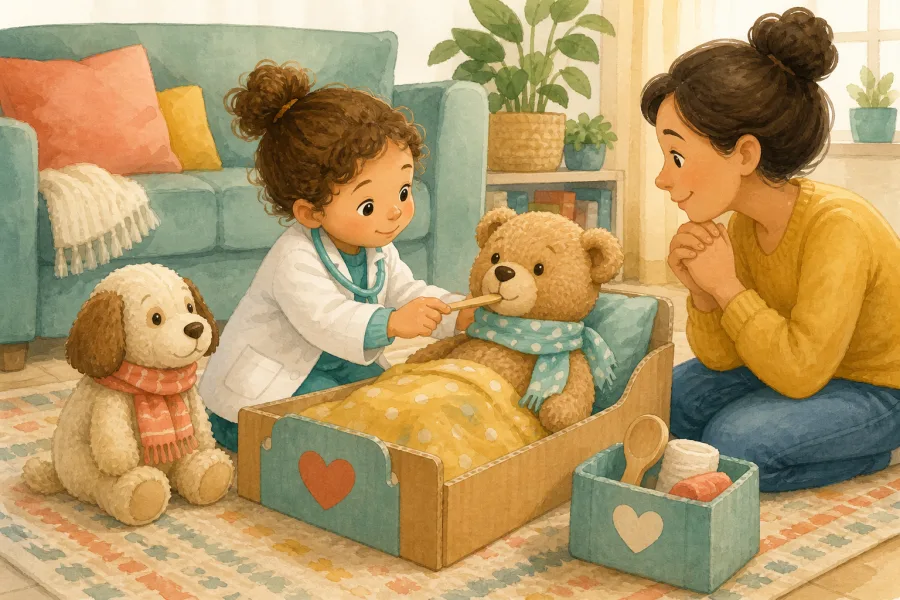
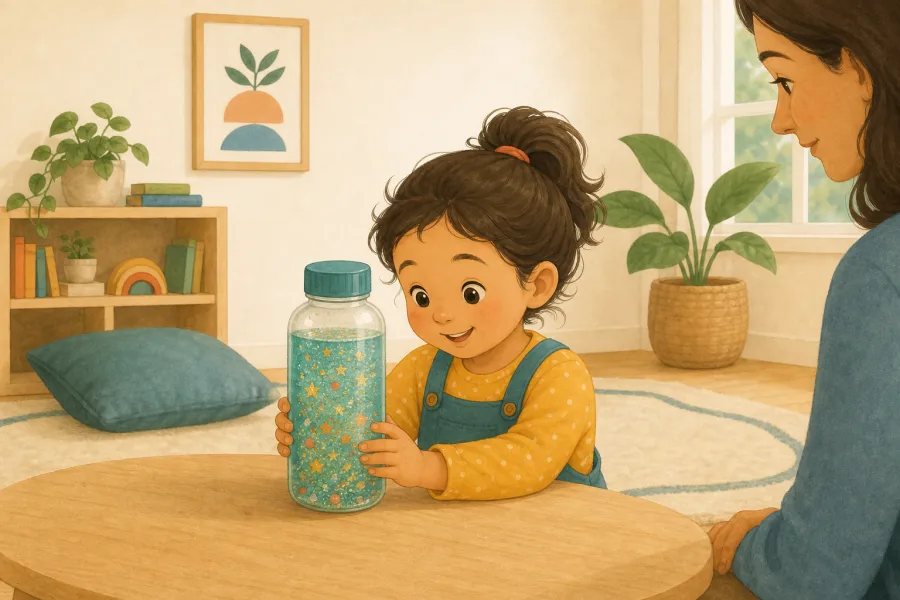
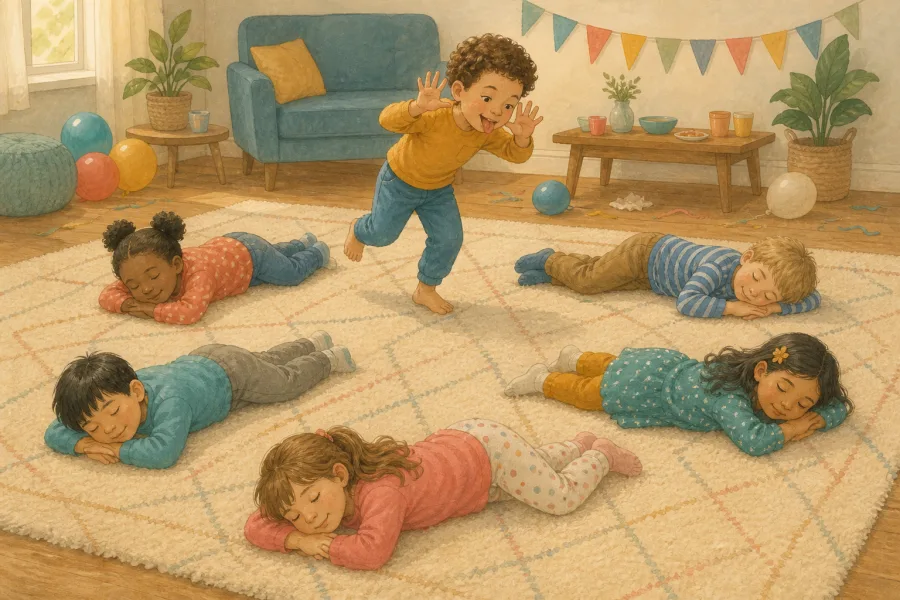
A teddy bear checkup lets children rehearse asking for help and caring for someone. For a quiet pause, try a calm-down sensory bottle together or take turns being still in Sleeping Lions.
These are play ideas, not treatments or replacements for practicing the daily task itself. Follow each activity’s safety guidance and keep small parts away from younger children.
Common questions
What are examples of adaptive skills?
Pulling on pants, using a fork, asking for help, following a familiar routine, and taking turns are examples. Some involve hands and movement; others involve communication or social understanding.
How are adaptive skills different from self-help skills?
Self-help usually means personal care, such as dressing or toileting. Adaptive skills also include everyday concepts, communication, safety, and social participation.
Should a 4-year-old be able to dress themselves?
Expect growing participation rather than every item done alone. CDC lists opening some buttons at 4, while AAP describes dressing with little help across ages 4–5; fasteners, clothing design, and individual needs affect the task.
How are adaptive skills tested for an IEP?
A school evaluation team may use interviews, observations, and standardized measures, sometimes including an adaptive behavior scale such as Vineland. Ask which tools the team uses and how they assess your child’s functioning across settings; this printable isn’t an IEP test.