
An activity you can start today
Hopscotch Number Hop
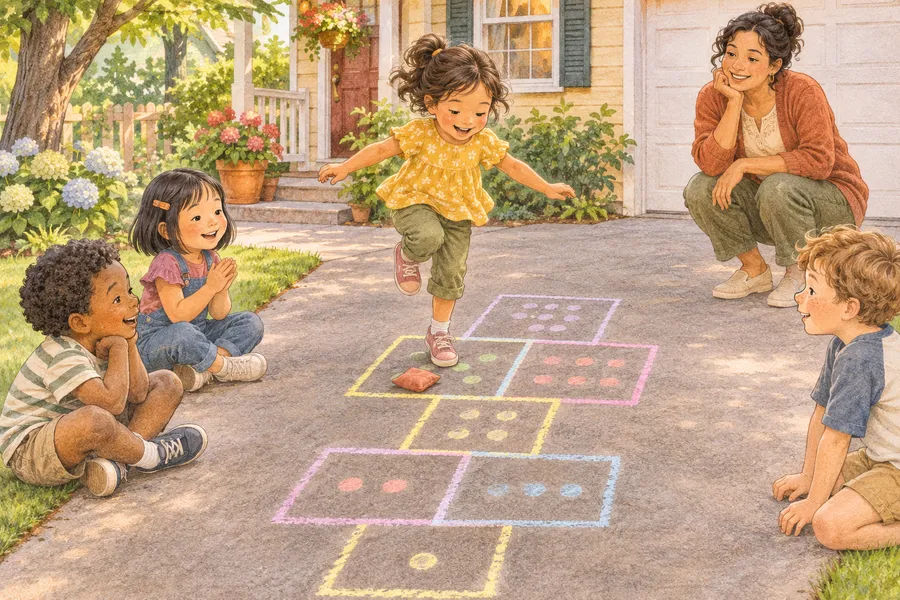
Chalk a 1 to 10 grid, toss a beanbag, and hop the numbers while you call them out loud.
Know before you start
At a glance
- Setup
- 5 min
- Cleanup
- 5 min
- Mess
- low
- Energy
- active
- Adult help
- nearby
Before you start
- Pick a flat, dry patch of pavement or a clear hallway, and check it for traffic and slick spots.
- Draw the grid with chalk outdoors or lay painter's tape indoors: single squares and side-by-side pairs, numbered 1 to 10.
- Set one house rule out loud: the beanbag stays flat on the ground, not thrown at anyone.
Step by step
Let’s play
- Draw the grid. Chalk a 1 to 10 hopscotch pattern on dry pavement, or tape it on a hard floor indoors. Mix single squares with side-by-side pairs, numbered 1 to 10.
- Set the throwing line. Stand a few steps back and take turns tossing the beanbag onto a square. Whatever it lands on is out of bounds for hopping.
- Hop and call the numbers. Hop on one foot on single squares, land with two feet on the side-by-side squares, and say each number out loud as you go.
- Turn around and pick it up. At the top, hop back, skip the square with the beanbag, and scoop it up on the way past.
- Play a number round. Call out a number and have your child hop straight to it. Try even numbers only, or two numbers in a row for a bigger challenge.
- Pass the beanbag. Take turns until everyone has had a few rounds, then fold up the tape or let the chalk fade.
The child’s-eye view
Why kids love it
It is a throwing game, a hopping game, and a counting game all at once. The beanbag lands somewhere new each turn, so no two rounds look the same, and calling out the numbers feels like a small victory every time.
Built into the fun
What they’re learning
Children see each numeral, say it out loud, and step on it, which links the written number to the word and to a physical action.
Hopping every square in order practices 1 to 10, and hopping only the even squares gives a first taste of skip counting.
Hopping on one foot on single squares and landing on two feet on double squares asks children to shift weight, aim, and stop.
Make it fit your child
Ways to change the game
Even numbers only
Call out a rule: hop only on 2, 4, 6, 8, and 10. Kids have to read each square before they jump.
Number call out
The adult calls a number and the child hops straight to it. Add two numbers in a row for older kids: 'Four, then seven.'
Tape it indoors
Lay painter's tape on a hard floor for a rainy day version. Use a rolled sock as the marker so nothing rattles or rolls away.
Real-life fixes
If it’s not going to plan
The beanbag keeps landing off the grid
Move the throwing line closer, or let the child stand right at the first square and drop the beanbag instead of tossing it.
A younger child cannot hop on one foot yet
Let them jump with two feet on every square and skip the one-foot rule. The numbers still work, and the hopping comes with practice.
Good to know
Frequently asked questions
What age can kids play hopscotch?
Most children are ready around 4, when they can hop on one foot for a few jumps and recognize numbers up to 10. Younger kids can jump with two feet and still enjoy the counting.
Can you play hopscotch indoors?
Yes. Use painter's tape on a hard floor and a soft marker like a beanbag or rolled sock. Keep the grid away from stairs and check that the tape lies flat so nobody trips.
Kidtivity Lab activity guide · Last updated
Try next
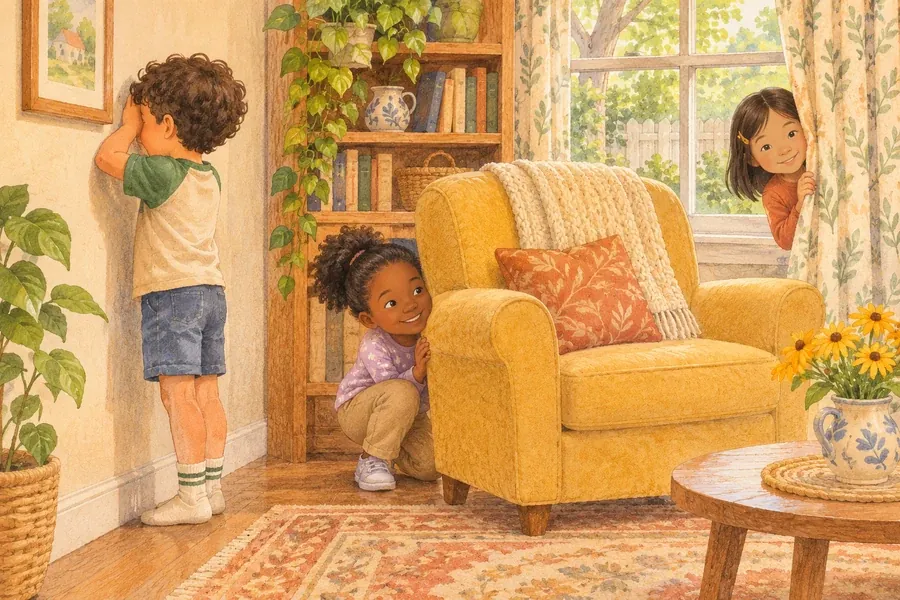
Hide and Seek
One player counts, everyone else hides. The classic that works in any house, yard or park, no supplies needed.
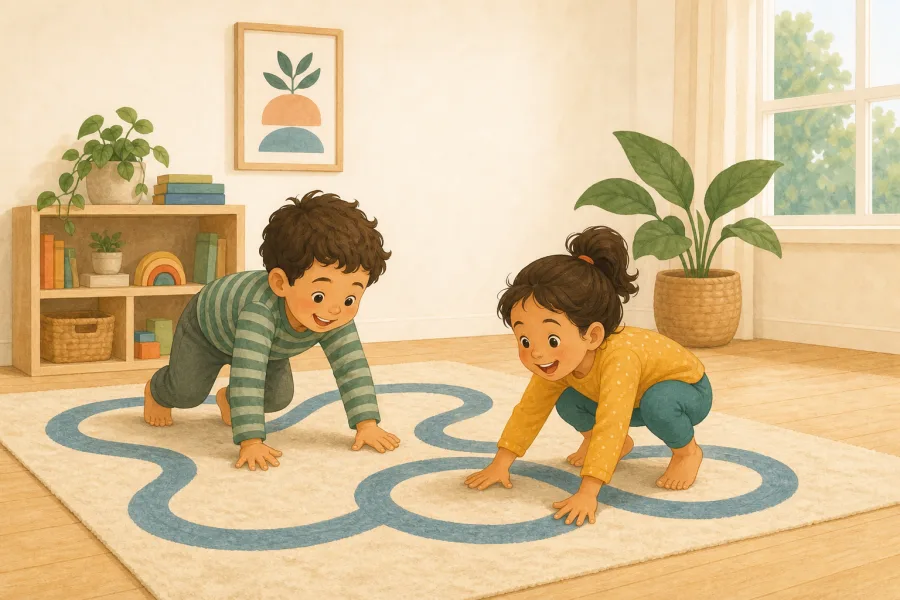
Animal Walk Race
Crawl, hop, and stomp to the finish line like your favorite animals.
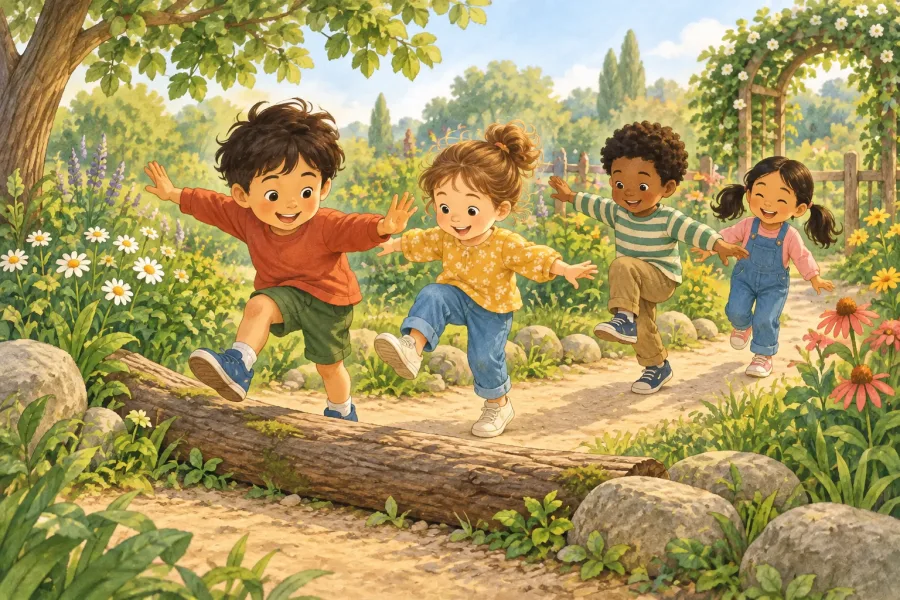
Follow the Leader
March, hop, wiggle — one child chooses the movement and everyone else tries to keep up.